domingo, marzo 20, 2016
martes, septiembre 30, 2014
The CIA was very concerned about contra-drug investigation in the 1990's
http://ww4report.com/node/13581
Nicaragua: contra-drug series was CIA 'nightmare'
Submitted by Weekly News Update... on Tue, 09/30/2014
On Sept. 18 the US Central Intelligence Agency (CIA) released a number of classified articles from its in-house journal, Studies in Intelligence, including an article about "Dark Alliance," a 1996 series in the San Jose Mercury News that linked the CIA-backed Nicaraguan contra rebels to the sale of crack in South Central Los Angeles in the 1980s. Other US media, notably the New York Times, the Washington Post and the Los Angeles Times, harshly criticized the series' author, investigative reporter Gary Webb, noting, and often exaggerating, flaws in his reporting. Webb lost his job at the Mercury News and was never employed by a major newspaper again; he was found dead on Dec. 10, 2004 in an apparent suicide.
On Sept. 18 the US Central Intelligence Agency (CIA) released a number of classified articles from its in-house journal, Studies in Intelligence, including an article about "Dark Alliance," a 1996 series in the San Jose Mercury News that linked the CIA-backed Nicaraguan contra rebels to the sale of crack in South Central Los Angeles in the 1980s. Other US media, notably the New York Times, the Washington Post and the Los Angeles Times, harshly criticized the series' author, investigative reporter Gary Webb, noting, and often exaggerating, flaws in his reporting. Webb lost his job at the Mercury News and was never employed by a major newspaper again; he was found dead on Dec. 10, 2004 in an apparent suicide.
The CIA journal article, by Directorate of Intelligence staffer Nicholas Dujmovic, described the initial public reaction to the series as a "nightmare" and "a genuine public relations crisis." Although the contras' links to cocaine trafficking had been reported previously, Webb's series had more effect, in part because it connected the contras to the explosion of crack use in African-American communities. It was also one of the first major stories to gain traction through circulation over the internet. Dujmovic attributed the popularity of "Dark Alliance" to "societal shortcomings." "We live in somewhat coarse and emotional times—when large numbers of Americans do not adhere to the same standards of logic, evidence, or even civil discourse as those practiced by members of the CIA community," he complained.
The CIA's response largely relied on "a ground base of already productive relations with journalists," Dujmovic wrote. The agency managed to discourage "one major news affiliate" from covering the story, and in another case it helped out a reporter by making "a rare exception to the general policy that CIA does not comment on any individual's alleged CIA ties." But to a large extent the mainstream media did the job on Webb without prompting from the CIA. The Los Angeles Times, for example, assembled a group of 17 reporters in what one member called the "get Gary Webb team." The group "put [Webb's series] under a microscope," another of the reporters, Jesse Katz, said in a 2013 radio interview. "And we did it in a way that most of us who were involved in it, I think, would look back on that and say it was overkill. We had this huge team of people at the L.A. Times and kind of piled on to one lone muckraker up in Northern California." The result of the media attack was a "success," according to Dujmovic, although only "in relative terms." (The Intercept, Sept. 25)
The story has never completely disappeared from public consciousness, however. A 1997 report by the CIA's then-inspector general, Frederick Hitz, confirmed the contras' link to drug trafficking, and a new story about contra drug dealing appeared in October 2013 in both the righ-twing US-based Fox television network and the left-leaning Mexican weekly Proceso. A feature film about Gary Webb, Kill the Messenger, is scheduled for release on Oct. 10.
From Weekly News Update on the Americas, September 28.
Etiquetas: CIA, Contras, eng, Gary Webb, Nicaragua, World War 4 Report
jueves, julio 17, 2014
Saludo del Frente Socialista de Puerto Rico al Frente Sandinista de Liberación Nacional en el 35 aniversario de la victoria contra la dictadura somocista

COMUNICADO DEL FRENTE SOCIALISTA DE PUERTO RICO
Un diez y nueve de julio de hace treinta y cinco años, una luz brilló en el firmamento, iluminando el mundo. Era el triunfo de la Revolución Sandinista, la del pueblo nicaragüense, la de los pobres de América Latina y el Caribe. Una nueva esperanza se sembró en los corazones de los pueblos que luchaban y siguen luchando por su liberación nacional y social.
El Frente Socialista de Puerto Rico, solidario siempre con el FSLN y su revolución, saluda fraternalmente a todas y todos los compañeros que hicieron posible esta victoria de nuestra América y hoy la continúan día a día con su obra de gobierno.
También queremos expresar una vez más nuestro agradecimiento al comandante Daniel Ortega, a la dirección del FSLN, y al pueblo nicaragüense por su solidaridad con la causa de la independencia y el socialismo de Puerto Rico.
Frente Socialista de Puerto Rico
Organización miembro de pleno derecho del Grupo
de Trabajo del Foro de Sao Paulo.Visítanos en: frentesocialistapr.blogspot.comPuedes comunicarte con nosotros/as en nuestro correo electrónicoPO Box 71325 Buzón 69 San Juan. Puerto Rico 00936


Etiquetas: Centroamérica, esp, Frente Socialista, FSLN, Nicaragua
martes, enero 07, 2014
Contra-Cocaine Was a Real Conspiracy
Article by Robert Parry
EXCERPT:
It did not begin with the 1996 emergence of Ricky Ross in a series of articles by San Jose Mercury-News investigative reporter Gary Webb...
The Contra-cocaine scandal began... with a 1985 article that Brian Barger and I wrote for the Associated Press. Our article cited documentary evidence and witnesses – both inside the Contra movement and inside the U.S. government – implicating nearly all the Contra groups fighting in Nicaragua under the umbrella of Ronald Reagan’s CIA.
Our Contra-cocaine article was followed up by a courageous Senate investigation led by Sen. John Kerry of Massachusetts who further documented the connections between cocaine traffickers, the Contras and the Reagan administration in a report issued in 1989.
Yet, part of the scandal always was how the Reagan administration worked diligently to undercut investigations of the President’s favorite “freedom fighters” whether the inquiries were undertaken by the press, Congress, the Drug Enforcement Administration or federal prosecutors. Indeed, a big part of this cover-up strategy was to mock the evidence as “a conspiracy theory,” when it was anything but.
To read the full article:
http://consortiumnews.com/2013/12/02/contra-cocaine-was-a-real-conspiracy/
For more info:
http://carmeloruiz.blogspot.com/search/label/Contras
http://carmeloruiz.blogspot.com/search/label/Gary%20Webb
EXCERPT:
It did not begin with the 1996 emergence of Ricky Ross in a series of articles by San Jose Mercury-News investigative reporter Gary Webb...
The Contra-cocaine scandal began... with a 1985 article that Brian Barger and I wrote for the Associated Press. Our article cited documentary evidence and witnesses – both inside the Contra movement and inside the U.S. government – implicating nearly all the Contra groups fighting in Nicaragua under the umbrella of Ronald Reagan’s CIA.
Our Contra-cocaine article was followed up by a courageous Senate investigation led by Sen. John Kerry of Massachusetts who further documented the connections between cocaine traffickers, the Contras and the Reagan administration in a report issued in 1989.
Yet, part of the scandal always was how the Reagan administration worked diligently to undercut investigations of the President’s favorite “freedom fighters” whether the inquiries were undertaken by the press, Congress, the Drug Enforcement Administration or federal prosecutors. Indeed, a big part of this cover-up strategy was to mock the evidence as “a conspiracy theory,” when it was anything but.
To read the full article:
http://consortiumnews.com/2013/12/02/contra-cocaine-was-a-real-conspiracy/
For more info:
http://carmeloruiz.blogspot.com/search/label/Contras
http://carmeloruiz.blogspot.com/search/label/Gary%20Webb
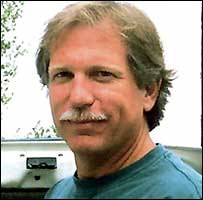
Journalist Gary Webb.
Etiquetas: CIA, Consortium News, Contras, eng, Gary Webb, Nicaragua, Robert Parry
martes, noviembre 05, 2013
Nicaragua: CIA-contra drug charges resurface
TO READ THE FULL ARTICLE:
http://ww4report.com/node/12736
Submitted by Weekly News Update... on Tue, 11/05/2013
The torture death of US Drug Enforcement Administration (DEA) agent Enrique ("Kiki") Camarena near Guadalajara in the western Mexican state of Jalisco in February 1985 was linked to drug running by the US-backed "contra" rebels seeking to overthrow the leftist government of Nicaragua, according to two former DEA agents and a former pilot for the US Central Intelligence Agency (CIA). Camarena was kidnapped by criminals working for Rafael Caro Quintero, a founder of the so-called Guadalajara Cartel, and was executed at one of Caro Quintero's ranches. According to the US, the cartel targeted Camarena because he had uncovered Caro Quintero's marijuana growing and processing operation. Under pressure from the US, the Mexican government eventually captured Caro Quintero and sentenced him to 60 years in prison for Camarena's murder.
http://ww4report.com/node/12736
Submitted by Weekly News Update... on Tue, 11/05/2013
The torture death of US Drug Enforcement Administration (DEA) agent Enrique ("Kiki") Camarena near Guadalajara in the western Mexican state of Jalisco in February 1985 was linked to drug running by the US-backed "contra" rebels seeking to overthrow the leftist government of Nicaragua, according to two former DEA agents and a former pilot for the US Central Intelligence Agency (CIA). Camarena was kidnapped by criminals working for Rafael Caro Quintero, a founder of the so-called Guadalajara Cartel, and was executed at one of Caro Quintero's ranches. According to the US, the cartel targeted Camarena because he had uncovered Caro Quintero's marijuana growing and processing operation. Under pressure from the US, the Mexican government eventually captured Caro Quintero and sentenced him to 60 years in prison for Camarena's murder.
Etiquetas: Central America, CIA, Contras, Drugs, eng, Iran Contra, Nicaragua, World War 4 Report
Vínculos
- 123 Real Change- Sibel Edmonds' blog
- Artículos de Alberto Acosta en Rebelión.org
- ADITAL - Noticias de América Latina y el Caribe
- Agencia Bolivariana de Prensa
- Agroecología Venezuela
- Al Jazeera
- ALBA TV
- All Songs Considered
- Alt.Latino
- Alternet
- Ambiental.Net - Ambiente y Desarrollo en América Latina
- América Latina en Movimiento
- Americas Policy Program
- Arcoiris TV
- Artículos de Carmelo en América Latina en Movimiento
- Artículos de Carmelo en Biodiversidad en América Latina
- Artículos de Carmelo en Haciendo Punto en otro Blog
- Artículos de Carmelo en Rebelión.org
- AS-PTA
- Así Que Sí
- Asociación Nacional de Derecho Ambiental de Puerto Rico
- Asociación de Periodistas- ASPPRO
- Katia Avilés
- Alejandra Baiz
- Bandcamp Bankster
- Basurama
- Beta Local
- Frei Betto
- Big Noise Films
- Bilaterals dot Org
- Biodiversidad en América Latina
- Biofuel Watch
- Bloc Sonic
- Bolivia Contaminada
- Bolpress
- Brasil de Fato
- Cambio Climático Sur - CLAES
- CC Mixter
- Center for Media and Democracy
- Centro Latinoamericano de Ecología Social
- Centro de Periodismo Investigativo
- Cero Design
- Proyecto La Chakra
- La Chiwinha
- Café Cibales
- City Farmer News
- Claridad
- Climate Progress
- Climate Voices
- Coalición Pro Agricultura Ecológica de Puerto Rico
- Colectivo Desde el Pie
- Colectivo 7
- Comercio Justo en Puerto Rico
- Combatiendo los TLC
- Con Calma
- Consortium News
- David Corn
- Corporate Watch
- Counterpunch
- Creative Commons
- Crocodyl
- Darth Nader
- Decrecimiento
- Del Agro
- Democracy Now
- Desayuno Calle
- Desde mi Huerto
- Diálogo Digital
- Diario Danés
- The Dinner Party
- DJ Velcro
- Dublab- Future Roots Radio
- Earth Beat
- Earth Policy Institute
- Ecologist TV
- Ecoportal
- EcoSer/Desarrollo Integral
- Periódico El Rehén
- 11 Central Ave.- Comedy on US National Public Radio
- El Local en Santurce
- En Defensa del Maíz
- Energía y Equidad
- Energía Sur - CLAES
- Energía Verde
- Energy Press
- Environment 360
- Espacio 1414
- Esta es una Plaza
- ETC Group
- FACT Magazine
- Fighting FTA's
- FOBOMADE Bolivia
- Food First
- Foreign Policy in Focus
- Free Albums Galore
- Free Music Archive
- Free Press
- Free Speech TV
- FRENTE SOCIALISTA DE PUERTO RICO
- Fresh Air- US National Public Radio
- G Mail
- g727
- Global Land Grab
- Global Noize- My favorite music blog
- Google Maps
- GRAIN
- Grist
- Grit TV- Hosted by Laura Flanders
- Grupo de Reflexión Rural
- Artículos de Eduardo Gudynas en Rebelión.org
- Hidrocarburos Bolivia
- Hip Hop Vox FM
- Horizonte Sur
- Hulu
- Indymedia Puerto Rico
- Inhabitat
- Institute for Social Ecology
- Instituto de Estudios Ecologistas del Tercer Mundo
- Intelligence & Capital News Report
- Isa's Bread
- Izquierda Anti-capitalista
- Jamendo
- Naomi Klein
- KPFK 90.7 FM
- La Quince
- Last FM
- LATIN AMERICA ENERGY AND ENVIRONMENT MONITOR
- Librería Mágica
- La Línea de Fuego
- Linked In
- Live Station
- MAELA - Movimiento Agroecológico
- Media Matters for America
- Meet the Farmer TV
- Melli Productions
- Melli's YouTube page
- Mercado Ecológico de Ponce
- Mercado Orgánico de Rincón
- Minnesota Public Radio News
- George Monbiot
- Monbiot's Blog
- Movimiento Continental Bolivariano
- The Nation
- Navdanya
- NPR Books podcast
- NPR Program Stream
- Oakland Institute
- Observatorio Boliviano de Industrias Extractivas
- Observatorio Petrolero Sur
- Oil Change International
- Ojo del Ciudadano
- Organic Consumers Association
- Orgánica 3
- Organizing Notes
- The Other News
- Las Otras Noticias
- Pandora - The Musical Genome Project
- Paren de Fumigar
- Ignacio Peña
- Permisos a la Cañona
- Phlow
- Plataforma Energética
- Pluralia TV
- Poder, Espacio y Ambiente
- Polinizaciones
- Postcards from the Revolution
- PR Watch
- Presentation Zen
- ProPublica
- PROYECTO DE BIOSEGURIDAD DE PUERTO RICO
- Puerto Rico Agroecológico
- RA: Resident Advisor
- Radio Huelga
- Radio Mundo Real
- Radio Universidad
- Radioagência NP
- RALLT - Por una América Latina libre de Transgénicos
- RAP-AL Uruguay
- The Real News
- Rebel Reports - By Jeremy Scahill
- Rebelion
- REDES AT
- RT
- Sala Teatro Beckett
- Salva la Selva
- Sembrarte
- Semillas de Identidad
- Servicio de Noticias Ambientales
- Siembra Urbana
- The Sixty One
- Slow Food
- Soberanía alimentaria, biodiversidad y culturas
- Sociedad Científica Latinoamericana de Agroecología- Venezuela
- Sonic Squirrel
- Soplo
- Soundcloud
- South Centre
- Stop Agrocombustibles
- Stuffed and Starved- Raj Patel's blog
- Sur y Sur
- Synthesis/Regeneration
- Take a Bite out of Climate Change
- Third World Network
- This American Life
- The Traveler Within
- The Uptake TV
- Urb Magazine
- US Working Group on the Food Crisis
- Vía Campesina en español
- Vía Campesina in English
- Vía Orgánica
- Esther Vivas
- Vive TV
- Voices from Africa
- We Make Money Not Art
- What to Eat- Marion Nestle's blog
- World War 4 Report, by Bill Weinberg
- The Wire
- Worldwatch Institute
- WPAB 550 AM
- WPRA 990
- Yerba Mala Cartonera
- Edit-Me
- Edit-Me
Entradas anteriores
- Anthony Michael Hall, one of my favorite actors ev...
- (Incomplete) Chronology of Puerto Rico’s political...
- Weinberg on the origins of ISIS
- La contrarevolución cubana y el caso de Carlos Muñ...
- Carmelo Ruiz: Un informe que no pone fin al debate
- Puerto Rico y los Panama Papers
- Honrando a Albizu en Salinas
- 31 de agosto, cambiando el curso de la historia
- Bolivia: Guerras extractivistas
- A different perspective on organic standards
Archivos
- marzo 2004
- abril 2004
- mayo 2004
- junio 2004
- julio 2004
- agosto 2004
- septiembre 2004
- octubre 2004
- noviembre 2004
- diciembre 2004
- enero 2005
- febrero 2005
- marzo 2005
- abril 2005
- mayo 2005
- junio 2005
- julio 2005
- agosto 2005
- septiembre 2005
- octubre 2005
- noviembre 2005
- diciembre 2005
- enero 2006
- febrero 2006
- marzo 2006
- abril 2006
- mayo 2006
- junio 2006
- julio 2006
- agosto 2006
- septiembre 2006
- octubre 2006
- noviembre 2006
- diciembre 2006
- enero 2007
- febrero 2007
- marzo 2007
- abril 2007
- mayo 2007
- junio 2007
- julio 2007
- agosto 2007
- septiembre 2007
- octubre 2007
- noviembre 2007
- diciembre 2007
- enero 2008
- febrero 2008
- marzo 2008
- abril 2008
- mayo 2008
- junio 2008
- julio 2008
- agosto 2008
- septiembre 2008
- octubre 2008
- noviembre 2008
- diciembre 2008
- enero 2009
- febrero 2009
- marzo 2009
- abril 2009
- mayo 2009
- junio 2009
- julio 2009
- agosto 2009
- septiembre 2009
- octubre 2009
- noviembre 2009
- diciembre 2009
- enero 2010
- febrero 2010
- marzo 2010
- abril 2010
- mayo 2010
- junio 2010
- julio 2010
- agosto 2010
- septiembre 2010
- octubre 2010
- noviembre 2010
- diciembre 2010
- enero 2011
- febrero 2011
- marzo 2011
- abril 2011
- mayo 2011
- junio 2011
- julio 2011
- agosto 2011
- septiembre 2011
- octubre 2011
- noviembre 2011
- diciembre 2011
- enero 2012
- febrero 2012
- marzo 2012
- abril 2012
- mayo 2012
- junio 2012
- julio 2012
- agosto 2012
- septiembre 2012
- octubre 2012
- noviembre 2012
- diciembre 2012
- enero 2013
- febrero 2013
- marzo 2013
- abril 2013
- mayo 2013
- junio 2013
- julio 2013
- agosto 2013
- septiembre 2013
- octubre 2013
- noviembre 2013
- diciembre 2013
- enero 2014
- febrero 2014
- marzo 2014
- abril 2014
- mayo 2014
- junio 2014
- julio 2014
- agosto 2014
- septiembre 2014
- octubre 2014
- noviembre 2014
- diciembre 2014
- enero 2015
- febrero 2015
- marzo 2015
- abril 2015
- mayo 2015
- junio 2015
- julio 2015
- agosto 2015
- septiembre 2015
- octubre 2015
- noviembre 2015
- diciembre 2015
- enero 2016
- febrero 2016
- marzo 2016
- abril 2016
- mayo 2016
- junio 2016
- julio 2016
- agosto 2016
- septiembre 2016

Suscribirse a
Entradas [Atom]