miércoles, abril 30, 2008


Wednesday, 30 April 2008

Open Letter

To : Mr Jacques Diouf Secretary General of the Food and Agriculture Organization (FAO), Mr. Yasuo Fukuda, Prime Minister of Japan, President of the G8, Mr. John W. Ashe, Permanent UN representative, Antigua and Barbuda's Permanent and Chairman of the Group of 77

From: Henry Saragih, International Coordinator for La Via Campesina

Jakarta, April 28, 2008

Concrete measures are needed to strengthen peasant and farmer-based food production; the food price crisis exposes the instability of liberalized agricultural markets.

Dear Mr. Diouf, Mr. Fukuda, and Mr. Ashe,

Our movement, La Via Campesina, consists of millions of small farmers and landless workers in more than 60 countries around the world. Although we are the ones producing food for our families and communities, many of us are hungry or living in poverty. Over the last months, the situation has worsened due to the sudden rise in food prices. We are also severely hit by the crisis because many of us do not have enough land to feed our families, and because most producers do not benefit from those high prices. Large traders, speculators, supermarkets and industrial farms are cashing in on and benefitting from this crisis.

This current food crisis is the result of many years of deregulation of agricultural markets, the privatization of state regulatory bodies and the dumping of agricultural products on the markets of developing countries. According to the FAO, liberalized markets have attracted huge cash flows that seek to speculate on agricultural products on the “futures” markets and other financial instruments.

The corporate expansion of agrofuels and the initially enthusiastic support for agrofuels in countries such as the US, EU and Brazil have added to the expectation that land for food will become more and more scarce. On top of this in many southern countries hundreds of thousands of hectares are converted from agricultural uses in an uncontrolled way for so-called economic development zones, urbanization and infrastructure. The ongoing land grabbing by Transnational Companies (TNCs) and other speculators will expel millions more peasants who will end up in the mega cities where they will be added to the ranks of the hungry and poor in the slums. Besides this, we may expect especially in Africa and South Asia more severe droughts and floods caused by global climate change. These are severe threats for the rural as well as for the urban areas.

These are highly worrying developments that need active and urgent action! We need a fundamental change in the approach to food production and agricultural markets!

Time to rebuild national food economies!

Rebuilding national food economies will require immediate and long-term political commitments from governments. An absolute priority has to be given to domestic food production in order to decrease dependency on the international market. Peasants and small farmers should be encouraged through better prices for their farm products and stable markets to produce food for themselves and their communities. Landless families from rural and urban areas have to get access to land, seeds and water to produce their own food. This means increased investment in peasant and farmer-based food production for domestic markets.

Governments have to provide financial support for the poorest consumers to allow them to eat. Speculation and extremely high prices forced upon consumers by traders and retailers have to be controlled. Peasants and small farmers need better access to their domestic markets so that they can sell food at fair prices for themselves and for consumers.

Countries need to set up intervention mechanisms aimed at stabilizing market prices. In order to achieve this, import controls with taxes and quotas are needed to avoid low-priced imports which undermine domestic production. National buffer stocks managed by the state have to be built up to stabilize domestic markets: in times of surplus, cereals can be taken from the market to build up the reserve stocks and in case of shortages, cereals can be released.

******

Peasants and small farmers are the main food producers

La Via Campesina is convinced that peasants and small farmers can feed the world. They have to be the key part of the solution. With sufficient political will and the implementation of adequate policies, more peasants and small farmers, men and women, will easily produce sufficient food to feed the growing population. The current situation shows that changes are needed!

The time for Food Sovereignty has come!

Yours sincerely,
Henry Saragih
International Coordinator for La Via Campesina

Etiquetas: , , , , ,


Novedades de GRAIN
28 April 2008

La crisis alimentaria: El negocio de matar de hambre

La crisis alimentaria mundial afecta a mucha gente, pero las empresas del agronegocio, los comerciantes y especuladores mundiales se están aprovechando de la situación para llevarse su buena tajada.

Gran parte de la información que se brinda de la crisis alimentaria mundial se ha centrado en los disturbios ocurridos en países de bajos ingresos, donde trabajadores y trabajadoras y gente de otros sectores ya no pueden hacer frente a la disparada de los costos de los alimentos básicos. Pero hay otra parte de la historia: las grandes ganancias que están obteniendo enormes empresas de la alimentación e inversionistas. Cargill, la mayor empresa comercializadora de granos del mundo, incrementó en 86% las ganancias del comercio de commodities en el primer trimestre de este año. Bunge, otra gigante del negocio de los alimentos, experimentó un aumento del 77% en sus ganancias durante el último trimestre del año pasado. ADM, la segunda mayor empresa mundial del ramo cerealero, registró un 67% de aumento de sus ganancias en 2007.

Tampoco les va mal a los grandes almacenes: las ganancias de Tesco, la cadena gigante de supermercados del Reino Unido, crecieron un 11,8% el año pasado, en lo que se consideró un récord histórico para la firma. Otros grandes almacenes, como Carrefour de Francia y Wal-Mart de los Estados Unidos, dicen que las ventas de alimentos son el sector principal que sostiene el aumento de sus ganancias. Los fondos de inversión, alejándose de los resbaladizos mercados accionarios y de la retracción del crédito, están en su apogeo con los mercados de commodities, logrando que los precios queden fuera del alcance de países importadores de alimentos como Bangladesh y Filipinas.

Esas ganancias tampoco son algo caído del cielo. En los últimos 30 años, el FMI y el Banco Mundial han presionado a los llamados países en desarrollo para que desmantelen todas las formas de protección de sus agricultores nacionales y abran sus mercados al agronegocio, los especuladores y la alimentación subvencionada por los países ricos. Esto ha transformado a los países más empobrecidos, que se han convertido de exportadores de alimentos en importadores. Actualmente, aproximadamente el 70 por ciento de los países en desarrollo son importadores netos de alimentos. Para culminarla, la liberalización financiera ha facilitado a los inversionistas el control de los mercados para su propio beneficio privado.

La política agrícola ha perdido contacto con su objetivo más básico: alimentar a las personas. En lugar de hacer una revisión de sus políticas desastrosas, gobiernos y grupos de expertos le echan la culpa a los problemas de producción, la creciente demanda de alimentos en China e India, y los biocombustibles. Si bien todo esto ha incidido, la causa fundamental de la crisis alimentaria actual es la propia globalización neoliberal, que ha transformado a los alimentos de una fuente de seguridad de formas de vida, en un mero commodity con el cual especular, aún a costa del hambre generalizada entre los sectores más pobres del mundo.

L@s invitamos a leer el informe: GRAIN, "El hambre como una forma de asesinato. Es necesario cambiar la política alimentaria ¡YA!”, abril de 2008,
http://www.grain.org/2/?id=40

Etiquetas: , , , ,

martes, abril 29, 2008


www.oaklandinstit/3F6DE3FE.png

The Oakland Institute Reporter


Dangerous Liaisons
A Battle Plan from the United Nations and the International Financial Institutions to Fight Global Hunger

UN agencies are meeting in Berne o tackle the world food price crisis. Heads of International Financial Institutions (IFIs), including Robert Zoellick, President of the World Bank (former U.S. trade representative) and Pascal Lamy, WTO's Director General, are among the attendees. Will the "battle plan" emerging from the Swiss capital, a charming city with splendid sandstone buildings and far removed from the grinding poverty and hunger which has reduced people to eating mud cakes in Haiti and scavenging garbage heaps, be more of the same - promote free trade to deal with the food crisis?

The growing social unrest against food prices has forced governments to take policy measures such as export bans, to fulfill domestic needs. This has created uproar among policy circles as fear of trade being undermined sets in. "The food crisis of 2008 may become a challenge to globalization," exclaims The Economist in its April 17, 2008 issue. Not surprisingly then, the "Doha Development Round" which has been in a stalemate since the collapse of the 2003 WTO Ministerial in Cancun, largely due to the hypocrisy of agricultural polices of the rich nations, is being resuscitated as a solution to rising food prices.

Speaking at the Center for Global Development, Zoellick passionately argued that the time was "now or never" for breaking the Doha Round impasse and reaching a global trade deal. Pascal Lamy has argued, "At a time when the world economy is in rough waters, concluding the Doha Round can provide a strong anchor." Dominique Strauss-Kahn, Managing Director of the IMF, has claimed, "No one should forget that all countries rely on open trade to feed their populations. [Š] Completing the Doha round would play a critically helpful role in this regard, as it would reduce trade barriers and distortions and encourage agricultural trade."

Preaching at the altar of free market to deal with the current crisis requires a degree of official amnesia. It was through the removal of tariff barriers, through the international trade agreements, that allowed rich nations such as the U.S. to dump heavily subsidized farm surplus in developing countries while destroying their agricultural base and undermining local food production. Reduction of rice tariffs from 100 to 20 percent in Ghana under structural adjustment policies enforced by the World Bank, rice imports increased from 250,000 tons in 1998 to 415,150 tons in 2003, with 66 percent of rice producers recording negative returns leading to loss of employment. In Cameroon, poultry imports increased by about six-fold with the lowering of tariff protection to 25 percent while import increases wiped out 70 percent of Senegal's poultry industry.

Developing countries had an overall agricultural trade surplus of almost US$7 billion per year in the 1960s. According to the Food and Agricultural Organization (FAO), gross imports of food by developing countries grew with trade liberalization, turning into a food trade deficit of more than US$11 billion by 2001 with cereal import bill for Low Income Food Deficit Countries reaching over $38 billion in 2007/2008.

Erosion of agricultural base of the developing countries has increased hunger among their farmers while destroying their ability to meet their food needs. The 1996 World Food Summit's commitment to reduce the number of hungry - 815 million then - by half by 2015 had already become a far-fetched idea by its 10th anniversary. U.N. Special Rapporteur on the Right to Food, Jean Ziegler, reported last June that nearly 854 million people in the world-one in every six human beings-are gravely undernourished.

So on who's behalf are the heads of the IFIs promoting the conclusion of the Doha Round and further liberalization of agriculture. While Investors Chronicle in its April 2008 feature story, "Crop Boom Winners" explores how investors can gain exposure to the dramatic turnaround in food and farmland prices, a new report from GRAIN, Making a Killing from the Food Crisis, shows Cargill, the world's biggest grain trader, achieved an 86% increase in profits from commodity trading in the first quarter of 2008; Bunge had a 77% increase in profits during the last quarter of 2007; ADM, the second largest grain trader in the world, registered a 67% per cent increase in profits in 2007. Behind the chieftains of the capitalist system are powerful transnational corporations, traders, and speculators who trade food worldwide, determine commodity prices, create and then manipulate shortages and surpluses to their advantage, and are the real beneficiaries of international trade agreements.

The vultures of greed are circling the carcasses of growing hunger and poverty as another 100 million join the ranks of the world's poorest - nearly 3 billion people who live on less than $2 a day. Agriculture is fundamental to the well-being of all people, both in terms of access to safe and nutritious food and as the foundation of healthy communities, cultures, and environment. The answer to the current crisis will not come from the WTO or the World Bank, but lies in the principles of food sovereignty that can ensure food self-sufficiency for each nation. It is time for the developing countries to uphold the rights of their people to safe and nutritious food and break with decades of ill-advised policies that have failed to benefit their people.


* Anuradha Mittal is the executive director of the Oakland Institute. www.oaklandinstitute.org. Learn more about the World Food Crisis at www.oaklandinstitute.org.

###

The Oakland Institute is a progressive policy think tank working to increase public participation and promote fair debate on critical social, economic, environmental and foreign policy issues.

Etiquetas: , ,

Public Sentiment Against GM Crops

CARMELO RUIZ

(Taken from 'Biotech Bets on Agrofuels http://americas.irc-online.org/am/5179)

GM organisms contain genetic codes (genomes) that have been altered by genetic engineering-an unprecedented procedure that creates genetic combinations not possible in nature. The main GM products in the U.S. market are corn and soy, which have been genetically modified for resistance to herbicides (usually Monsanto's Roundup) or to pests (known as Bt crops). These crops are used mostly to feed farm animals and to make additives (such as sweeteners and starch) present in most processed foods.

In spite of the upbeat propaganda of the biotechnology companies, broad sectors of society reject GM products, claiming they are neither safe nor necessary. Thousands of protesters from all over the world swamped three United Nations events that took place in southern Brazil almost simultaneously in March 2006: the biennial conferences of the Biodiversity Convention and the Biosafety Protocol, and the World Conference on Agrarian Reform and Local Development. Prominent among their demands was a ban on GM crops.

As the meetings and protests took place, activists of the MST, Brazil's landless people's movement, seized a farm in the state of Parana where the Syngenta biotechnology corporation had illegally planted GM corn and soy in the buffer zone of the Iguaçu National Park. On Oct. 21, 2007 armed gunmen violently evicted them, wounding many and murdering 34 year-old Valmir "Keno" Mota de Oliveira, father of three. The MST, Vía Campesina, and countless civil society organizations in Brazil have condemned these acts. They demand that Syngenta take responsibility for the killing, that it be held accountable for its environmental violations, close down its experimental plot, and leave the country.

In February 2007, farmers and animal herders, representatives of civil society groups, social movements, and environmentalists from 17 countries in Africa, Asia, Latin America, and Europe met in Mali to discuss food and farming issues. Together they issued the Bamako Declaration, which, among other things, categorically says NO to genetically modified organisms.

The Bamako Declaration was part of the preparatory process for the World Forum for Food Sovereignty, which took place that same week in Mali. Over 500 men and women from more than 80 countries, and representing organizations of peasants/family farmers, fisherfolk, indigenous peoples, landless peoples, rural workers, migrants, pastoralists, forest communities, women, youth, consumers, and environmental and urban movements, drafted the Nyeleni Declaration.

The declaration rejects GM foods: (We fight against) "technologies and practices that undercut our future food-producing capacities, damage the environment, and put our health at risk. These include transgenic crops and animals, terminator technology, industrial aquaculture and destructive fishing practices, the so-called White Revolution of industrial dairy practices, the so-called 'old' and 'new' Green Revolutions, and the "Green Deserts" of industrial bio-fuel monocultures and other plantations."

In March 2008, around 300 women of the MST destroyed a nursery of GM corn seedlings belonging to Monsanto in the southern Brazilian state of São Paulo to protest the government's biosafety council's approval of plantings of GM corn. In the days that followed, some 1,500 women protested in front of several Syngenta properties in the state of Parana.


Combustibles nuevos, biopiratería vieja
Silvia Ribeiro

En los meses recientes, a la gran cantidad de voces de la sociedad civil que alertan sobre los impactos sociales, económicos y ambientales de la nueva ola de agrocombustibles, se han unido los informes críticos de instituciones internacionales que han sido cruciales para el desarrollo del neoliberalismo, como el Banco Mundial (BM) y el Fondo Monetario Internacional.

Una de las explicaciones de la súbita “toma de conciencia” de ese tipo de instituciones es que, cobijados en esas críticas, promueven como una de las soluciones nuevas tecnologías de alto riesgo para el ambiente y la sociedad, pero con grandes ganancias para quienes las controlan. No existe cuestionamiento de parte de esas instituciones a los problemas de fondo, como la matriz de producción energética y la enorme desigualdad del consumo y de impactos. En cambio, intentan hacernos creer que la “solución” será tecnológica, por ejemplo, mediante una “segunda generación” de agrocombustibles. Para ello, promueven y justifican (sin ninguna prueba real de su utilidad y sin mención a sus impactos) cultivos y árboles transgénicos, junto con el desarrollo de tecnologías aún peores, como la biología sintética o “ingeniería genética extrema”, como la hemos llamado en el Grupo ETC.

La biología sintética, que es la creación sintética de ADN, se propone construir microrganismos vivos artificiales, o alterar sus metabolismos naturales con secuencias artificiales de ADN para que puedan procesar celulosa más eficientemente o producir nuevos combustibles. Con la excusa de salvar al planeta del calentamiento global y con la motivación real de aprovechar los desastres globales para obtener más ganancias, no tienen ningún prurito en intentar crear seres vivos nunca antes vistos, con impactos impredecibles. Un ejemplo de este tipo es el contrato anunciado el pasado 22 de abril entre la empresa Amyris Biotechnologies y el grupo brasileño de azúcar y etanol Crystalsev, que se propone procesar caña de azúcar con microrganismos alterados para producir biodiesel.

Otro ejemplo, más directamente relacionado a México, es la empresa Synthetic Genomics, creada por el controvertido genetista Craig Venter en 2005, con capital del regiomontano Alfonso Romo, y la participación de otro mexicano, el biotecnólogo Juan Enríquez Cabot. En junio 2007 se alió con la petrolera BP para el desarrollo de biología sintética y vida artificial aplicada a biocombustibles.

El aporte más significativo de México al lucro privado de Venter lo hizo la investigadora del Instituto de Ecología de la UNAM, Valeria Souza. En efecto, el acervo de recursos microbianos al que tiene acceso la empresa de Venter para sus experiencias de biología sintética y el lucro millonario que anuncian, proviene de la travesía global que hizo Venter en su barco-laboratorio Sorcerer II, recorriendo los mares megadiversos del planeta tomando muestras de la vida microbiana. Venter afirmaba que su expedición era “sin fines de lucro”. Desconfiados (con razón) las autoridades de otros países que recorrió, incluyendo Ecuador, Polinesia y Australia, le exigieron que firmara extensos contratos para prevenir la privatización y el uso comercial de los recursos obtenidos.

No han sido muy efectivos para impedir los objetivos comerciales de Venter, pero en México ni siquiera tuvo que tomarse ese trabajo. Le bastó con establecer “colaboración” con Souza –ni siquiera con la institución que la aloja– que al parecer, a cambio de tener su nombre en algunas publicaciones, le brindó su permiso de colecta científica para que se llevara muestras de la vida microbiana única en Yucatán, sin más trámite ni control mas que una “declaración de entendimiento” por parte de la institución de Venter, ahora extinta.

Valeria Souza ya tenía un antecedente similar, cuando facilitó para la NASA estadunidense los estudios y extracción de recursos de la vida microbiana única de Cuatro Ciénegas, en Cohauila. Paradójicamente, la NASA buscaba, entre otras cosas, microrganismos extremófilos, igual que la empresa Diversa Corporation. Diversa sí firmó un contrato oficial con la UNAM –para extraer mucho menos de lo que Souza le permitió llevarse a Venter–, pero éste fue cancelado porque la Procuraduría Federal de Protección al Ambiente dictaminó que la UNAM no podía decidir sobre los recursos genéticos de la federación.

En el caso Souza-Venter, mucho más oscuro y amplio tanto en los recursos extraídos como en la forma de proceder y las vastas repercusiones que puede tener su utilización futura, ni la UNAM ni las autoridades han tomado ninguna medida al respecto. No es tarde para ello.

*Investigadora del Grupo ETC

http://www.rebelion.org/noticia.php?id=66592

Etiquetas: , , , , , , , , ,

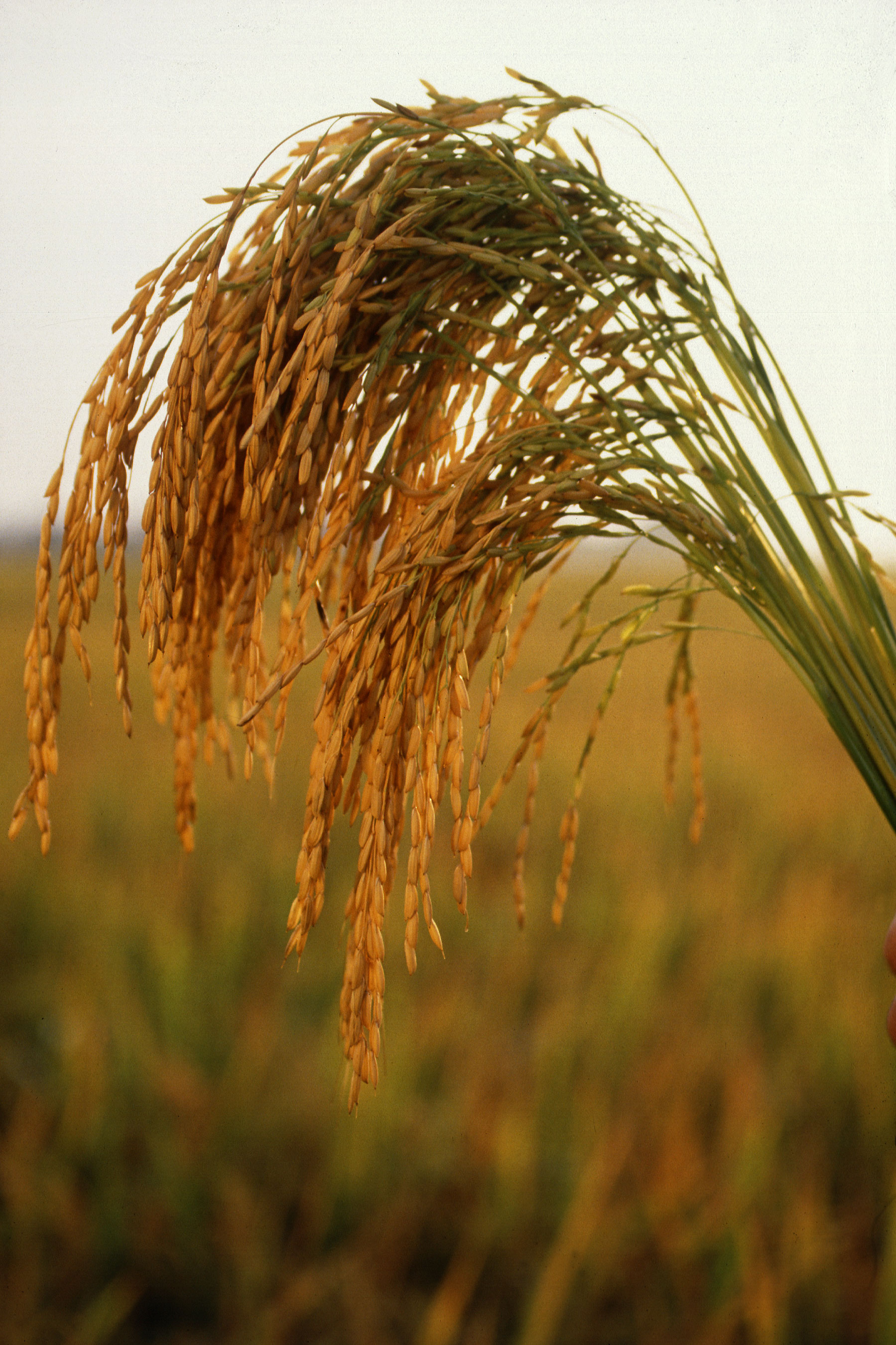
Image:US long grain rice.jpg

ARROZ, ¿QUE CARNE HAY?

Es alentadora la iniciativa de sembrar nuestro propio arroz (ver artículo de El Nuevo Día al final de este mensaje). Esperemos que quienes lo siembren no caigan en los errores de la llamada revolución verde y el uso de cepas de arroz híbrido. El muy celebrado arroz híbrido fue inventado por el Instituto Internacional para la Investigación del Arroz (IRRI) en Filipinas, una de las principales instituciones de la revolución verde.

Contrario a lo que dicen IRRI y las transnacionales del agronegocio, el arroz híbrido ha sido todo un fiasco. Los altos rendimientos y grandes ganancias que se le prometieron a los agricultores no se materializaron. Quienes único se beneficiaron fueron las compañías vendedoras de semilla, ya que la cosecha de la semilla híbrida no sirve como semilla y por lo tanto el agricultor se ve obligado a comprar semilla todos los años.

La organización internacional GRAIN investigó el supuesto éxito del arroz híbrido y documentó los hechos en este detallado informe: http://www.grain.org/briefings/?id=190 En respuesta, los partidarios de la revolución verde señalaron que en China el arroz híbrido sí fue un éxito. Pero GRAIN investigó y desenmascaró la farsa en este informe: http://www.grain.org/seedling/?id=455

Puerto Rico debe desarrollar sus propias variedades de arroz, y no contar para nada con IRRI. Tales variedades deberán ser no híbridas y adaptadas a las condiciones particulares de nuestro país.

CARMELO RUIZ MARRERO
Proyecto de Bioseguridad de Puerto Rico

=====

http://carmeloruiz.blogspot.com/
---------------------------------------------Polished Indian sona masuri rice.
Japanese short-grain rice


La Isla puede producir su propio arroz

Ya lo hizo en los años 80 cuando lo mercadeó bajo la marca D’Aquí.

Por Aura N. Alfaro / aalfaro@elnuevodia.com / 12 abril 2008

Al igual que la República Dominicana , Puerto Rico podría producir arroz para su consumo, según lo hizo de 1977 a 1985.

Así lo aseveró el procurador del Ciudadano, Carlos López Nieves, quien era el secretario de Agricultura entonces, cuando se creó la marca DÁquí.

“Podemos estudiar la posibilidad de hacerlo, porque en aquel entonces había voluntad de hacerlo y se hizo. Hay que ver en qué estado están y qué costaría readquirir el molino y poner los terrenos al día”, dijo el funcionario.

López, quien ordenó que se abandonara el proyecto, sostuvo que en aquel momento existía una situación contraria a la actual: cosechas abundantes, bajos precios a nivel mundial y altos intereses en el costo del financiamiento local, hasta de un 20%.

Según López, aún existe el molino en Arecibo y las tierras que se nivelaron con la tecnología láser en Vega Baja, Manatí, Barceloneta y Arecibo. Además, existe un sistema de riego.

En entrevista con El Nuevo Día, Heriberto Martínez Torres, ex secretario de Agricultura y quien impulsó el proyecto en su origen, informó que unos 14 agricultores lograron sembrar 4,000 cuerdas, de un total de 16,000 que se esperaban cultivar, para ser viable.

La idea era competir con los productores de California y Louisiana, los suplidores principales de Puerto Rico.

“Tan pronto iniciamos el proyecto, la importadora J. Goss Lalande bajó sus precios en los supermercados locales y comenzó a amenazarnos con inundar el mercado (con arroz)”, dijo Martínez.

Por su parte, el entonces subsecretario de Agricultura, Antonio Vélez Ramos, señaló que el molino, que estuvo en manos de la compañía Comet Rice, costó $7 millones, y la inversión total en el proyecto sumó $20 millones.

La venta posterior del molino a una entidad privada incluyó la marca del arroz D’Aquí, que aún se encuentra en el mercado local.

“Para mí que se perdió interés en el proyecto, pero fue posible”, dijo Vélez.

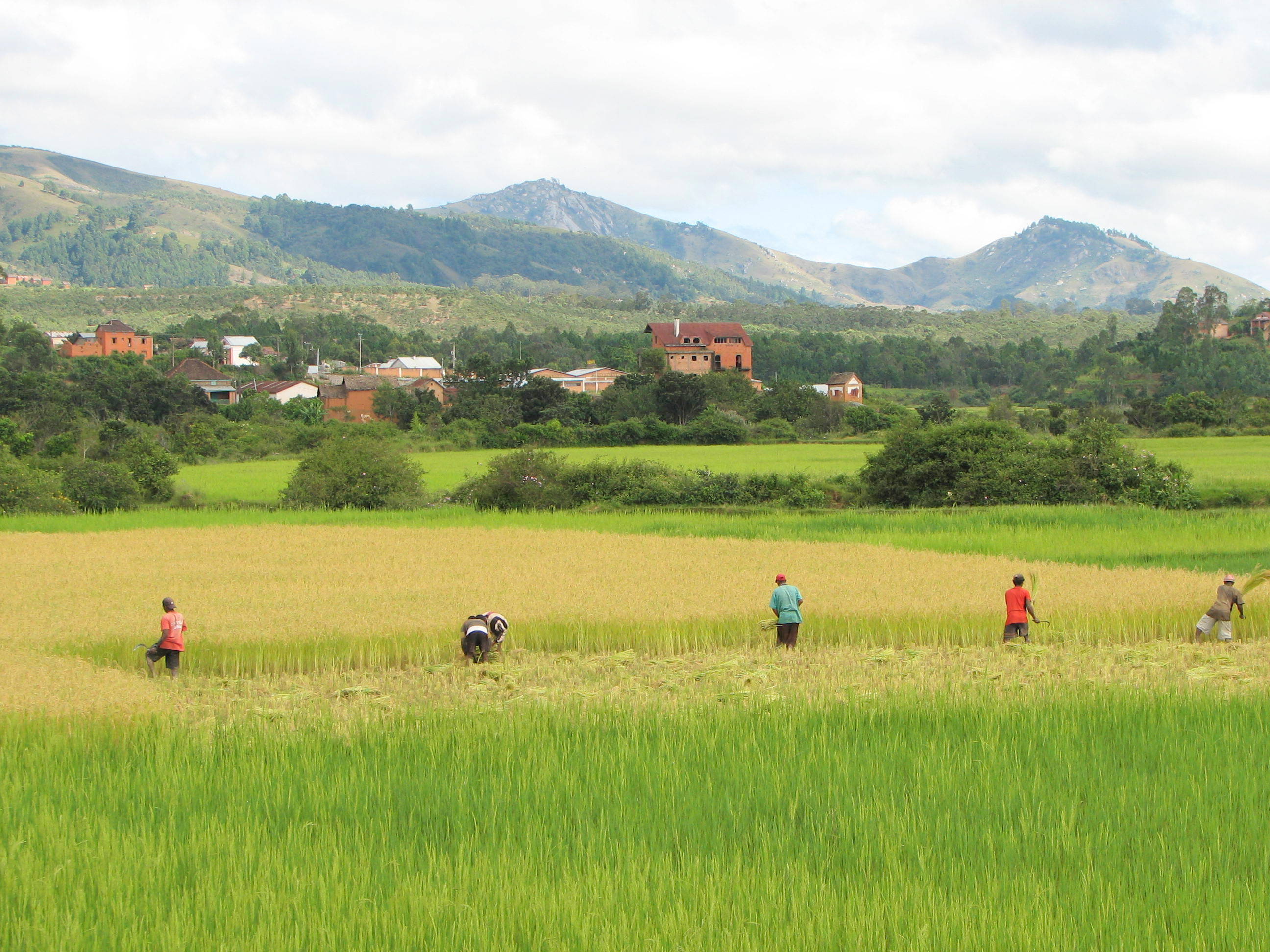
Image:Ambositra 04.jpg

Etiquetas: , ,

lunes, abril 28, 2008

Escaramuzas por la comida en América Latina

Laura Carlsen | 14 de abril de 2008

Por primera vez desde que las hambrunas generalizadas arrasaron con poblaciones completas, se están experimentando serias dudas acerca del abastecimiento global alimenticio a través del mundo.

El problema esta vez no es tanto una cuestión de la cantidad de comida producida (como si lo hubiese sido jamás), sino acerca de para qué se utilizarán los terrenos productivos, quién nos dará de comer, y quién va a comer.

En Argentina, los productores de soya bloquearon carreteras para protestar un aumento de impuestos sobre las exportaciones que el gobierno de la presidenta Cristina Fernández de Kirchner ha gravado. Los productores de soya han cosechado una bonanza financiera durante los últimos años, gozando de una zafra de precios altos con el apoyo completo del gobierno, desplazando a los pequeños productores agrícolas de sus tierras. Mientras volaban insultos entre los políticos y los exportadores, los consumidores urbanos estaban padeciendo escasez de alimentos debido a la interrupción en el transporte de comida entre el campo y las ciudades.

En Bolivia, los productores del aceite de cocinar se manifestaron en contra de la prohibición temporal gubernamental de exportaciones. El gobierno boliviano del presidente Evo Morales ha congelado las exportaciones hasta que la demanda doméstica se pueda satisfacer a precios alcanzables. Los productores en la provincia de Santa Cruz usaron la ocasión para reiterar demandas para la autonomía regional e intensificaron su oposición a las políticas de bienestar social del gobierno.

En México, los cabilderos de las empresas de la biotecnología se acercaron un paso más a la legalización en el país del maíz transgénico (GM por sus siglas en inglés), con nuevas reglas que se establecerían según una nueva ley de bioseguridad confeccionada para saciar sus intereses. Las organizaciones de campesinos advirtieron que las medidas amenazan las variedades nativas de maíz, el pan de cada día para muchos y la soberanía nacional alimenticia. Entre el maíz transgénico y las variedades nativas ocurre la polinización cruzada natural, lo cual crea contaminación genética de variedades que los campesinos indígenas han desarrollado a través de los siglos. Su uso también ocasiona la dependencia de los campesinos en las compañías transnacionales de semillas, en vez de fiarse de las prácticas de guardar semillas como se ha hecho por miles de años.

Cada uno de estos conflictos se encuentra inmiscuido en su propio escenario político complejo. Pero tienen algo en común: son parte de una batalla por el futuro de la comida y la agricultura. Según los precios de los artículos básicos siguen elevándose grandemente, los campesinos en vez de gozar de los beneficios, se hallan enfrentándose a nuevas amenazas a su capacidad de ganarse la vida.

Un informe reciente de la Comisión Económica y Social para Asia y el Pacífico de la Organización de las Naciones Unidas (CESPAP) advierte que los precios globales de la comida van a permanecer altos. El informe le echa la culpa en parte al auge de los biocombustibles por los costos de comida en aumento.

"Ya que las fuentes principales para los biocombustible son los granos y las semillas de las cuales se devenga aceite, el precio creciente del petróleo ejerció gran impulso en la marcha hacia arriba de los precios de las materias primas agrícolas en el 2007, los cuales gozaron de sus mejores niveles en casi 30 años. Cuando el petróleo alcanzó $100 por barril en enero del 2008, los precios de la soya alcanzaron su nivel más alto en 34 años, los precios del maíz se acercaron a su precio más alto reciente durante los últimos 11 años, los precios del trigo estaban justo debajo de su precio más alto de todos los tiempos, los precios de las semillas de colza se elevaron a niveles record y los futuros de aceite de palma alcanzaron un nivel de alto histórico". El informe concluye aseverando que "Los gobiernos necesitan considerar cuidadosamente el impacto que tienen los biocombustibles en los pobres".

Otros factores que se han juntado para crear la crisis del abastecimiento alimenticio incluyen el cambio climático, la concentración en la producción y el mercadeo, el desparrame urbano en crecimiento, la erosión y contaminación de los recursos naturales, la demanda mayor para ganadería y políticas gubernamentales que han hecho que la labranza de los pequeños productores agrícolas—hasta el día de hoy la fuente de la mayoría del abastecimiento alimenticio del mundo—una actividad económica "nocompetitiva" (y por lo tanto noviable).

Todo esto trae a colación el problema de quién tiene acceso a la comida. Con los precios internacionales en aumento, el acceso de facto a los alimentos básicos para los pobres está en peligro.

La ONU ha pronosticado que los precios globales de la comida van a aumentar a razón de 20-50% para el 2016. Las alzas en los alimentos básicos afecta n de peor manera a los pobres en zonas urbanas, ya que el acceso a la comida es precario y se ven forzados a gastar un porcentaje más alto de sus ingresos totales en darle de comer a sus familias.

Cuando esto ocurre, los gobiernos tienen que volver a plantearse su dependencia en el mercado internacional para la comida y tienen que volver a considerar las políticas que fomentan el uso de la tierra para producir los cultivos industriales para la exportación. Bolivia no es el único país que ha tenido que recurrir a las prohibiciones de exportaciones. Enfrentándose a una escasez seria de arroz y preciso altos, Cambodia, India y Egipto en efecto han prohibido las exportaciones, y Vietnam ha impuesto límites en las exportaciones. Las Filipinas, sin poder satisfacer su propia demanda, ha tenido que implorar por recortes en su consumo.

También ya es más que tarde para que las instituciones de gobierno global le den un vistazo bien detenido a los costos humanos implicados al permitirle a un puñado de empresas transnacionales controlar una cantidad tan grande del abastecimiento global alimenticio. La crisis de la tortilla en México resultó ser un problema mayormente de control especulativo de la oferta en vez de un problema verdadero de oferta y demanda.

Sin embargo, el poder económico de las compañías agrícolas industriales ha crecido tanto en los últimos años, que los intentos del gobierno o la sociedad civil para salvaguardar el abastecimiento alimenticio se han topado con resistencia que posiblemente conlleve la desestabilización. A menos que los gobiernos se aferren a su derecho de dictar normas con respecto al abastecimiento alimenticio, estas escaramuzas pudieran resultar en una guerra total.


Versión original: Food Fights
Traducción por: Annette Ramos

Laura Carlsen (lcarlsen@ciponline.org) es directora del Programa de las Américas en la Ciudad de México. El blog de las Américas México se encuentra en www.americasmexico.blogspot.com.

Etiquetas: , , , ,

Biotech Bets on Agrofuels

Carmelo Ruiz Marrero | April 24, 2008

http://americas.irc-online.org/am/5179


Americas Program, Center for International Policy (CIP)

There is a new participant in the international deliberations on global warming and agrofuels: the biotechnology industry. The corporate giants of the genetics industry propose new technologies, including genetically modified trees, second generation cellulosic ethanol, and synthetic biology, to wean society off fossil fuels and fight climate change.

The implications for Latin America are breathtaking. The biotechnology industry's massive move into the energy sector brings together major social and ecological issues in the region, such as agrofuel promotion, genetically modified (GM) crops, and the growth of agribusiness monocultures. Latin American civil society's aspirations of land reform, environmental protection, alternatives to neoliberalism, and food and energy sovereignty, are at stake.

Biotechnology companies have become some of the main movers in promoting the use of farm crops like corn, soy, and sugar cane to make fuel for motor vehicles. Faced with increasing public resistance to human consumption of their GM crops, the biotech industry sees its salvation in the production of GM agrofuels. By portraying GM crops as the answer to climate change and resource depletion caused by fossil fuels, they hope to cast a more favorable light on biotech plants.

They have a lot at stake: Monsanto, for example, obtains 60% of its revenue from the sale of GM seeds. Riding the tide of the biofuels boom, Monsanto and other companies hope to avoid the human health concerns associated with GM food crops and open up a whole new area of profit from the global warming crisis.

******

Agrofuels' Negative Environmental Balance Sheet

September 2007: The OECD releases a critical report titled "Biofuels: Is the Cure Worse than the Disease?" According to the document, the race toward energy crops threatens to cause food scarcity and harm biodiversity in exchange for very limited benefits. Its authors state that in the best of cases, agrofuels can reduce energy-related greenhouse gas emissions by no more than 3%.

October 2007: UN Right to Food rapporteur Jean Ziegler declares in the organization's headquarters in New York that the increasing use of food crops to make fuel constitutes a crime against humanity and calls for a five-year moratorium while sustainable alternatives are developed.

January 2008: Representatives of the Rainforest Action Network, Student Trade Justice Campaign, Food First, Global Justice Ecology, and Grassroots International protest in front of U.S. House Speaker Nancy Pelosi's office in San Francisco to request a moratorium on agrofuel incentives until they can be shown to be a definite improvement over fossil fuels and will not exacerbate world hunger.

Is there enough land on the planet to satisfy a significant part of world energy demand using first-generation agrofuels? Or will they exacerbate global warming and other environmental problems? How will agrofuel production affect indigenous and rural peoples?

According to GRAIN, a Europe-based NGO that advocates the protection of agricultural biodiversity, if the United States dedicated its whole corn and soy harvests to make fuel, it would cover less than one-eighth of its oil demand and barely 6% of its diesel demand. The figures are even more sobering considering the United States grows around 44% of the world's corn—more than China, the European Union, Brazil, Argentina, and Mexico combined. This means that if world corn production were to be quadrupled and dedicated entirely to ethanol production, it could satisfy U.S. demand, but would leave the rest of the world's motor vehicle fleet still running on oil, while drivers starved.

The situation in Europe does not look much better. In his 2007 book Heat: How to Stop the Planet from Burning, British researcher George Monbiot calculates that running all cars and buses in the United Kingdom on biodiesel would require 25.9 million hectares, but England has no more than 5.7 million hectares of farmland in total.

World agrofuel production must be quintupled to merely keep up with rising energy demand, according to the Interamerican Development Bank report "A Blueprint for Green Energy in the Americas." If this is achieved, agrofuels will cover 5% of world energy demand by 2020.

Various Latin America-based organizations, including Oilwatch South America and the Latin American Network against Tree Monocultures declared in 2006 that "energy crops will expand ... at the expense of our natural ecosystems. Soy is projected to be one of the main sources for diesel production, but it is a fact that soy monocultures are the main cause of the destruction of native forest in Argentina, the tropical Amazon rainforest in Brazil and Bolivia, and the Mata Atlántica in Brazil and Paraguay."

"Sugarcane plantations and ethanol production in Brazil are the business of an oligopoly that utilizes slave labor," said the declaration, titled "The Land Should Feed People, Not Cars." "Palm oil plantations grow at the expense of jungles and territories of indigenous populations and other traditional populations of Colombia, Ecuador, and other countries, increasingly oriented to biodiesel production."

One of the signatory organizations, the World Rainforest Movement, affirmed in early 2007 that "the cultivation of these fuels means death. Death of entire communities; death of cultures; death of people; death of nature. Be these oil palm or eucalyptus plantations, be these sugarcane or transgenic soybean monoculture plantations, be they promoted by 'progressive' or 'conservative' governments. Death."

"All of these crops, and all of this monoculture expansion, are direct causes of deforestation, eviction of local communities from their lands, water and air pollution, soil erosion, and destruction of biodiversity," stated GRAIN in 2007 in a manifesto titled "Stop the Agrofuels Craze!" "They also lead, paradoxically, to a massive increase of CO2 emissions, due to the burning of the forests and peat lands to make way for agrofuel plantations."

"In a country like Brazil, way ahead of everybody else in producing ethanol for transport fuel, it turns out that 80% of the country's greenhouse gases come not from cars but from deforestation, partly caused by the expanding soya and sugarcane plantations. Recent studies have shown that the production of one ton of palm-oil biodiesel from peatlands in Southeast Asia creates 2-8 times more CO2 than is emitted by burning one ton of fossil-fuel diesel. While scientists debate whether the 'net energy balance' of crops such as maize, soya, sugar cane, and oil palm is positive or negative, the emissions caused by the creation of many of the agrofuels plantations send any potential benefit, literally, up in smoke."

Some 260 representatives of over 100 organizations, including civil society and academia, from Brazil, United States, Europe, El Salvador, Uruguay, Chile, Costa Rica, and all regions of Mexico, met in Mexico City in August 2007 for a forum on agrofuels and food sovereignty. The forum's conclusions were hardly flattering to the agrofuels industry.

"In a context of crisis in the countryside and of campesino and indigenous agriculture, of agrarian conflicts against communities and the ejido, of attempts to privatize water and the resources of communities, agrofuels can be a new threat of the neoliberal model," said their final declaration. "We declare ourselves in permanent defense of peasant and indigenous territories, the ejido, and the community. We will not permit the expansion of crops for agroindustrial fuels at the expense of the dispossession of their territories and resources. We revindicate again the demand for recognition of the rights of indigenous peoples and their right to self-determination."

Next in this series, Next Generation Agrofuels.

Etiquetas: , , ,

domingo, abril 27, 2008

The Pentagon Strangles Our Economy: Why the U.S. Has Gone Broke

http://www.alternet.org/story/83555/

By Chalmers Johnson, Le Monde diplomatique. Posted April 26, 2008.


60 years of enormous military spending is taking a dramatic toll on the rest of the economy.

The military adventurers in the Bush administration have much in common with the corporate leaders of the defunct energy company Enron. Both groups thought that they were the "smartest guys in the room" -- the title of Alex Gibney's prize-winning film on what went wrong at Enron. The neoconservatives in the White House and the Pentagon outsmarted themselves. They failed even to address the problem of how to finance their schemes of imperialist wars and global domination.

As a result, going into 2008, the United States finds itself in the anomalous position of being unable to pay for its own elevated living standards or its wasteful, overly large military establishment. Its government no longer even attempts to reduce the ruinous expenses of maintaining huge standing armies, replacing the equipment that seven years of wars have destroyed or worn out, or preparing for a war in outer space against unknown adversaries. Instead, the Bush administration puts off these costs for future generations to pay or repudiate. This fiscal irresponsibility has been disguised through many manipulative financial schemes (causing poorer countries to lend us unprecedented sums of money), but the time of reckoning is fast approaching.

There are three broad aspects to the U.S. debt crisis. First, in the current fiscal year (2008) we are spending insane amounts of money on "defense" projects that bear no relation to the national security of the U.S. We are also keeping the income tax burdens on the richest segment of the population at strikingly low levels.

Second, we continue to believe that we can compensate for the accelerating erosion of our base and our loss of jobs to foreign countries through massive military expenditures -- "military Keynesianism" (which I discuss in detail in my book Nemesis: The Last Days of the American Republic). By that, I mean the mistaken belief that public policies focused on frequent wars, huge expenditures on weapons and munitions, and large standing armies can indefinitely sustain a wealthy capitalist economy. The opposite is actually true.

Third, in our devotion to militarism (despite our limited resources), we are failing to invest in our social infrastructure and other requirements for the long-term health of the U.S. These are what economists call opportunity costs, things not done because we spent our money on something else. Our public education system has deteriorated alarmingly. We have failed to provide health care to all our citizens and neglected our responsibilities as the world's number one polluter. Most important, we have lost our competitiveness as a manufacturer for civilian needs, an infinitely more efficient use of scarce resources than arms manufacturing.

Fiscal disaster

It is virtually impossible to overstate the profligacy of what our government spends on the military. The Department of Defense's planned expenditures for the fiscal year 2008 are larger than all other nations' military budgets combined. The supplementary budget to pay for the current wars in Iraq and Afghanistan, not part of the official defense budget, is itself larger than the combined military budgets of Russia and China. Defense-related spending for fiscal 2008 will exceed $1 trillion for the first time in history. The U.S. has become the largest single seller of arms and munitions to other nations on Earth. Leaving out President Bush's two on-going wars, defense spending has doubled since the mid-1990s. The defense budget for fiscal 2008 is the largest since the second world war.

Before we try to break down and analyze this gargantuan sum, there is one important caveat. Figures on defense spending are notoriously unreliable. The numbers released by the Congressional Reference Service and the Congressional Budget Office do not agree with each other. Robert Higgs, senior fellow for political economy at the Independent Institute, says: "A well-founded rule of thumb is to take the Pentagon's (always well publicized) basic budget total and double it." Even a cursory reading of newspaper articles about the Department of Defense will turn up major differences in statistics about its expenses. Some 30-40% of the defense budget is 'black,'" meaning that these sections contain hidden expenditures for classified projects. There is no possible way to know what they include or whether their total amounts are accurate.

There are many reasons for this budgetary sleight-of-hand -- including a desire for secrecy on the part of the president, the secretary of defense, and the military-industrial complex -- but the chief one is that members of Congress, who profit enormously from defense jobs and pork-barrel projects in their districts, have a political interest in supporting the Department of Defense. In 1996, in an attempt to bring accounting standards within the executive branch closer to those of the civilian economy, Congress passed the Federal Financial Management Improvement Act. It required all federal agencies to hire outside auditors to review their books and release the results to the public. Neither the Department of Defense, nor the Department of Homeland Security, has ever complied. Congress has complained, but not penalized either department for ignoring the law. All numbers released by the Pentagon should be regarded as suspect.

Etiquetas: ,

LA AGRICULTURA MODERNA CONDUCE AL DESASTRE ECOLÓGICO Y HUMANO

Por Hans R. Herren (*)

WASHINGTON DC, Abr (IPS) Para la mayoría de la gente en el mundo industrializado y en las clases media y alta de los países en desarrollo, la agricultura moderna puede ser considerada como un acontecimiento exitoso sin precedentes en la historia de la humanidad, pero la cruda realidad contradice ese juicio.

Entre 1960 y 2000 la población mundial se duplicó al pasar de 3.000 a 6.000 millones de personas, mientras la producción de alimentos se incrementó en 2 ½ veces. Los beneficiarios de esta munificencia saben que sus alimentos son seguros y variados. Sin embargo, esos beneficios estás distribuidos desigualmente y llegan a un precio cada vez más alto para los pequeños agricultores, los trabajadores, las comunidades rurales y el ambiente. Por lo tanto, es necesario un cambio en la ciencia y en la tecnología de la agricultura.

La agricultura moderna, tal como hoy se practica en el mundo, significa que nos estamos devorando nuestro patrimonio. Está explotando excesivamente el suelo, nuestro recurso natural básico, y es insostenible porque hace un uso intensivo tanto de la energía proveniente de los combustibles de origen fósil como del capital, al mismo tiempo que básicamente no tiene en cuenta los efectos externos de su actividad. A esto se ha agregado recientemente el empleo de algunos productos básicos como el maíz para producir biocombustibles, llevando a las nubes los precios de esos productos. El mundo en desarrollo va en la misma dirección, salvo que hace un uso menos intensivo del capital y emplea en su mayor parte energía humana.

Un estudio elaborado durante cuatro años, la Evaluación Internacional de la Ciencia y la Tecnología Agrícolas para el Desarrollo (IAASTD), fue acometido por iniciativa de la Cumbre Mundial para el Desarrollo Sostenible realizada por el Banco Mundial y la Organización de las Naciones Unidas para la Agricultura y la Alimentación (FAO) en 2002 en Johanesburgo. El informe final de este estudio será divulgado el 15 de abril en Londres, Washington y Nairobi.

Nuestro cometido era el de analizar no sólo la producción de alimentos aisladamente sino también en relación al hambre, la pobreza, el ambiente y la equidad en relación. De modo que nos propusimos estudiar de qué modo la sabiduría agrícola acumulada de la humanidad –conocimientos, ciencia y tecnología- nos ha conducido durante el último medio siglo a la actual situación. También debíamos sugerir opciones para enfrentar los conocidos desafíos de cómo alimentarnos de un modo sostenible tanto social como ambientalmente en los próximos 50 años. Hemos llegado a la conclusión de que sin cambios radicales en el modo en el que el mundo produce sus alimentos el planeta sufrirá daños duraderos.

Nuestro informe es abiertamente a favor de los pobres. Toda nuestra evaluación rotó alrededor de los objetivos de rediseñar la agricultura para reducir la pobreza y mejorar las condiciones de la vida rural y la salud humana. Pero eso no nos hace enemigos de los ricos, aunque debemos reconocer que algunos pueblos están consumiendo más de lo que les correspondería de existir un reparto equitativo de los recursos del planeta. En el informe decimos explícitamente que China e India están ahora compitiendo seriamente por porciones cada vez más grandes de los recursos naturales globales, tal como lo han hecho los países desarrollados durante muchas décadas. La realidad es que cada país necesita vivir de acuerdo con sus medios, de modo que América del Norte y Europa deberían hacer ajustes al respecto y aprender a hacer más con menos.

Una de nuestras conclusiones es que los países más pobres del mundo son netos perdedores en la mayoría de los escenarios de la liberalización comercial. Identificamos algunas “actitudes políticas y económicas conflictivas”. Específicamente, ello se refiere a los muchos países desarrollados que se oponen profundamente a cualquier cambio en los regímenes de comercio o en los sistemas de subsidios. Sin reformas en estos aspectos muchos países más pobres tendrán tiempos muy difíciles porque necesitan en primer lugar proteger su propio desarrollo.

También somos críticos acerca de la agricultura de las grandes corporaciones orientada al lucro, que continúa prosperando en el no reformado sistema que tenemos actualmente. Este sistema mantiene su dominio en el Norte y ahora está siendo exportado cada vez más hacia los países pobres del Sur.

El informe está dirigido a los hacedores de políticas que deben tomar decisiones financieras y también al público en general. En muchos países los alimentos son algo que en gran parte se da por sentado que están disponibles, mientras que los agricultores son pobremente recompensados por su papel consistente en poner los comestibles en la mesa. Las inversiones en ciencia agrícola y su extensión a los agricultores han disminuido a lo largo del tiempo, aunque siguen siendo urgentemente necesarios el desarrollo y la difusión de soluciones sostenibles, ambientalmente seguras y equitativas para la producción de alimentos.

Si seguimos con las actuales tendencias en materia de producción de alimentos agotaremos nuestros recursos naturales y pondremos en peligro el futuro de nuestros niños. Invertir en nuestro sustento debería ser el más básico empeño de la humanidad.

(*) Hans R. Herren, copresidente de
la Evaluación Internacional de la Ciencia y la Tecnología Agrícolas para el Desarrollo (IAASTD) y presidente del Millenium Institute.

Etiquetas: ,

| |

Amigos de la Tierra rechaza la mesa redonda de "soja responsable"

Amigos de la Tierra rechaza la mesa redonda de "soja responsable"

Descargar (6:07 minutos, 4.2 MB)

Comienza hoy en Buenos Aires, capital de Argentina, la tercera reunión de la Mesa Redonda sobre Soja Responsable, en el medio de manifestaciones de repudio a ese proceso por parte de la sociedad civil organizada.

El polémico encuentro reúne a corporaciones transnacionales cerealeras y biotecnológicas, instituciones financieras internacionales, supermercados europeos, asociaciones de grandes productores y organizaciones conservacionistas, entre otros actores.

Unas 200 organizaciones rechazan la actividad, a la que califican como un “lavado verde corporativo”. Cuestionan además el rol del agronegocio por ser responsable de la devastación de suelos, de la deforestación, la desaparición de la biodiversidad, la expoliación del patrimonio natural y la eliminación de la agricultura familiar.

» leer más

Etiquetas: , ,

sábado, abril 26, 2008

¿CUAL ES LA NUEVA AGRICULTURA?

Carmelo Ruiz Marrero
17 de abril 2008

El que un medio noticioso tan importante como El Nuevo Día haya dedicado un editorial a la agricultura nacional es de por sí una buena noticia. Pero preocupa un tanto la ausencia total de un discurso crítico ante la agricultura convencional industrializada. Es especialmente preocupante su llamado a "producción intensiva mediante nuevas tecnologías". ¿Significa esto darle el "fast track" al uso de transgénicos, clonación, nanotecnología, pesticidas, herbicidas, antibióticos y hormonas de crecimiento en la producción de cultivos y carnes?

El discurso crítico en torno al agro es más importante y oportuno que nunca hoy 17 de abril, día internacional de la lucha campesina, día en que pequeños agricultores en decenas de países están realizando manifestaciones en contra de las transnacionales del agronegocio, los transgénicos, la privatización de las semillas mediante patentes, y el neoliberalismo, y en pro de la agricultura ecológica, la reforma agraria y la soberanía alimentaria, proponiendo soluciones a la crisis de los alimentos y el calentamiento global. (Vean la página web http://www.viacampesina.org/main_sp/)

La visión crítica de la agricultura recibió tremendo impulso esta semana con la publicación del informe del IAASTD, un cuerpo internacional compuesto por cientos de expertos reconocidos que estudiaron exhaustivamente la agricultura mundial y sus problemas. Su informe, ratificado por 54 gobiernos en una conferencia en Suráfrica, denuncia de manera contundente el fracaso de la agricultura industrializada, supuestamente moderna, y da al traste con las pretensiones de la industria de la biotecnología de poner fin al hambre en el mundo con sus cultivos transgénicos. El informe vindica lo que los ecologistas y agricultores orgánicos llevamos años diciendo. Para más información: http://bioseguridad.blogspot.com/search/label/IAASTD

Debemos decir SI a una nueva agricultura, pero con un diálogo crítico y un ojo escéptico ante los vendedores de pesticidas y semillas transgénicas.

CARMELO RUIZ MARRERO
Proyecto de Bioseguridad de Puerto Rico


Por una nueva agricultura

El Nuevo Día (Editorial)

miércoles, 16 de abril de 2008

El lamento que se escucha por doquier en labios de los consumidores es lo mucho que se han encarecido los productos y servicios, en particular los alimentos, situación que ha ido poco a poco erosionando el poder adquisitivo de los puertorriqueños.

En algunos casos, las alzas se deben a factores exógenos sobre los cuales el País tiene poco control o ninguno. Por ejemplo, la devaluación del dólar frente a monedas como el yuan, el euro y la libra esterlina, y el incremento en el precio del petróleo que ha tenido un efecto multiplicador en todos los sectores de actividad económica.

Empero, en otros renglones como en el de los alimentos, Puerto Rico tiene ante sí una valiosísima herramienta que ayudaría a estabilizar los costos y los precios, al tiempo que se reduce nuestra dependencia en la importación de comestibles, que actualmente fluctúa en un 71%. Esa herramienta es la revitalización de la agricultura.

Desafortunadamente, la agricultura en Puerto Rico es un área de actividad económica que ha sido relativamente ignorada en las últimas décadas. Nuestra excesiva dependencia del mercado exterior nos ha hecho vulnerables a los caprichos y eventos climáticos en los países de origen de los productos alimenticios que importamos.

Cuando se adoptó la política de industrialización en la década de 1940, ese rumbo ayudó a transformar al País pero, ya fuese por diseño o por omisión, la promoción industrial se hizo en detrimento del sector agrícola, que en esa época generaba 229,000 empleos.

Es tanto lo que se ha estigmatizado este sector que hoy día muy pocos ven el cultivo de la tierra como una alternativa adecuada de trabajo y sustento. Al presente, el empleo agrícola es ínfimo, con apenas 14,000 trabajadores, según cifras del Departamento del Trabajo, aunque otras estadísticas lo colocan en 50,000 entre empleos directos e indirectos.

No deja de asombrar que, aun con las limitaciones existentes, este sector aporta el 4.1% del producto interno bruto y el 6.4% del producto bruto nacional, cuando todavía la mayoría de los créditos e incentivos gubernamentales se otorgan al sector industrial.

Pero los tiempos demandan que se desarrolle una visión distinta de política pública que ayude a promover los cultivos y la agroindustria en Puerto Rico y a impulsar al sector agrícola hacia uno de producción intensiva mediante nuevas tecnologías.

Como parte de este esfuerzo la protección de terrenos agrícolas es vital. Según el último censo agrícola federal, que cubre el periodo entre 1998 y el 2002, la Isla perdió 20% del terreno dedicado a uso agrícola, equivalente a 174,791 cuerdas. Algunas sencillamente se dejaron de cultivar y otras, originalmente zonificadas para uso agrícola, fueron rezonificadas por la Junta de Planificación para usos urbanos.

No obstante todavía un tercio de toda la extensión territorial de Puerto Rico, unas 690,687 cuerdas, es cultivable. Sabemos que no podemos producir todo lo que consumimos, pero un sector agrícola fuerte y modernizado ayudaría a combatir el desempleo, contribuiría a controlar los precios de los comestibles y daría disponibilidad de alimentos en caso de emergencia.

¿Por qué estamos importando plátanos, viandas, arroz y otros productos alimentarios cuando en otros tiempos éramos nosotros los que exportábamos nuestras cosechas?

Urge que dejemos de ver la agricultura como una estampa del pasado.

Etiquetas: , ,

The World Food Crisis

The only surprising thing about the global food crisis to Jim Goodman is the notion that anyone finds it surprising. "So," says the Wisconsin dairy farmer, "they finally figured out, after all these years of pushing globalization and genetically modified [GM] seeds, that instead of feeding the world we've created a food system that leaves more people hungry. If they'd listened to farmers instead of corporations, they would've known this was going to happen." Goodman has traveled the world to speak, organize and rally with groups such as La Via Campesina, the global movement of peasant and farm organizations that has been warning for years that "solutions" promoted by agribusiness conglomerates were designed to maximize corporate profits, not help farmers or feed people. The food shortages, suddenly front-page news, are not new. Hundreds of millions of people were starving and malnourished last year; the only change is that as the scope of the crisis has grown, it has become more difficult to "manage" the hunger that a failed food system accepts rather than feeds.

The current global food system, which was designed by US-based agribusiness conglomerates like Cargill, Monsanto and ADM and forced into place by the US government and its allies at the World Bank, the International Monetary Fund and the World Trade Organization, has planted the seeds of disaster by pressuring farmers here and abroad to produce cash crops for export and alternative fuels rather than grow healthy food for local consumption and regional stability. The only smart short-term response is to throw money at the problem. George W. Bush's release of $200 million in emergency aid to the UN's World Food Program was appropriate, but Washington must do more. Rising food prices may not be causing riots in the United States, but food banks here are struggling to meet demand as joblessness grows. Congress should answer Senator Sherrod Brown's call to allocate $100 million more to domestic food programs and make sure, as Representative Jim McGovern urges, that an overdue farm bill expands programs for getting fresh food from local farms to local consumers.

Beyond humanitarian responses, the cure for what ails the global food system - and an unsteady US farm economy - is not more of the same globalization and genetic gimmickry. That way has left thirty-seven nations with food crises while global grain giant Cargill harvests an 86 percent rise in profits and Monsanto reaps record sales from its herbicides and seeds. For years, corporations have promised farmers that problems would be solved by trade deals and technology - especially GM seeds, which University of Kansas research now suggests reduce food production and the International Assessment of Agricultural Science and Technology for Development says won't end global hunger. The "market," at least as defined by agribusiness, isn't working. We "have a herd of market traders, speculators and financial bandits who have turned wild and constructed a world of inequality and horror," says Jean Ziegler, the UN's right-to-food advocate. But try telling that to the Bush Administration or to World Bank president (and former White House trade rep) Robert Zoellick, who's busy exploiting tragedy to promote trade liberalization. "If ever there is a time to cut distorting agricultural subsidies and open markets for food imports, it must be now," says Zoellick. "Wait a second," replies Dani Rodrik, a Harvard political economist who tracks trade policy. "Wouldn't the removal of these distorting policies raise world prices in agriculture even further?" Yes. World Bank studies confirm that wheat and rice prices will rise if Zoellick gets his way.

Instead of listening to the White House or the World Bank, Congress should recognize - as a handful of visionary members like Ohio Representative Marcy Kaptur have - that current trends confirm the wisdom of the Institute for Agriculture and Trade Policy's call for "an urgent rethink of the respective roles of markets and governments." That's far more useful than blaming Midwestern farmers for embracing inflated promises about the potential of ethanol - although we should re-examine whether aggressive US support for biofuels is not only distorting corn prices but harming livestock and dairy producers who can barely afford feed and fertilizer. Instead of telling farmers they're wrong to seek the best prices for their crops, Congress should make sure that farmers can count on good prices for growing the food Americans need. It can do this by providing a strong safety net to survive weather and market disasters and a strategic grain reserve similar to the strategic petroleum reserve to guard against food-price inflation.

Congress should also embrace trade and development policies that help developing countries regulate markets with an eye to feeding the hungry rather than feeding corporate profits. This principle, known as "food sovereignty," sees struggling farmers and hungry people and says, as the Oakland Institute's Anuradha Mittal observes, that it is time to "stop worshiping the golden calf of the so-called free market and embrace, instead, the principle [that] every country and every people have a right to food that is affordable." As Mittal says, "When the market deprives them of this, it is the market that has to give."

John Nichols is a co-founder of Free Press and the co-author with Robert W. McChesney of TRAGEDY & FARCE: How the American Media Sell Wars, Spin Elections, and Destroy Democracy - The New Press.

© 2008 The Nation

original story at: http://www.thenation.com/doc/20080512/nichols

Etiquetas: , , , ,

viernes, abril 25, 2008

Celebran Designación del

Corredor Ecológico Noreste como Reserva Natural


San Juan – La Coalición Pro Corredor Ecológico del Noreste recibió con júbilo la noticia de la aprobación de la Resolución de la Junta de Planificación designando oficialmente al Corredor Ecológico del Noreste como una Reserva Natural, por el Gobernador Aníbal Acevedo Vilá.

La designación del Corredor como Reserva Natural por la Junta de Planificación es la primera tarea que ordenaba la Orden Ejecutiva firmada por el Gobernador en octubre del año pasado, estableciendo como política pública la conservación de esta área natural.

“Nos place observar que las agencias administrativas están cumpliendo con las directrices de la Orden Ejecutiva aprobada el año pasado. En los próximos meses, esperamos poder evaluar el Plan Integral de Manejo y Usos de Terrenos para el Corredor, el cual delineará los pasos para el manejo de la conservación y el desarrollo ecoturístico de esta excepcional Reserva Natural”, indicó Camilla Feibelman, coordinadora del Sierra Club, una de las organizaciones pertenecientes a la Coalición.

La Coalición celebrará la designación como parte del Tercer Festival del Tinglar este sábado, 26 de abril de 10:00 am a 6:00 pm en la Plaza de Luquillo. En esta actividad se llevará a cabo una parada integrada por niños, titulada ¡Recréate en el Corredor!, y en la cual le darán la bienvenida de forma simbólica a los Tinglares como parte del inicio de la temporada de anidaje de estas tortugas marinas en peligro de extinción a las playas del Corredor. El Festival contará también con la música de Son de Almendro, Gomba Jahbari y Tito Auger con Eric Landrón, entre otros. También habrá kioscos y actividades educativas, comida natural y artesanías.

La designación del CEN como reserva natural ha recibido el endoso de agencias federales y estatales, entidades profesionales y empresariales, organizaciones conservacionistas internacionales, y grupos comunitarios, incluyendo gran parte del liderato religioso de la Isla, así como representantes de la comunidad puertorriqueña en los Estados Unidos. Personalidades como el actor Benicio del Toro, el abogado Robert F. Kennedy, hijo, y el Ing. Alexis Massol, quién es el primer puertorriqueño galardonado con el Goldman Environmental Prize, equivalente al premio Nóbel del Ambiente, también han declarado públicamente su apoyo a dicha iniciativa. En una acción inusual, la designación también ha sido favorecida por la inmensa mayoría de los legisladores de los tres partidos políticos.

Etiquetas: ,

¿Como que el arroz no es viable en nuestro país?

¿Que el arroz no es viable en
Puerto Rico? ¿Acaso la reportera y el administrador de ASDA no se han enterado de que existen fincas de arroz en el valle de Lajas de la compañía Rice Tec? Estas fincas suplen semilla de arroz a las plantaciones en California. En otras palabras, nosotros proveemos semilla de arroz a los gringos y ellos nos envían a cambio sacos de arroz con la etiqueta MADE IN USA.

Puerto Rico es además un importante centro ultramarino de propagación de semillas para la industria semillera y compañías de biotecnología- especialmente el área de Salinas y Santa Isabel-, que están agrupadas bajo la Asociación de Investigación de Semillas de Puerto Rico. Nosotros le proveemos semilla de soya y maíz a Estados Unidos.

En vista de estos hechos, ¿Cómo es posible que a alguien se le vaya a ocurrir decir que el arroz y el maíz no son viables en Puerto Rico?

CARMELO RUIZ
=====

http://carmeloruiz.blogspot.com/
http://bioseguridad.blogspot.com/


----- Original Message ----

Improbable producción de arroz en la Isla

Por: Marialba Martínez

El Vocero

24 de abril de 2008

A pesar que en Puerto Rico se consume 3.9 millones quintales de arroz anualmente proveniente de países como Estados Unidos, China, y Tailandia, producirlo localmente no se perfila como el mejor uso de los suelos de la Isla.

"Un intento de producción en escala comercial significativa a principios de la década de 1980, fracasó debido a los altos costos de producción locales, a que las condiciones de clima y suelos, en términos generales, no eran apropiados en la zona norte, y a los altos costos de infraestructura a nivel de finca requerida", dijo el agronomo. José A. Ruiz Hernández, administrador de Servicios y Desarrollo Agropecuario (ASDA), durante vistas publicas acerca del mercado del arroz en Puerto Rico de la Comisión de Asuntos Federales y del Consumidor del Senado de Puerto Rico.

Añadió Juan Bauzá Salas, administrador auxiliar de ASDA, que un estudio del proceso de producir arroz reveló que cuesta tres veces la producción de arroz que el importarlo de otros países. De acuerdo con Bauzá Salas, la economía de escala en Puerto Rico promueve agricultores con fincas de no más de 300 a 400 acres cuando en otros países tienen suficiente terreno para fincas de 10 veces este tamaño. Además, nuestros suelos son distintos y exigen que el agua se busque y se bombee desde pozos debajo de la tierra.

"Hasta el presente, a nivel mundial se proyecta un panorama de precios elevadísimos y se estiman podría desembocarse en una hambruna en muchos países con poca producción agrícola, dependientes de importaciones; pero Puerto Rico no ha tenido mayores problemas con la importación de arroz", dijo Ruiz Hernández. "Sin embargo, la sustitución de grandes áreas de terreno en los Estados Unidos para producir cosechas energéticas como maíz y soya, conjuntamente con los elevados precios de los combustibles para usos agrícolas, podría elevar más aun los precios y hasta crear una escasez, real o especulativa, del grano".

Desde enero 2007, hasta marzo 2008, el precio del arroz grano mediano, paquete de tres libras, ha subido de $1.37 a $1.46 en promedio mensual, de acuerdo a data recopilada por el Negociado de Estadísticas del Trabajo-División Coste de Vida del Departamento del Trabajo y Recursos Humanos.

"En días recientes, y a través de los medios de comunicación, los puertorriqueños hemos conocido de un nuevo aumento de 10% en los precios del arroz y un incremento adicional de 10% para el verano", dijo la licenciada Taina E. Matos Santos, Procuradora del Trabajo, en representación del Secretario Román Velasco González. "El reportaje indica que el principal producto alimenticio local, que se produce en su totalidad en el extranjero, ha aumentado un 69% durante los últimos tres años".

De acuerdo con un análisis hecho del Índice de Precios al Consumidor en Puerto Rico por la economista Mirta Olmo, entre enero y febrero de 2008 el precio de los cereales y productos de cereales aumentó 2.3% (arroz y pastas). Otro sendo análisis del Índice de Precios de Arroz con base de diciembre 2006 (=100) indica que en julio de 2007, el precio de arroz había aumentado 4.3%, subiendo 8.1% en diciembre 2007, y más recientemente, incrementando 12.1% a marzo 2008.

http://www.vocero.com/noticias.asp?s=Negocios&n=111515

Etiquetas: , ,

The ecological and social tragedy of crop-based biofuel production in the Americas

Miguel A Altieri
Professor of Agroecology
University of California, Berkeley

Elizabeth Bravo
Red por una América Latina Libre de Transgenicos
Quito, Ecuador


http://www.foodfirst.org/node/1662

The nations of the OECD—the Organization for Economic Cooperation and Development, who account for 56% of the planet’s energy consumption, are desperately in need of a liquid fuel replacement for oil. Worldwide petroleum extraction rates are expected to peak this year, and global supply will likely dwindle significantly in the next fifty years. There is also a great need to find substitutes for fossil fuels, which are one of the major contributors to global climate change through the emission of CO2 and other greenhouse gases.

Biofuels have been promoted as a promising alternative to petroleum. Industry, government and scientific proponents of biofuels claim that they will serve as an alternative to peaking oil, mitigate climate change by reducing greenhouse gas emissions, enhancing farmer incomes, and promoting rural development. But rigorous research and analysis conducted by respected ecologists and social scientists suggests that the large-scale industrial boom in biofuels will be disastrous for farmers, the environment, biodiversity preservation and consumers, particularly, the poor.

In this paper we address the ecological, social and economic implications of biofuel production. We argue that contrary to the false claims of corporations that promote these “green fuels,” the massive cultivation of corn, sugar cane, soybean, oil palm and other crops presently pushed by the fuel crops industry—all to be genetically engineered—will not reduce greenhouse gas emissions, but will displace tens of thousands of farmers, decrease food security in many countries, and accelerate the deforestation and environmental destruction of the Global South.


******


The energy crisis—driven by over-consumption and peak oil—has provided an opportunity for powerful global partnerships between petroleum, grain, genetic engineering, and automotive corporations. These new food and fuel alliances are deciding the future of the world’s agricultural landscapes. The biofuels boom will further consolidate their hold over our food and fuel systems and allow them to determine what, how and how much will be grown, resulting in more rural poverty, environmental destruction and hunger. The ultimate beneficiaries of the biofuel revolution will be grain merchant giants, including Cargill, ADM and Bunge; petroleum companies such as BP, Shell, Chevron, Neste Oil, Repsol and Total; car companies such as General Motors, Volkswagen AG, FMC-Ford France, PSA Peugeot-Citroen and Renault; and biotech giants such as Monsanto, DuPont, and Syngenta.

The biotech industry is using the current biofuel fever to greenwash its image by developing and deploying transgenic seeds for energy, not food production. Given the increasing public mistrust for and rejection of transgenic crops as food, biotechnology will be used by corporations to improve their image claiming that they will develop new genetically modified crops with enhanced biomass production or that contain the enzyme alfa-amilase which will allow the ethanol process to begin while the corn is still in the field—a technology they claim has no negative impacts on human health. The deployment of such crops into the environment will add one more environmental threat to those already linked to GMO corn which in 2006 reached 32.2 million hectares: the introduction of new traits into the human food chain as has already occurred with Starlink corn and rice LL601.

As governments are persuaded by the promises of the global biofuel market, they devise national biofuel plans that will lock their agro-systems into production based on large scale, fuel monocultures, dependent upon intensive use of herbicides and chemical fertilizers, thus diverting millions of hectares of valuable cropland from much needed food production. There is a great need for social analysis to anticipate the food security and environmental implications of the unfolding biofuel plans of small countries such as Ecuador. This country expects to expand sugarcane production by 50,000 hectares, and to clear 100,000 hectares of natural forests to give way to oil palm plantations. Oil palm plantations are already causing major environmental disaster in the Choco region of Colombia (Bravo 2006).

Clearly, the ecosystems of areas in which biofuel crops are being produced are being rapidly degraded, and biofuel production is neither environmentally and socially sustainable now nor in the future.

It is also worrisome that public universities and research systems (i.e. the recent agreement signed by BP and the University of California-Berkeley) are falling prey to the seduction of big money and the influence of politics and corporate power. In addition to the implications of the intrusion of private capital on the shaping of the research agenda and faculty composition—that erodes the public mission of universities in favor of private interests—it serves as an attack against academic freedom and faculty governance. These partnerships divert universities from engaging in unbiased research and preclude intellectual capital from exploring truly sustainable alternatives to the energy crisis and climate change.

There is no doubt that the conglomeration of the petroleum and biotech capital will increasingly decide the fate of the rural landscapes of the Americas. Only strategic alliances and coordinated action of social movements (farmers organizations, environmental and farm labor movements, NGOs, consumer lobbies, committed members of the academic sector, etc) can put pressure on governments and multinational companies to ensure that these trends are halted. More importantly, we need to work together to ensure that all countries retain the right to achieve food sovereignty via agroecologically-based, local food production systems, land reform, access to water, seeds and other resources and domestic farm and food policies that respond to the true needs of farmers and all consumers, especially the poor.


Etiquetas:

jueves, abril 24, 2008

La única soja responsable es menos soja. La Mesa Redonda sobre Soja Responsable impide las soluciones reales


Declaración de la Federación de Amigos de la Tierra Internacional: "La Federación de Amigos de la Tierra Internacional1 fuertemente rechaza el actual proceso de la Mesa Redonda sobre Soja Responsable (RTRS, por sus siglas en inglés). Esta mesa redonda no encara los grandes impactos sociales y ambientales de los cultivos de soja a escala industrial e impide las soluciones reales. La certificación provee una fachada de sustentabilidad para las corporaciones multinacionales y el agronegocio, que controlan la producción, el financiamiento, el comercio, el procesamiento y la promoción de los productos de soja, así como las soluciones reales. La certificación provee una fachada de sustentabilidad para las corporaciones multinacionales y el agronegocio, que controlan la producción, el financiamiento, el comercio, el procesamiento y la promoción de los productos de soja, así como las grandes corporaciones petroleras y de agrocombustibles, como Shell y British Petroleum."

22-4-08

Para acceder a este documento (formato PDF) haga clic sobre el enlace a continuación y descargue el archivo:

La única soja responsable es menos soja

Etiquetas:


www.oaklandinstit/3F6DE3FE.png

The Oakland Institute Reporter


Overhaul of Agriculture Systems Needed

In the midst of the growing world food crisis, International Assessment of Agricultural Science and Technology (IAASTD), an independent and multi-stakeholder international assessment of agriculture has concluded that a radical change is needed in agriculture policy and practice, in order to address hunger and poverty, social inequities and environmental sustainability questions.

The report's message is that the business-as-usual scenario of industrial farming, input and energy intensiveness, and marginalization of small-scale farmers, is no longer tenable. While past emphasis on production and yields had brought some benefits, this was at the expense of the environment and social equity. Moreover, there is a recognition that excessive and rapid trade liberalization can have negative consequences for food security, poverty alleviation and the environment.

The final report of IAASTD, the product of work of over 400 authors, was finalized at a meeting of over 50 governments held in Johannesburg 7-12 April 2008.

To read an analysis of the final report by the lead Author of IAASTD's East and South Asia and the Pacific Report, Lim Li Ching, a Senior Fellow at the Oakland Institute, Click Here (http://www.oaklandinstitute.org/?q=node/view/477 ).


###

The Oakland Institute is a progressive policy think tank working to increase public participation and promote fair debate on critical social, economic, environmental and foreign policy issues.

Etiquetas: , , ,

miércoles, abril 23, 2008

End Food-to-Fuel Diversion: The World Is Getting Hungry

by Lester Brown and Jonathan Lewis

The willingness to try, fail and try again is the essence of scientific progress. The same sometimes holds true for public policy.

It is in this spirit that we call upon Congress to revisit recently enacted federal mandates requiring the diversion of foodstuffs for production of biofuels.

These “food-to-fuel” mandates were meant to move America toward energy independence and mitigate global climate change. But the evidence irrefutably demonstrates that this policy is not delivering on either goal. In fact, it is causing environmental harm and contributing to a growing global food crisis.

Food-to-fuel mandates were created for the right reasons. The hope of using American-grown crops to fuel our cars seemed like a win-win-win scenario: Our farmers would enjoy the benefit of crop-price stability. Our national security would be enhanced by having a new domestic energy source. Our environment would be protected by a cleaner fuel.

But new evidence has shown that the justifications for these mandates were inaccurate.

It is now abundantly clear that food-to-fuel mandates are leading to increased environmental damage. First, producing ethanol requires huge amounts of energy — most of which comes from coal. Second, the production process creates a number of hazardous byproducts, and some production facilities are reportedly dumping these in local water sources.

Third, food-to-fuel mandates are helping drive up the price of agricultural staples, leading to significant changes in land use with major environmental harm. Here in the United States, farmers are pulling land out of the federal conservation program, threatening fragile habitats.

Increased agricultural production also means increased fertilizer use. The National Academy of Sciences reported last month that meeting the congressional food-to-fuel mandate by 2022 would lead to a 10 percent to 19 percent increase in the size of the Gulf of Mexico’s “dead zone” — an area so polluted by fertilizer runoff that no aquatic life can survive there.

Most troubling, though, is that the higher food prices caused in large part by food-to-fuel mandates create incentives for global deforestation, including in the Amazon basin.

The result is devastating: We lose an ecological treasure and critical habitat for endangered species, as well as the world’s largest “carbon sink.” And when the forests are cleared and the land plowed for farming, the carbon that had been sequestered in the plants and soil is released. Princeton scholar Tim Searchinger has modeled this impact and reports in Science magazine that the net impact of the food-to-fuel push will be an increase in global carbon emissions.

Meanwhile, the mandates are not reducing our dependence on foreign oil. Last year, the United States burned about a quarter of its national corn supply as fuel - and this led to only a 1 percent reduction in the country’s oil consumption.

Turning one-fourth of our corn into fuel is affecting global food prices. U.S. food prices are rising at twice the rate of inflation, hitting the pocketbooks of lower-income Americans and people living on fixed incomes.

Globally, the United Nations and other relief organizations are facing gaping shortfalls as the cost of food outpaces their ability to provide aid for the 800 million people who lack food security. Deadly food riots have broken out in dozens of nations in the past few months, most recently in Haiti and Egypt. World Bank President Robert Zoellick warns of a global food emergency.

The immediate necessary step is a major increase in global food aid. But beyond that, America must stop contributing to food price inflation through mandates that force us to use food to feed our cars instead of to feed people.

Taking these together — the environmental damage, the human pain of food price inflation, the failure to reduce our dependence on oil — it is impossible to avoid the conclusion that food-to-fuel mandates have failed.

Congress took a big chance on biofuels that, unfortunately, has not worked out. Now, in the spirit of progress, let us learn the appropriate lessons from this setback, and let us act quickly to mitigate the damage and set upon a new course that holds greater promise for meeting the challenges ahead.

Lester Brown is founder and president of the Earth Policy Institute. Jonathan Lewis is a climate specialist and lawyer with the Clean Air Task Force. They wrote this article for the Washington Post.

Etiquetas: ,

Entre la seguridad alimentaria y el precio del petróleo

El debate sobre biocombustibles

Gerardo Honty

En los últimos días ha recrudecido el debate sobre los llamados “biocombustibles”. La retórica de los argumentos se repite sin solución de continuidad, con discursos que siempre tienen a los pobres y al medio ambiente como centro de las preocupaciones pero manteniéndolos alejados de las decisiones. Desde las Naciones Unidas y otras instituciones se alerta sobre los combustibles derivados de la agricultura, los que en sentido estricto deben ser llamados “agrocombustibles”, para tener siempre presente su origen en cultivos alimentarios.

Pero en los últimos días, los cuestionamientos provienen desde varios frentes. Por un lado, el director del Fondo Monetario Internacional (FMI), Dominique Strauss-Kahn, le echó un poco de etanol al fuego al declarar que producir biocombustible a partir de alimentos planteaba "un verdadero problema moral", en momentos en que los países pobres se enfrentan a una grave crisis alimentaria. Desde otras tiendas, el presidente de Bolivia, Evo Morales, acaba de lanzar alertas similares contra estos productos.

El relator especial de la ONU para el Derecho a la Alimentación, el suizo Jean Ziegler, calificó (una vez más) la producción masiva de biocombustibles de "crimen contra la Humanidad", ya que el uso de tierras fértiles para producir carburantes reduce las superficies destinadas a los alimentos y provoca el aumento de sus precios.

En el marco de la 30a Conferencia Regional para América Latina y el Caribe de la FAO, celebrada en Brasilia, del 14 al 18 de abril, el presidente de Brasil, Lula da Silva retrucó: "El verdadero crimen contra la Humanidad será descartar a priori a los biocombustibles, y relegar a los países estrangulados por la falta de alimentos y energía a la dependencia y la inseguridad".

En el encuentro de FAO estaban presentes 33 países con el objetivo de analizar el problema del aumento de los precios de los productos básicos y su repercusión en la seguridad alimentaria. Sus conclusiones no han sido alentadoras. El director de FAO, Jacques Diouf, al finalizar la reunión sostuvo que la crisis de los precios de los alimentos en el mundo será prolongada: “se dice que si la producción (de alimentos) aumenta los precios bajan, pero no es eso lo que va a pasar”.

Destacó que el alza de los precios se debe a una suma de factores, entre ellos: subidas de precios de los fertilizantes (58 por ciento en los últimos 12 meses), aumento del precio del petróleo, y la acción de los “especuladores”, que se han lanzado a “buscar oportunidades” en los mercados de materias primas. A su juicio no hay escasez de alimentos sino obstáculos para que los más pobres accedan a ellos.

Juan García Cebolla, Coordinador de la Iniciativa América Latina y Caribe Sin Hambre refuerza lo que dice su director: “La Región en su conjunto produce el 30 por ciento más de lo que necesitaría para alimentar adecuadamente a toda su población. Esto significa que no es un problema de producción en términos generales aunque haya zonas donde producen menos de lo que consumen.” Según datos de la organización 52,4 millones de personas permanecen subnutridas en América Latina, nueve millones de las cuales son niñas y niños menores de cinco años de edad.

Lula afirmó ante la FAO que los biocombustibles no son el "villano" que amenaza la seguridad alimentaria de los países pobres, y que en cambio, son una herramienta para su desarrollo económico. A la vez se quejó de que se mencione tanto el impacto de la producción de biocombustibles en los alimentos y nadie cuestione “el impacto negativo del aumento del petróleo en los costos de producción, o que muy pocos se levantan contra el impacto nocivo de los subsidios y del proteccionismo en el sector agrícola" promovido por los países ricos.

En realidad y posiblemente sin darse cuenta, Lula coincidía con el mensaje de su archienemigo, el director de la FAO, Diouf, al sostener que los alimentos suben por una suma de factores diversos donde hay varios villanos, entre ellos el precio del petróleo. Ese valor se ha multiplicado por cinco en la última década si lo evaluamos en dólares y se ha cuadruplicado si los medimos en euros. No obstante el costo de producción del crudo no se ha modificado sustancialmente. ¿Quién está acumulando la ganancia?

Los mayores pozos petroleros no están en territorios de los países centrales ni las grandes reservas están en manos de las compañías privadas. El poco petróleo que queda está mayoritariamente en manos de empresas estatales en territorios del tercer mundo. Por lo tanto la pregunta clave es: ¿a dónde están yendo esos recursos?

La discusión presente sobre alimentos y agrocombustibles elude con su retórica lo principal: el problema no está solamente en qué se produce, sino en cómo se apropian la ganancias. No es solamente si la tierra alcanza o no para todos los cultivos, el problema también es cómo se organiza y quién controla la distribución de la producción y sus ganancias.

El razonamiento expuesto por el presidente brasileño –que forma parte de un imaginario colectivo mayor- es que los agricultores, en vez de producir alimentos, deben producir agrocombustibles para exportación. De esta manera los ingresos percibidos por la venta del biocombustible generarán los recursos para que los agricultores (entre otros pobres) compren los alimentos.

Sin embargo, por alguna razón, los ingresos nunca llegan a los agricultores pobres, principal preocupación en la retórica de las cumbres. Los dineros van quedando a lo largo de la larga cadena de producción, distribución y consumo donde otros se apropian de las ganancias. Y este es el verdadero “problema moral” y el auténtico “crimen contra la humanidad”.

Es probable que la gran demanda de biocombustibles tenga parte de la responsabilidad del aumento de los alimentos. No es cierto que tenga la responsabilidad de que la quinta parte de la población del mundo esté pasando hambre.


- G. Honty coordina la iniciativa en agrocombustibles (www.agrocombustibles.org) del Centro Latino Americano de Ecología Social (CLAES).


http://alainet.org/active/23652

Etiquetas: ,

En la era del post –petrolera

Movilizándonos para rescatar nuestro sistema alimentario

Miguel A. Altieri

La agricultura mundial está en una encrucijada. La economía global impone demandas conflictivas sobre las 1,500 millones de hectáreas cultivadas. No sólo se le pide a la tierra agrícola que produzca suficientes alimentos para una población creciente, sino también que produzca biocombustibles y que lo haga de una manera que sea ambientalmente sana, preservando la biodiversidad y disminuyendo la emisión de gases de invernadero, mientras aun represente una actividad económicamente viable para todos los agricultores.

Estas presiones están desencadenando una crisis del sistema alimentario global sin precedentes, la cual ya se empieza a manifestar en protestas por escasez de alimentos en muchos países de Asia y África. De hecho hay 33 países al filo de la inestabilidad social por la carencia y precio de los alimentos. Esta crisis que amenaza la seguridad alimentaria de millones de personas, es el resultado directo del modelo industrial de agricultura, que no solo es peligrosamente dependiente de hidrocarburos sino que se ha transformado en la mayor fuerza antrópica modificante de la biosfera. Las crecientes presiones sobre el area agrícola en disminución están socavando la capacidad de la naturaleza para suplir las demandas de la humanidad en cuanto a alimentos, fibras y energía. La tragedia es que la población humana depende de los servicios ecológicos (ciclos de agua, polinizadores, suelos fértiles, clima local benevolente, etc.) que la agricultura intensiva continuamente empuja más allá de sus límites.

Antes del fin de la primera década del siglo XXI, la humanidad está tomando consciencia rápidamente de que el modelo industrial capitalista de agricultura dependiente de petróleo ya no funciona para suplir los alimentos necesarios. Los precios inflacionarios del petróleo inevitablemente incrementan los costos de producción y los precios de los alimentos han escalado a tal punto que un dólar hoy compra 30% menos alimentos que hace un año. Una persona en Nigeria gasta 73% de sus ingresos en alimentos, en Vietnam 65% y en Indonesia 50%. Esta situación se agudiza rápidamente en la medida que la tierra agrícola se destina para biocombustibles y en la medida que el cambio climático disminuye los rendimientos vía sequías o inundaciones. Expandir tierras agrícolas a biocombustibles o cultivos transgénicos que ya alcanzan mas de 120 millones de hectáreas, exacerbará los impactos ecológicos de monocultivos que continuamente degradan los servicios de la naturaleza. Además, la agricultura industrial contribuye hoy con más de 1/3 de las emisiones globales de gases de invernadero, en especial metano y óxidos nitrosos. Continuar con este sistema degradante, como lo promueve un sistema económico neoliberal, ecológicamente deshonesto al no reflejar las externalidades ambientales no es una opción viable.

El desafío inmediato para nuestra generación es transformar la agricultura industrial e iniciar una transición de los sistemas alimentarios para que no dependan del petróleo.

Necesitamos un paradigma alternativo de desarrollo agrícola, uno que propicie formas de agricultura ecológica, sustentable y socialmente justa. Rediseñar el sistema alimentario hacia formas mas equitativas y viables para agricultores y consumidores requerirá cambios radicales en las fuerzas políticas y económicas que determinan que se produce, como, donde y para quien. El libre comercio sin control social es el principal mecanismo que está desplazando a los agricultores de sus tierras y es el principal obstáculo para lograr desarrollo y una seguridad alimentaria local. Sólo desafiando el control que las empresas multinacionales ejercen sobre el sistema alimentario y el modelo agro exportador que auspician los gobiernos neoliberales, se podrá detener el espiral de pobreza, hambre, migración rural y degradación ambiental.

El concepto de soberanía alimentaria, como lo promueve el movimiento mundial de pequeños agricultores, la Vía Campesina, constituye la única alternativa viable al sistema alimentario en colapso, que sencillamente falló en su cálculo que el comercio libre internacional sería clave para solucionar el problema alimentario mundial. Por el contrario, la soberanía alimentaria enfatiza circuitos locales de producción-consumo, y acciones organizadas para lograr acceso a tierra, agua, agro biodiversidad, etc., recursos claves que las comunidades rurales deben controlar para poder producir alimentos con métodos agroecológicos. No hay duda que una alianza entre agricultores y consumidores es de importancia estratégica. Al mismo tiempo que los consumidores deben bajarse en la cadena alimentaria al consumir menos proteína animal, se deben dar cuenta que su calidad de vida está íntimamente asociada al tipo de agricultura que se practica en los cordones verdes que circundan a pueblos y ciudades, no solo por el tipo y calidad de cultivos que ahí se producen, sino por los servicios ambientales, como calidad del agua, microclima y conservación de biodiversidad, etc., que esta agricultura multifuncional genere. Pero la multifuncionalidad sólo emerge cuando los paisajes están dominados por cientos de fincas pequeñas y biodiversas, que, como los estudios demuestran, pueden producir entre dos y diez veces más por unidad de área que las fincas de gran escala. En Estados Unidos los agricultores sostenibles, en su mayoría agricultores pequeños y medianos, generan una producción total mayor que los monocultivos extensivos, y lo hacen reduciendo la erosión y conservando más biodiversidad. Las comunidades rodeadas de fincas pequeñas, exhiben menos problemas sociales (alcoholismo, drogadicción, violencia familiar, etc.) y economías más saludables que comunidades rodeadas de fincas grandes y mecanizadas. En el estado de Sao Paulo, Brasil, ciudades rodeadas de grandes extensiones de caña de azúcar son más calurosas que ciudades rodeadas de fincas medianas y diversificadas. Debiera ser obvio, entonces, para los consumidores urbanos que comer constituye a la vez un acto ecológico y político, pues al comprar alimentos en mercados locales o ferias de agricultores, se está votando por un modelo de agricultura adecuada para la era post-petrolera, mientras que, al comprar en las cadenas grandes de supermercados, se perpetúa el modelo agrícola no sustentable.

La escala y urgencia del desafío que la humanidad enfrenta es sin precedentes y lo que se necesita hacer es ambiental, social y políticamente posible. Erradicar la pobreza y el hambre mundial necesita una inversión anual de aproximadamente 50 billones de dólares, una fracción al compararse con el presupuesto militar mundial que alcanza mas de un trillón de dólares por año. La velocidad con que se debe implementar este cambio es muy rápida, pero lo que está en duda es si acaso existe la voluntad política para transformar radical y velozmente el sistema alimentario, antes que el hambre y la inseguridad alimentaria alcancen proporciones planetarias e irreversibles.

- Miguel A. Altieri, University of California, Berkeley
Sociedad Científica Latinoamericana de Agroecología (SOCLA)


http://alainet.org/active/23532

Etiquetas: ,

The Global Water Crisis and the Coming Battle for the Right to Water

Maude Barlow | February 25, 2008

Editor: Erik Leaver


Foreign Policy In Focus

Editor's Note: The following is an excerpt of Chapter 5 in Maude Barlow's latest book, Blue Covenant. She is touring with her book across the country; see Food and Water Watch for her full schedule.

The Future of Water

The three water crises – dwindling freshwater supplies, inequitable access to water and the corporate control of water – pose the greatest threat of our time to the planet and to our survival. Together with impending climate change from fossil fuel emissions, the water crises impose some life-or-death decisions on us all. Unless we collectively change our behavior, we are heading toward a world of deepening conflict and potential wars over the dwindling supplies of freshwater – between nations, between rich and poor, between the public and the private interest, between rural and urban populations, and between the competing needs of the natural world and industrialized humans.

Blue CovenantWater Is Becoming a Growing Source of Conflict Between Countries

Around the world, more that 215 major rivers and 300 groundwater basins and aquifers are shared by two or more countries, creating tensions over ownership and use of the precious waters they contain. Growing shortages and unequal distribution of water are causing disagreements, sometimes violent, and becoming a security risk in many regions. Britain’s former defense secretary, John Reid, warns of coming “water wars.” In a public statement on the eve of a 2006 summit on climate change, Reid predicted that violence and political conflict would become more likely as watersheds turn to deserts, glaciers melt and water supplies are poisoned. He went so far as to say that the global water crisis was becoming a global security issue and that Britain’s armed forces should be prepared to tackle conflicts, including warfare, over dwindling water sources. “Such changes make the emergence of violent conflict more, rather than less, likely,” former British prime minister Tony Blair told The Independent. “The blunt truth is that the lack of water and agricultural land is a significant contributory factor to the tragic conflict we see unfolding in Darfur. We should see this as a warning sign.”

The Independent gave several other examples of regions of potential conflict. These include Israel, Jordan and Palestine, who all rely on the Jordan River, which is controlled by Israel; Turkey and Syria, where Turkish plans to build dams on the Euphrates River brought the country to the brink of war with Syria in 1998, and where Syria now accuses Turkey of deliberately meddling with its water supply; China and India, where the Brahmaputra River has caused tension between the two countries in the past, and where China’s proposal to divert the river is re-igniting the divisions; Angola, Botswana and Namibia, where disputes over the Okavango water basin that have flared in the past are now threatening to re-ignite as Namibia is proposing to build a threehundred- kilometer pipeline that will drain the delta; Ethiopia and Egypt, where population growth is threatening conflict along the Nile; and Bangladesh and India, where flooding in the Ganges caused by melting glaciers in the Himalayas is wreaking havoc in Bangladesh, leading to a rise in illegal, and unpopular, migration to India.

While not likely to lead to armed conflict, stresses are growing along the U.S.-Canadian border over shared boundary waters. In particular, concerns are growing over the future of the Great Lakes, whose waters are becoming increasingly polluted and whose water tables are being steadily drawn down by the huge buildup of population and industry around the basin. A joint commission set up to oversee these waters was recently bypassed by the governors of the American states bordering the Great Lakes, who passed an amendment to the treaty governing the lakes that allows for water diversions to new communities off the basin on the American side. Canadian protests fell on deaf ears in Washington. In 2006, the U.S. government announced plans to have the U.S. coast guard patrol the Great Lakes using machine guns mounted on their vessels and revealed that it had created thirty-four permanent live-fire training zones along the Great Lakes from where it had already conducted a number of automatic weapons drills due to fierce opposition, firing three thousand lead bullets each time into the lakes. The Bush administration has temporarily called off these drills but is clearly asserting U.S. authority over what has in the past been considered joint waters.

Similar trouble is brewing on the U.S.-Mexican border, where a private group of U.S.–based water rights holders is using the North American Free Trade Agreement to challenge the long-term practice by Mexican farmers to divert water from the Rio Grande before it reaches the United States.

http://www.fpif.org/fpiftxt/5016


Etiquetas: ,

martes, abril 22, 2008

COMUNICADO DE PRENSA

A DECIDIR EL TRIBUNAL SUPREMO EL CARÁCTER PUBLICO

DE LAS PLAYAS EN CASO DE PASEO CARIBE

Diversas entidades de la sociedad civil advirtieron hoy en conferencia de prensa sobre las posibles consecuencias de la futura determinación del Tribunal Supremo de Puerto Rico sobre el caso de Paseo Caribe en la definición del carácter público o privado de las costas en Puerto Rico.

Según los abogados y catedráticos en derecho, el Lcdo. Michel Godreau (autor de la Ley de Condominios de Puerto Rico), el Lcdo. Pedro Saadé y la Lcda. Eva Prados: "sería una catástrofe legal de consecuencias nefastas para el futuro de las playas o riberas de Puerto Rico, permitirle a un particular ir por encima de una ley clara y expresa que cataloga al mar y sus riberas o playas como cosas comunes que no pertenecen a nadie en particular validándole el acto de robarle terreno al mar vía su relleno."

Así mismo reza la petición y el alegato de amigos de la corte que suscribieron estos abogados para las entidades Misión Industrial e Iniciativa para un Desarrollo Sustentable (IDS), los cuales fueron denegados la semana pasada por el Tribunal Supremo. Debido a su importancia, ambas entidades someterán una moción de reconsideración ante el alto foro durante esta semana.

El alegato de amigo de la corte también resalta que si el Tribunal Supremo confirma la decisión del Tribunal de Primera Instancia sobre Paseo Caribe "equivaldría a la legalización de la privatización del mar y de las playas, con el mero hecho de rellenar el mar. Si bien es cierto que en el pasado se han otorgado permisos para rellenar terrenos, dicho acto no tiene carácter dispositivo en sí y no transfiere la propiedad, ni la titularidad sobre los mismos".

Según Juan Rosario de Misión Industrial: "si nuestro más alto foro confirma la decisión del Juez Dávila Suliveres sobre Paseo Caribe, crearía un precedente terrible ya que se establecería que nuestras playas y terrenos sumergidos no le pertenecen al Pueblo de Puerto Rico, sino a quién pueda violar las leyes y reglamentos. Confiamos que nuestro más alto foro judicial velará por el interés común al rectificar el carácter como bien de dominio público de nuestras costas, reafirmando así el mandato constitucional sobre la conservación de nuestros recursos naturales."

El escrito de amigo de la corte conceptualiza, en virtud del Código Civil, el grave error de la sentencia dictada por el Tribunal de Primera Instancia en el caso de Paseo Caribe al calificar los terrenos ganados al mar como privados. El Art. 254 del Código Civil categoriza como cosas comunes no sólo al mar y sus riberas, sino también al aire y las aguas pluviales. "Sería igual de absurdo permitir la privatización del mar y de las playas, que permitir la privatización del aire que respiramos o del agua de lluvia, cosas que naturalmente están a disposición de todos los seres humanos, no le pertenecen a nadie en particular y se encuentran fuera del comercio de los hombres de acuerdo a lo dispuesto por ley."

Por estas razones, ambas entidades, al igual que un sinnúmero de organizaciones que se unieron a la conferencia de prensa, solicitan al Tribunal Supremo la revocación de la sentencia del Tribunal de Primera Instancia.

22 de abril de 2008

Etiquetas: ,


In West Oakland, California, where liquor stores have replaced markets, People’s Grocery is creating a healthy alternative, offering access to organic produce. Through urban gardens and local farms, People's Grocery supports a culture based on connection to the land, sustainable agricultural practices, and regenerating community.

Brahm Ahmadi

Brahm Ahmadi is the co-founder and executive director of People's Grocery. He has a B.A. in Sociology from the University of California and is an MBA candidate at the Presidio School of Management. Brahm combines social enterprise, cooperative economics, urban agriculture,... bio page »


http://www.peoplesgrocery.org/

Etiquetas:

SEEDLING, April 2008 issue

See the Seedling issue online: http://www.grain.org/seedling/?type=72
Download the entire issue in PDF: http://www.grain.org/seedling/?id=540&pdf (6.4 MB)
Details of articles below.

IN THIS ISSUE...

Even if we weren't there, most of us remember COP 8, which was held in Curitiba in Brazil in March 2006. Demonstrations by farmers, peasants, indigenous peoples and civil society compelled government representatives from all over the world to uphold the ban on GURTs (Genetic Use Restriction Technologies). GURTs are experimental forms of genetic engineering technology, sometimes referred to as "terminator" technologies, that provide the means to restrict the development of a trait in a plant variety by turning a genetic switch on or off. It seemed that the "Ban Terminator" campaign had succeeded in putting suicide seeds and other such technologies into a deep freeze. It was a moment of triumph which reaffirmed the power of social movements and popular organisations to influence the course of history.

But, as is demonstrated in the opening article in this issue, first published in our sister Latin American publication, Biodiversidad, the push for GURTs continues, even within governments that supported the ban. Just a few months after the Curitiba meeting, the European Union began the Transcontainer Project to develop genetically modified crops that are "biologically contained". It is the same terminator technology but dressed up with a new coating of greenwash. The Transcontainer website describes what they are doing as an environmentally friendly way of "significantly reducing the spread of transgenes of GM crop plants to conventional and organic crop plants and to wild and weedy relatives". COP 9 is to be held in Bonn, Germany in May. As it approaches, it is time to challenge this technology yet again.

Terminator technology is only one of a range of "second generation" genetically modified organisms (GMOs). In this issue we are publishing an important article by Guy Kastler from the Réseau Semences Paysannes (Peasant Seed Network) in France. He explains in careful and concise language the new strategy that the European biotechnology companies have assembled, with the support of the authorities. On the face of it, European consumers appear to be winning the battle against GMOs. The European authorities are no longer pressing for the acceptance of US-led "first generation" GMOs. Indeed, Monsanto's tactics in chasing farmers for the payment of royalties have been criticised as far too aggressive. But, as Kastler demonstrates, Europe's reappraisal only amounts to a tactical retreat. Behind the scenes, European companies are quietly developing a second generation of GMOs that will be far harder to combat.

These new GMOs will be equipped with GURTs, or they will be developed by new high-tech breeding techniques that will permit the companies even greater control over seeds through legal mechanisms such as plant breeders' rights. Since many of these new genetically manipulated products will fall outside the strict definition of a GMO, they will be exempt from the mandatory assessment and specific authorisation that are required for GMOs. Many consumers opposed to GMOs will unwittingly end up purchasing them.

In our special issue on agrofuels in last July's Seedling, we paid insufficient attention to India, which is emerging as a leading producer of biodiesel, mainly manufactured from jatropha, a bushy tree. As it grows well on dry, infertile soil, jatropha is often cited as an ideal crop for agrofuels, as it can be grown on waste land. However, what appears as "waste land" to outsiders can often play a crucial role in the life of rural communities who have to make full use of scant resources to survive. Jatropha has long been a useful plant for many of these communities, but today it is being used as a tool in the corporate take-over of rural India.

Our interviewee in this issue is Daycha Siripatra, a leading grassroots activist in Thailand. He talks about the farmers' profound knowledge of seeds and plants, which means that, even without carrying out scientific tests, they realise when their crops have been contaminated by GMOs. There are more than 6,000 varieties of rice in Thailand, he says, and these varieties need to be grown in the fields where, in the skilled hands of local farmers, they can adapt to changing climatic conditions. It is the experience of people like Daycha Siripatra that led GRAIN recently to argue that it is far more important to have seeds growing and being adapted in the fields, rather than to conserve them in vaults. They must remain a living resource.

The editor

Etiquetas: ,

lunes, abril 21, 2008

From Raj Patel's blog:

Can Industrial Crops Feed the World? NO.

IAASTD logo

Two important bits of news from the world of agricultural technology. First, we've a report that genetically modified soy beans yield less than ordinary ones. The study was motivated by a professor who heard soybean farmers asking "how come I don't get as high a yield as I used to?". A good question indeed. One answer - it wasn't designed to yield more, it was designed to withstand a herbicide sold by the same company that sells the seed.

But there's a bigger answer to the question of the future of agricultural technology. It comes with a report of the International Assessment of Agricultural Science and Technology for Development (IAASTD). Snappy title? No. Bed-time reading? Hardly. It's hundreds of dense pages long (and I'll be reading it over the next week, so you won't have to).

But already, the IAASTD is an acronym to remember. Like the Nobel-prize-winning IPCC, this panel is an independent collection of experts and scientists from across the world.

They were convened by the UN, and in partnership with a range of other organisations (including the World Bank) to look at the global problems of hunger and food. They assessed a range of agricultural technology, including industrial agriculture, genetically modified and agroecological. Their conclusion? Not only is there a way of feeding the world with sustainable farming, it's the only way.

This rather cuts the legs out from under the industrial agriculture acolytes, and the bores who insist that criticisms of the Green Revolution are all well and good, but there's no other way to feed the world. They're wrong, and it's tremendously important to have corroborated, by so impressive a body, the work of so many people concerned with sustainable agriculture.

In answering the question "can sustainable ag feed the world", a new one emerges, though: how to we promulgate sustainable agriculture? What needs to happen so that governments do something - after all, the private sector solutions of industrial and biotech really have been part of the problem for decades, and it's unlikely that change is going to come from them, no matter how finely they dress themselves in the garb of green.

The countries that have tried sustainable agriculture had active governments in which sustainability was a priority. But, like climate change, it's only going to be something that governments do when they're dragged kicking and screaming to do it by their people.

Already, there's intransigence. The US, UK, Canada and Australia have all refused to endorse the report (despite the participation of many scientists from those countries).

We all know how hard it was to get governments to take climate change seriously (and there's ample evidence that they're still not taking it seriously enough). This is yet another battlefront but it's one that, because of food shortages and protests, might be one that gets us further, quicker. Nothing like a food rebellion to light a fire under governments. This is exactly what's happening in Mali- something I'll be writing about in more detail soon...

Etiquetas: , , ,

GOING, GOING, GONE? New Satellite Images Reveal a Shrinking Amazon Rainforest

Washington, D.C. Deforestation of the Brazilian Amazon may be on the rise, according to high-resolution images released by an agency of the Brazilian government. The images suggest an end to a widely hailed three-year decline in the rate of deforestation and have spurred a public controversy among high-level Brazilian officials, writes Tim Hirsch, author of “The Incredible Shrinking Amazon Rainforest” in the May/June 2008 issue of World Watch magazine.

Deforestation accounts for approximately one-fifth of global greenhouse gas emissions and is responsible for significant species loss worldwide. Recent anti-deforestation measures under the administration of Brazilian President Luiz Inácio Lula da Silva have led to a marked drop in the rate of forest loss over the past three years.

“What matters most to people is whether deforestation is coming under control, or whether this magnificent ecosystem is doomed to relentless decline, with all the implications for the millions of unique species it harbors, for the survival of precarious indigenous cultures, and for the global climate,” writes Hirsch.

Using satellite imaging, the Brazilian National Space Research Agency (INPE) estimated a probable rainforest loss of 7,000 square kilometers between August and December 2007, a figure on track to surpass last year’s total of 11,000 square kilometers.

The announcement by INPE garnered conflicting reactions from government officials. President Lula expressed doubts regarding the validity of the findings, while Governor Blairo Maggi of Mato Grosso, the state which accounted for more than half the deforestation registered by the images, accused the INPE of releasing false information.

Discussion of financial incentives to reward developing countries that protect their forests suggests that a downward trend in deforestation may one day prove profitable for Brazil . As an emerging economic force, and as a candidate for a permanent seat on the United Nations Security Council, Brazil has much to lose if the rate of deforestation increases.

“It is too soon to judge whether the emergency action taken by the Lula government in the Amazon will be sufficient to do what it claims is possible: bear down strongly enough on deforestation to keep the annual rate below last year’s figure,” wrote Hirsh. “One thing is certain: this is a crucial turning point for the Amazon, and the outcome matters hugely to us all.”

Etiquetas: ,


www.oaklandinstit/3F6DE3FE.png

The Oakland Institute Reporter


Prevent Food Riots by Changing Policies

By Anuradha Mittal*


Tune into the NPR show, Day To Day on April 21, 2008 to hear us on the World Food Crisis.

This op-ed was distributed by the Progressive Media Project and McClatchy Tribune Information Services on Thursday, April 17, 2008, and it was published by the Cleveland Plain Dealer, Houston Chronicle, Sacramento Bee, Fresno Bee, Senegal Post and other papers.


Food riots are erupting all over the world. To prevent them and to help people afford the most basic of goods, we need to understand the causes of skyrocketing food prices and correct the policies that have fueled them.

World food prices rose by 39 percent in the last year. Rice alone rose to a 19-year high in March - an increase of 50 per cent in two weeks alone - while the real price of wheat has hit a 28-year high.

As a result, food riots erupted in Egypt, Guinea, Haiti, Indonesia, Mauritania, Mexico, Senegal, Uzbekistan and Yemen. For the 3 billion people in the world who subsist on $2 a day or less, the leap in food prices is a killer. They spend a majority of their income on food, and when the price goes up, they can't afford to feed themselves or their families.

Analysts have pointed to some obvious causes, such as increased demand from China and India, whose economies are booming. Rising fuel and fertilizer costs, increased use of bio-fuels and climate change have all played a part.

But less obvious causes have also had a profound effect on food prices.

Over the last few decades, the United States, the World Bank and the International Monetary Fund have used their leverage to impose devastating policies on developing countries. By requiring countries to open up their agriculture market to giant multinational companies, by insisting that countries dismantle their marketing boards and by persuading them to specialize in exportable cash crops such as coffee, cocoa, cotton and even flowers, they have driven the poorest countries into a downward spiral.

In the last thirty years, developing countries that used to be self-sufficient in food have turned into large food importers. Dismantling of marketing boards that kept commodities in a rolling stock to be released in event of a bad harvest, thus protecting both producers and consumers against sharp rises or drops in prices, has further worsened the situation.

Here's what we must do to prevent an epidemic of starvation from breaking out.

First, it is essential to have safety nets and public distribution systems put in place. Donor countries should provide more aid immediately to support government efforts in poor countries and respond to appeals from U.N. agencies, which are desperately seeking $500 million by May 1.

Second, we should help affected countries develop their agricultural sectors to feed more of their own people and decrease their dependence on food imports. We should promote production and consumption of local crops raised by small, sustainable farms instead of growing cash crops for western markets. And we should support a country's effort to manage stocks and pricing so as to limit the volatility of food prices.

To embrace these crucial policies, however, we need to stop worshipping the golden calf of the so-called free market and embrace, instead, the principle of food sovereignty. Every country and every people have a right to food that is affordable. When the market deprives them of this, it is the market that has to give.

* Anuradha Mittal is the Executive Director of the Oakland Institute, a policy think tank whose mission is to increase public participation and promote fair debate on critical social, economic, environmental and foreign policy issues. www.oaklandinstitute.org.

Etiquetas: , ,

domingo, abril 20, 2008

La alimentación, amarrada al extranjero

Vea las infográficas.

Si ocurre una emergencia en los mercados y disminuyen las importaciones, nuestra producción agrícola no es capaz de suplir nuestras necesidades alimentarias. ¿Podría haber hambre en Puerto Rico? ¿Cómo llegamos a esto?

Por Eliván Martínez Mercado / emartinez1@elnuevodia.com / 20 abril 2008

La seguridad del País está en juego. Los productos alimenticios aumentan como nadie había imaginado, y tampoco nadie puede imaginar cuándo se va a detener la escalada. Ya se denomina al 2008 como el año de la crisis mundial de alimentos. El riesgo: si ocurre una emergencia en los mercados y comienzan a disminuir las importaciones a Puerto Rico, la producción agrícola local no es capaz de suplir la dieta mínima que requiere la población para evitar una hambruna. No es una alerta superflua.

Vivimos con la barriga amarrada a la comida de afuera”, advierte el doctor Jorge A. González, director del Departamento de Economía Agrícola y Sociología Rural, en el Recinto de Mayagüez de la Universidad de Puerto Rico. El problema radica en que el 85% de los alimentos consumidos localmente son importados. “Ahora más que nunca estamos ante una situación alarmante. Estamos a merced de quien nos quiera vender y al precio que disponga”, añade William Suárez, director ejecutivo del Colegio de Agrónomos de Puerto Rico. Hasta el secretario del Departamento de Agricultura, Gabriel Figueroa, ha reconocido a LaREVISTA la vulnerabilidad en que se encuentra la Isla. “Los que dependemos de las importaciones vamos a tener problemas en los renglones que no somos autosuficientes”, dijo. Pero Puerto Rico no ha tenido un debate público sobre cómo una economía agrícola maltrecha pone en riesgo la estabilidad. ¿Cómo llegamos a este punto? ¿Por qué?

Condiciones adversas se combinan para dificultar el desarrollo agrícola. La ayuda a la industria ha disminuido. Tanto, que la Administración de Servicios y Desarrollo Agropecuario, el brazo del Departamento de Agricultura que incentiva a los agricultores, ha perdido unos $125 millones de su presupuesto en seis años. Y la Cámara de Representantes considerará el próximo 29 de abril recortar $9.1 millones más.

La agricultura fue un sector importante en la Isla hasta la década del 40. Al comenzar la promesa de un gran futuro mediante el proceso de industrialización, la agricultura quedó en un segundo plano. El gobierno, parte de la población y la empresa privada le impusieron un estigma, como si fuese una actividad económica tercermundista. Esa percepción sobrevive en pleno 2008 en el imaginario colectivo. “Tú le hablas a la gente de trabajar con la tierra y todavía piensan en un hombre con pava que está halando unos bueyes”, se lamenta William Suárez. Hoy se cultivan productos como leche, pollo, cerdo, guineo, plátano, calabazas y tomates, entre otros, que componen el 6.4% del producto bruto nacional.

Puerto Rico está perdiendo sus mejores terrenos cultivables, que se encuentran en los llanos costeros. En los últimos 24 años, perdió hasta un 30% de su terreno agrícola.


Relacionadas

Las fincas que el gobierno destina a la agricultura tampoco se usan a cabalidad. De las 75,000 cuerdas que la Autoridad de Tierras ha dedicado a este sector, arrienda 60,000 a los agricultores. Pero de ahí a que se ponga a producir competentemente falta mucho, sostiene el director del Colegio de Agrónomos. “La mayoría de esa tierra está desatendida”, añade el economista González. “Y la tierra que es privada, los dueños la dejan sin ninguna actividad, dejan que pase el tiempo, especulan y la venden para otras cosas como la construcción. Ningún país rezaga tanto la agricultura como nosotros”.

Puerto Rico está perdiendo sus mejores terrenos cultivables, que se encuentran en los llanos costeros. La falta de un sistema de planificación organizado permite el desparrame urbano; o sea, la construcción de viviendas, centros comerciales y carreteras a lo largo y ancho de la Isla , en lugar de construir verticalmente para ocupar menos espacio. La Isla perdió hasta un 30% de su terreno agrícola en los últimos 24 años, según el censo federal de 2002.

Señales de inestabilidad

Los boricuas no pueden dar por sentado la ayuda de Washington. “A ese panorama de dificultad en la agricultura tienes que añadirle que hay 1.3 millones de puertorriqueños que reciben fondos de alimentos de Estados Unidos, y ese país tiene una economía con problemas”, añade Gustavo Vélez, presidente de la firma de análisis Inteligencia Económica y Legislativa. “Nunca vamos a ser autosuficientes. Pero tenemos que empezar a crear, como todos los países, un sistema para suplir algunas de las necesidades básicas. Y eso incluye que el gobierno tiene que subsidiar, como hacen todos los países”.

El mundo desarrollado vio en 2007 que no era invulnerable a los exabruptos causados por la crisis de alimentos. Los italianos protestaron en el verano pasado porque el costo de su comida más querida, la pasta, había saltado por los aires. Los puertorriqueños, por su parte, tendrán que lidiar en mayo con un nuevo aumento de 10% en el arroz, y con un incremento adicional de 10% en verano. El principal producto alimenticio local, que se produce en su totalidad en el extranjero, ha aumentado un 60% durante los últimos tres años.

Los países pobres son los que más padecen la crisis. En el vecindario caribeño ya han comenzado a mostrarse claras señales de inestabilidad. Cinco personas han muerto durante este mes en Haití, durante protestas para presionar al gobierno a controlar los costos. El presidente del Banco Mundial, Robert Zoellick, advirtió hace dos semanas que 33 naciones están en riesgo de disturbios sociales. “Para países donde la gente invierte la mitad o dos terceras partes del presupuesto en comida, no hay margen de sobrevivencia”, afirmó. La población de Nigeria, por ejemplo, gasta un 73% de su presupuesto en alimentos; en Vietnam, 65%. En Puerto Rico y Estados Unidos la cifra representa solamente un 10%, pero pudiera llegar a un 20% o 30% en el sector pobre a medida que empeora la crisis, según dijo a LaREVISTA el economista agrícola Bruce Babcock, profesor de economía agrícola en Iowa State University.

La crisis de alimentos se debe a una convergencia de factores que provocan un espiral inflacionario. El precio del combustible sigue aumentando, lo que encarece la producción, el transporte y los fertilizantes. El precio del maíz se ha duplicado desde principios de este año, porque agricultores de países como Estados Unidos están destinando hasta un 20% de la cosecha para fabricar biocombustible (que se vende más caro) en lugar de producir comida.

El cambio climático ha entrado en escena. Una grave sequía de seis años en Australia ha aplastado los cultivos de arroz. El productor más grande del sur del planeta -uno de cuyos molinos, el de Deniliquin, sostenía por sí solo la demanda de 20 millones de personas en todo el mundo- ya no puede hacerlo, lo que significa que hay más demanda y menos producción. El pánico ante el encarecimiento de los productos y la falta en las reservas de alimento hizo que China, Egipto, Vietnam y la India redujeran sus exportaciones de arroz este año para asegurar los suministros de su gente. Las consecuencias son manifestaciones alrededor del mundo y más leña al fuego del aumento en los combustibles.

Por si fuera poco, las superpoblaciones de economías emergentes como la India y China están comiendo más y mejor de lo que está disponible. La ONU advierte que las reservas de granos y cereales de este año serán las más bajas desde 1982. Calcula que los cereales pueden subir este año hasta 74%. Puerto Rico no puede darse el lujo de ignorar las interconexiones con el resto del mundo.

“Este panorama lo que hace es confirmar lo que hemos dicho siempre, de que debemos conservar nuestras tierras. Debemos ver todo esto como una oportunidad para comenzar a mantenerlas y ponerlas a producir alimentos”, cuenta el profesor José Molinelli, director del Departamento de Ciencias Ambientales de la Universidad de Puerto Rico, Recinto de Río Piedras. “Pero para eso tenemos que entender que en vez de ser una cosa del pasado la agricultura es una cuestión del futuro”.

http://www.elnuevodia.com/diario/noticia/revistas/revistas/la_alimentacion,_amarrada_al_extranjero/393971

Etiquetas: , ,

TWO ITEMS FROM FOOD FIRST'S LATEST NEWSLETTER:

Organic Agriculturalists graduate from Agriculture and Land-Based Association (ALBA)
At ALBA, based in Salinas, California, 22 organic farmers graduated on April 5, 2008. They have been learning how to become organic, independent farmers, producing high quality products, protecting the environment, and their health. ALBA’s training consists of five modules: protecting soil fertility, reducing chemical inputs, weed and pest control, the impact of the farming system, and building local economy.
Food First’s executive director, Eric Holt-Giménez gave the keynote graduation speech in which he reminded the audience that from the time that women invented agriculture 8,000 years ago, the relationship between human beings and nature has been the basis for social change. Peasants have always been responsible for the environment and food for everyone in the world. The industrial revolution was possible thanks to the successes of agriculture. In all social transformations the peasant has played a key role; but it is rarely recognized. In capitalist and socialist nations alike, they have tried to eliminate peasants. “But here you are after 8,000 years defending the seeds. Why? Because of peasant values: respect for the life of others, mutual aid, innovation, environmental protection, and the love of producing food are maintained.”
“Thank you for insisting to produce food in a moment of scarcity and inflation of prices, when there are 840 million hungry people in the world – 36 million of whom can be found in the United States.
“Thank you for insisting on producing food in a way that improves the environment, while agroindustry seems only to look for ways to destroy it, contaminating our air, our soils, our rivers and oceans, and even poisoning our workers.
“Thank you for producing healthy food in a time in which there are millions of obese people because of processed junk food, which we feel obliged to eat because it seems cheap, but it poisons us, giving us serious problems with blood pressure, diabetes, and heart disease.
“Thank you for continuing in the most noble profession that exists in this world. Thank you for opening the doors to a new transition… A transition towards a healthy agriculture and a just, equitable, and sustainable food system… A transition on the road to food sovereignty.”
You can read the entire graduation address by Eric Holt-Giménez at
Food Not Lawns!—A Banner for Local Food Production
Lawns, a symbol of the American dream and a very real representation of America's profligate waste, are being slowly ripped up throughout the western United States. People from Eugene, Oregon to Bisbee, Arizona are turning their lawns into plant food gardens. “Food Not Lawns,” the banner for this nascent movement, has inspired independent groups in several states to devote city lots to local food production. The newest group to take up the banner is based in the arid mountain town of Fort Collins, Colorado.
Grow Food Not Lawns Fort Collins is helping their community “grow the idea of food production in people's backyards.” With plenty of volunteer labor, free soil testing, access to tools, advice from master gardeners at Colorado State Extension and “educational, celebratory, hands-on” workshops, member gardeners have plenty of support in making the lawns to food transition. Water, a scarce resource on Colorado's dry front range, is a major concern of the group. Organizers teach water conservation methods like building contoured beds, mulching, and drip irrigation, which they claim makes abundant food gardens consume less water than their grassy alternative. For those who want a partial conversion but still love their lawn, the group provides seed and know-how to grow native drought-tolerant Buffalo Grass. For the Fort Collins group, Food Not Lawns is a mission to both build a healthy food system, and find the “essence of community.”
For information on Food Not Lawns, or how to start your own backyard gardening support group, visit www.foodnotlawns.com or check out Food Not Lawns by H.C. Flores available from Chelsea Green Publishing.

Etiquetas:

The Food Crisis: Global Markets and Deregulation Strike Again

by Gretchen Gordon

You wouldn’t know it by watching Congressional debate on C-SPAN, but if you turn on the news, it’s clear that the global food system is in crisis. Food prices globally have skyrocketed, in some cases 80%. Food protests and riots from Italy to Yemen have begun capturing worldwide attention, and policymakers are scrambling to point fingers at a litany of culprits—everything from climate change, high oil prices, a weak dollar and the biofuels boom, to meat eaters in China. All of these factors have played a part in the current crisis, but the blame game is also allowing one culprit—the principle protagonist in this story—to get away with not even a mention. It’s a character you might have heard of recently for its role in that little unfortunate sub-prime mortgage mess. That’s right, deregulation.

******

Deregulation in agricultural markets, like economic deregulation in many sectors, reached full tilt in the eighties and nineties. Trade and development economists preached the wonders of open markets, unfettered production, and industrial agriculture. The World Bank and International Monetary Fund conditioned loan policies on the elimination of government intervention in agricultural markets. Global commodity agreements, price supports, and other mechanisms which helped keep global supplies and prices stable were dismantled. The World Trade Organization’s Agreement on Agriculture, together with multi-lateral and bilateral agreements including the North American Free Trade Agreement (NAFTA), slashed agricultural tariffs in the developing world, and opened up markets for a growing global agribusiness industry.

In the U.S., the 1996 Farm Bill eliminated the last vestiges of domestic price supports for most commodities and replaced them with a massive system of subsidies—the only thing left to prop up a farm economy in perpetual crisis. Market liberalization and the dumping of cheap commodities swamped small farmers here and abroad, pricing them out of local markets. Cheap feed crops fueled industrial livestock production, increasing meat consumption and driving out small producers. The few independent farmers who stayed in farming shifted production to a few commodities including corn and soy that can be stored and shipped to distant markets.

http://www.foodfirst.org/en/node/2099

Etiquetas: , ,

viernes, abril 18, 2008

| |

Celebran Día Internacional de la Lucha Campesina con decenas de movilizaciones

Celebran Día Internacional de la Lucha Campesina con decenas de movilizaciones

Descargar (4:48 minutos, 3.3 MB)

Organizaciones de trabajadores rurales de diversas partes del mundo celebran este jueves el Día Internacional de la Lucha Campesina, con decenas de movilizaciones, acciones de protesta, foros, escraches, entre otras actividades. Los reclamos por reformas agrarias integrales y los repudios a los agronegocios caracterizan esta jornada de lucha del movimiento campesino, especialmente en América Latina.

Cada 17 de abril se celebra el Día Internacional de la Lucha Campesina, en conmemoración de la masacre ocurrida en 1996 en el municipio brasileño Eldorado de Carajás, en el Estado de Pará. El 17 de abril de ese año 19 campesinos del Movimiento de los Trabajadores Rurales Sin Tierra de Brasil (MST) fueron asesinados por fuerzas de la policía militar en un reclamo por tierras. Otros 69 agricultores fueron heridos.

» leer más

Etiquetas: ,

PortuguesEspaniol


Llamada a la acción frente a la CDB, Bonn


Ante el cambio climático, la destrucción de la biodiversidad y la crisis energética, las empresas multinacionales fingen tener las soluciones mágicas que les permitirán continuar con los negocios como siempre. Proponen toda una serie de tecnologías milagrosas - plantas y árboles OGM, genes sintéticos, nanotecnologías, Terminators, Transcontenedores, agrocombustibles, "trampas de carbono" - que según ellas servirán para responder a la crisis medioambiental. Detrás de este discurso paternalista se oculta la voluntad de apropiarse de todos los recursos del mundo: las tierras, el agua, las semillas, los genes, los mares, los conocimientos y pronto incluso el aire que respiramos.

En nombre de la protección del medio ambiente, el Convenio sobre la Biodiversidad (CBD) y otros Tratados internacionales sobre el medio ambiente ofrecen una cobertura de legitimidad legal a este atraco mundial. Por ejemplo, los OGM, los Teminator y otras semillas híbridas solo buscan establecer derechos de propiedad intelectual sobre los recursos, las semillas, que han sido seleccionadas, mejoradas y preservadas desde hace miles de años por las comunidades indígenas y campesinas. Estas comunidades nunca han utilizado las semillas como mercancía.

Todas estas tecnologías, desde el momento en el que son desarrolladas por la industria, calientan el planeta y destruyen la biodiversidad y la vida campesina. Al promoverse la agricultura industrial y la depredación de los recursos naturales, las crisis medioambientales y sociales empeoran.

Ante este modelo destructivo, afirmamos que las campesinas y los campesinos del mundo son capaces de responder a los retos medioambientales: los métodos de producción campesinos, al fijar el carbono en los suelos, enfrían el planeta; las semillas campesinas requieren menos insumos altos en carbono y son capaces de adaptarse al cambio climático; los mercados locales evitan los transportes de larga distancia y en consecuencia el derroche de energías fósiles.

Por lo tanto es urgente parar la destrucción de las comunidades rurales y respetar la soberanía alimentaria y los derechos de los campesinos. Eso pasa prioritariamente por acabar con la privatización de los recursos naturales, por la redistribución de los recursos agrarios y por la regulacion de los mercados agrícolas.

Llamamos a movilizarnos del 17 al 19 de mayo en Bonn, en Alemania, para detener a los piratas. Defenderemos con colores y con música la diversidad de nuestras culturas y el derecho a usar colectivamente los recursos naturales en contra de la apropiación privada.

¡La agricultura campesina hace vivir la diversidad y enfría el planeta! ¡Paremos a la privatización de los recursos naturales!
Para más información:

Guy Kastler guy.kastler@wanadoo.fr +33 603945721 (Frances)

José Oviedo joseoviedo@costarricense.cr (Español)

Heike Schiebeck heike.schiebeck@gmx.at, +43-423887053 (Aleman, Ingles).

Fuente: Minga Informativa de Movimientos Sociales

Etiquetas: ,

Combatiendo los TLC

Silvia Ribeiro*
La Jornada, México, 12 de abril 2008

Desde hace algo más de una década, los tratados de libre comercio o TLC se han expandido como plaga por todo el mundo, condicionando gran parte de nuestra vida cotidiana.

Más allá de solamente regular el comercio de mercancías entre países, se han convertido en verdaderos factores de transformación de paradigmas (y realidades) dentro de cada país, haciendo posible la privatización de aspectos y recursos vitales para las sociedades, que si se hubieran planteado separadamente, probablemente nunca se hubieran podido concretar.

Planteados en paquete y formulaciones aparentemente técnicas que la mayoría no entiende, han logrado ahondar significativamente los abismos de desigualdad dentro y entre las sociedades. Si la Organización Mundial de Comercio es un arma poderosa para imponer regulaciones y privilegios a favor de pocas trasnacionales y menos países (una "constitución del mundo" como la llamara Renato Ruggiero, entonces director de la OMC), la mayoría de los TLCs bilaterales o regionales han ido mucho más lejos en temas puntuales, además de incluir otros que ni siquiera estaban en consideración en este organismo global. Gracias a la cláusula de "nación más favorecida" que la OMC impone a sus miembros, las condiciones que un país acepta en cualquier tratado, incluso bilateral entre países del Sur, se extienden automáticamente a cualquier otro país con el que tiene firmado un TLC.

A través de los TLC, las empresas transnacionales han podido aumentar exponencialmente sus ganancias, no sólo por la ampliación territorial de sus mercados, sino al lograr convertir en mercancía recursos naturales y aspectos vitales para la sobrevivencia, como la biodiversidad y los conocimientos sobre ella, el agua y los servicios necesarios para poder disfrutarla, los medicamentos, la educación y la atención a la salud, entre otros. Pero también en todo el mundo existen luchas de resistencia a estos tratados, desde sectores, temas y formas de organización diversas, tal como en realidad es el mundo y opuesto a la uniformidad que quisieran lograr las transnacionales para que todos seamos simples compradores de sus productos y servicios.

El documento "Combatiendo los TLC", publicado por Grain, Biothai y el colectivo Bilaterals.org en febrero del 2008, intenta dar cuenta de este panorama, incluyendo contexto, temas, situación y resistencias que a lo largo y ancho del mundo han suscitado estos acuerdos (www.combatiendolostlc.org).

Por ejemplo, informa que según datos del Banco Mundial, al 2004 había un total de 229 TLC vigentes en el mundo, y 174 países habían firmado al menos uno. Un cifra conservadora, que no incluye los TLC firmados que no han entrado en vigor, ni los que están en negociación. El TLCAN (Estados Unidos, Canadá y México) es el principal precursor de las nuevas generaciones de estos tratados, así como ahora la Alianza para la Seguridad y Prosperidad en América del Norte (ASPAN) es una cabecera de puente al agregar nuevos temas.

En la mayoría de estos acuerdos se repiten ciertos aspectos claves, que incluyen entre otros: acceso a los mercados agrícolas (en la práctica, para las trasnacionales) desmantelando la producción nacional, fundamentalmente la campesina y de pequeña escala; protección y privilegios a las inversiones de las empresas trasnacionales, permitiendo que éstas puedan demandar directamente a los estados (México ya ha sufrido desde 1996 más de 15 demandas de este tipo, por más de 1,700 millones de dólares del erario público), obligación de adoptar leyes de propiedad intelectual con gran impacto negativo en el acceso a medicinas para los países y sectores más pobres; obligación de imponer propiedad intelectual a seres vivos, primero microorganismos y ahora también plantas y animales, incluyendo genes humanos; liberalización de los servicios financieros que facilitan los movimientos de capital especulativo; conversión de los "servicios" en mercancías, obligando a los estados a permitir la privatización de la educación, atención de la salud, sistemas de agua y energía, comunicaciones y transportes; redefinición de las funciones y bienes ambientales de la biodiversidad y los ecosistemas en "servicios ambientales" que de esta forma pasan también a ser mercancías.

Además de importantes datos para el análisis, el documento aporta un panorama de las luchas contra estas imposiciones en el mundo, relatadas por sus protagonistas. Finalmente ofrece algunos de los muchos aprendizajes de estas batallas. Por ejemplo, los impactos de la cooptación a través de la "participación" de sectores sociedad civil dentro de las negociaciones, la trampa de "tener que presentar alternativas", cuando lo único sensato es decir "no" antes propuestas que nadie pidió y sólo interesan a las grandes empresas. Mucho más que un informe coyuntural, una lectura necesaria para entender y pensar la resistencia.

*Investigadora de Grupo ETC

Etiquetas: ,

jueves, abril 17, 2008

Farmers mobilise around the world and propose solutions to the food price crisis


Thursday, 17 April 2008

PRESS RELEASE

Small farmer's organisations and their allies are today celebrating the International Day of Peasant's Struggle commemorating the massacre of 19 landless workers, women and men struggling for land in Brazil 12 years ago. Today dozens of groups, communities and organisations in more than 25 countries around the world are organising more than 50 actions such as farmer's markets, conferences, direct actions, cultural activities and demonstrations to defend their right to food and their right to feed their communities. In Jakarta, the Indonesian Peasant's Union together with trade unions, human right groups, fisherfolk, women’s organisations and others are holding a general assembly against transnational corporations. Opening this event, Henry Saragih - general coordinator of the International Peasant's Movement La Via Campesina said: « Today is the day where the silenced communities are raising their voices. Farmers and rural populations represent almost half of the people on earth, but our voices are not heard and our concerns are ignored. Too often we are marginalised, impoverished and oppressed. But on the 17th of April, we celebrate our struggle for life!».

In Argentina, the National indigenous and farmers movement is gathering in seven provinces and organising marches against large soya producers who are grabbing land and destroying soils, organising actions against Syngenta and Monsanto; marches for life and against the plundering of land, water and seeds by transnational companies. In Germany, a whole week of actions have been organised by a coalition of several grassroots-groups, NGOs and networks active in the field of global agriculture in and around Berlin. They include a picture exhibition, a biodiversity window in an organic shop, a special selection on global agriculture in a bookshop, a bicycle rally and action at a GMO-research-field of the chemical giant BASF and many others. In Cameroon, the Rural council for the development of agriculture and fishing (CORDAP) is organising a conference in Yaoundé discussing “What kind of food policy do we want to develop in Cameroon in the era of rising international food prices?”.
(A full list of activities is available on www.viacampesina.org)

This global mobilisation is taking place as hunger is back on the public agenda. Food prices have been rising dramatically over the past year and hunger riots are happening in various parts of the world. For La Via Campesina, the current food crisis is largely due to speculation and trade liberalisation in the agriculture sector. Large food traders are now speculating on expected future shortages and rising prices artificially, creating hunger and increasing poverty. On the other hand, the steady dismantling of state mechanisms (such as buffer stocks and import controls) over the past decades has left countries extremely vulnerable to food price volatility.

Mobilised today, farmers organisations members of La Via Campesina and all their friends and allies believe that sustainable family farming and local food production can solve the current crisis. They are ready to take up the challenge.

Etiquetas:

Pouring Fire on the Food


This week’s headlines are ablaze with reports of food riots. Seemingly overnight, the world went from cheap food and surpluses to food prices spiking 80% and countries banning exports of food in an attempt to stave off shortages.

Welcome to the new world food crisis. Except that it has been brewing for decades. Ever since the World Bank and the International Monetary Fund broke down trade barriers in the global south—thus opening the gates for the dumping of subsidized grain from the U.S. and Europe—farmers in poor countries have steadily been driven out of business. Under the banner of “comparative advantage,” many poor countries that had previously been self sufficient in food were turned as a conscious matter of US foreign policy into food importing countries. But with the U.S. hoarding its corn and selling the rest of its food dear, these nations are left holding the poor end of an expensive stick.

Laying the blame on Australian droughts, rising meat consumption in China, the agrofuels boom, and the high cost of oil, our world leaders have been quick to offer a spate of solutions: A “New Deal” from the World Bank, another “Green Revolution” from the Bill and Melinda Gates and Rockefeller Foundations, and a quick $300 million in emergency food aid from the U.S. Billions more will be spent, and it’s a lucrative business. While agribusiness monopolies like ADM, Cargill, Monsanto and food giants like General Foods have remained conspicuously silent, about the crisis, over the pat three years, even as the crisis was unfolding, they were posting record profits of 60-80%.

Emergency measures are urgently needed to make food accessible to poor people. But so are profound changes to a globalized food system in need of repair. Inherently vulnerable to economic and environmental shock, we produce, process, transport and consume food in ways that are structurally dependent on vast amounts of petroleum, obsessed with three or four commodities, and subject to the unaccountable market power of a handful of seed, grain and chemical companies.

Unfortunately, the need for systemic change—not simply more of the same—is absent from official proposals to solve the food crisis. Perhaps this is understandable as it would mean that government, international finance institutions and agribusiness corporations acknowledge that they are part of the problem.

World leaders are rightly concerned about the wave of popular demonstrations against high food prices. With the exception of Haiti (where the poor are eating biscuits made of clay and vegetable oil), these street actions look more like angry rebellions of disenfranchised citizens than they do crazed rioting by starving masses. People are not just upset about high prices; it is the inherent injustice of the global food system that are driving them to revolt.

The International Assessment of Agricultural Science and Technology (IAASTD) recently released its final report in Johannesburg, South Africa. The result of an exhaustive 3-year international consultation similar to that of the Intergovernmental Panel on Climate Change, the IAASTD calls for an overhaul of agriculture dominated by multinational companies and governed by unfair trade rules. The report warns against relying on genetic engineered “fixes” for food production and emphasizes the importance of locally-based, agroecological approaches to farming. The key advantages to this way of farming—aside from its low environmental impact—is that it provides both food and employment to the world’s poor, as well as a surplus for the market. On a pound-per-acre basis, these small family farms have proven themselves to be more productive than large-scale industrial farms. And, they use less oil, especially if food is traded locally or sub-regionally. These alternatives, growing throughout the world, are like small islands of sustainability in increasingly perilous economic and environmental seas. As industrialized farming and free trade regimes fail us, these approaches will be the keys for building resilience back into a dysfunctional global food system.

Expecting solutions from the institutions that created the disaster in the first place is like calling an arsonist to put out the fire. Getting the poor back on the land and providing them the support presently being captured by the world’s agri-foods monopolies would be a truly systemic and durable solution to our current global food crisis.

Eric Holt-Giménez, Ph.D.
Executive Director, Food First/Institute for Food and Development Policy
Oakland, California
510-654-4400 Ext 227
fax: 510-654-4551

Etiquetas: , ,

Food First Policy Brief #13: Agrofuels

When Renewable Isn’t Sustainable:
Agrofuels and the Inconvenient Truths
Behind the 2007 U.S. Energy Independence
and Security Act

By Eric Holt-Giménez and Isabella Kenfield

March 2008

To order more copies contact Food First directly.
Price: $5.00 plus $4.05 shipping and handling within the U.S..

©2008 Institute for Food and Development Policy. Please do not copy without permission.

TABLE OF CONTENTS

The Fracturing of the Agrofuels Consensus--1
Food: The Canary in the Mineshaft----------2
From Oil Dependency to Agrofuel Dependency:
The Hidden Agenda----------------------5
When the road to energy independence is an expensive dead end-------6
Taxpayer dollars feeding our other dependency: Big Grain--------6
The agrofuels industry: Concentrated growth--------7
Agrofuels: Renewable… but not Green-----------8
Big Biotechnology: The biggest Agrofuel Polluter---------------------9
Second Generation to the Rescue?---------------10
Alternatives: Building the next food and energy context--------------11
The U.S. Moratorium on Agrofuels—A Necessary First Step--------11
Building Social Movements for Food & Fuel Sovereignty-------------12
References---------------------------------------13

Boxes
Agrofuels--Biofuels---------------1
Agrofuels Expansion ---------------1
Increase in Grain Prices----------2
The North-South Connection--------5
Biotech’s Monopoly Profits--------8
Seed Monopolies-------------------9
Certified Sustainable Agrofuels--10

From Oil Dependency to Agrofuel Dependency: The Hidden Agenda

Despite massive increases in U.S. ethanol production, the RFS targets—36 billion gallons per year by 2022—far exceed the U.S.’ current capacity for fuel crop production. Of the mandate, less than half—15 billion gallons—will come from corn ethanol. Achieving this volume will require 45 million acres—nearly 50 percent of the country’s current corn acreage. (Even if all of the U.S.’s 90 million-acre corn crop were converted to ethanol, just 12-16% of our gasoline would be replaced—barely enough for current ten percent ethanol blends (E-10), much less the 98% blends suggested in the Energy Bill. )

The remaining 21 billion gallons in the RFS are defined as “advanced biofuels.” This futuristic sounding term actually includes any fuel crop other than corn, including soybeans, oil palm, sugarcane and jatropha. While politicians have pinned their hopes on cellulosic ethanol made from native grasses or genetically-engineered (GE) fast-growing trees, by most accounts these fuels will need years and billions of dollars in research and infrastructure development to become commercially viable. The 36 billion gallon mandate only replaces some 7% of our current fuel use—about 1.5 million barrels of oil per day. Regardless of the technology, the next inconvenient truth lurking in the 2007 U.S. Energy Act is that the United States is geographically incapable of producing enough agrofuels to meet the RFS mandate. According to the Organization for Economic Cooperation and Development (OECD), North America has no significant additional cropland available for agrofuels. Politicians are planning to buy agrofuels from the Global South to make up the shortfall.

This is why the term “advanced agrofuels” is strategically vague. It must include imported agrofuels, primarily from Latin America. According to the OECD, 84% of the world’s additional land available for agrofuels is in South America and Africa. Astonishingly, this fact is not mentioned in the media, or by our politicians. This is despite the fact that in 2006, imported ethanol accounted for 13.5% of ethanol used in the U.S.. Countries that export ethanol to the U.S. include Costa Rica, El Salvador, Jamaica, Trinidad-Tobago, and Brazil, our major supplier. In 2005, the U.S. imported 31 million gallons of ethanol from Brazil. Then, in 2006, Brazilian imports jumped to 434 million gallons. Rather than ensuring energy independence, the RFS mandate reflects an agreement between industry and politicians to legislate the U.S.’s dependency on imported agrofuels.

When the road to energy independence is an expensive dead end
The need to reduce U.S. dependence on foreign oil has led many people to embrace agrofuels as a replacement for fossil fuels. Some assert that agrofuels will help moderate high oil prices or even help conserve oil. But agrofuels are an additive, not a replacement. Far from providing a transition from our dependence on petroleum to renewable energy sources, the agrofuels boom will simply extend the present petroleum-based economy and the era of peak oil—with all of its negative consequences. Why pursue this option? Because with an estimated one trillion barrels of oil reserves left on the planet, the price of oil is hovering at $100-a-barrel. The higher the oil prices, the more ethanol costs can rise while remaining competitive. With agrofuels, the planet’s energy crisis is potentially an $80 - $100 trillion bonanza for both Big Oil and Big Grain companies. Rather than conserving, this strategy allows oil companies to pump every last drop of oil from reserves in the world’s hard to reach, environmentally fragile areas, inviting us to consume our way out of over-consumption. There will be no renewable “transition” with agrofuels; only a longer, more expensive road to the oil economy’s inevitable dead end.

Taxpayer dollars feeding our other dependency: Big Grain
The big drivers of the agrofuels boom are the multinational corporations in the agribusiness, petroleum, biotech and automotive industries seeking to extend their market power. Over the past three years, venture capital investment in agrofuels has increased by nearly 700%. Private investment in agrofuels is pouring in to public research institutions, setting the agenda not only for agrofuels, but for public research in general. New corporate partnerships are being formed between agribusinesses, biotechnology companies, oil companies and car manufacturers. Billions of dollars are being invested in the agrofuel sector in a development often likened to a ‘green goldrush,’ in which countries are rapidly turning land over to agrofuel crops and developing infrastructure for processing and transporting them. While the rest of the world is heading into economic recession, these corporations are expanding and making unprecedented profits. How? Taxpayer dollars.

Archer Daniels Midland, the largest U.S. (and multinational) grain processor, now gets 25% of its operating profit from agrofuels, including both ethanol and biodiesel. In anticipation of passage of the Energy Bill, ADM’s stock surged nearly 20% from August to mid-December. The company announced that it was “optimistic about the expanded role [agrofuels] will play in improving energy security, strengthening rural economies and helping to improve our environment.”

In order to establish the international agrofuels market, these corporations require extensive government subsidies, tariffs and tax breaks. Corn and soybeans are the most subsidized crops in the U.S., raking in a total of $51 billion in federal handouts between 1995 and 2005. Ethanol subsidies amount to as much as $1.38 per gallon—about half of its wholesale market price. In 2006, the combined state and federal support for the U.S. ethanol industry was between $5.1 and $6.8 billion. According to Don Briggs, president of the Louisiana Oil and Gas Association, the 2007 U.S. Energy Bill is “a giant ethanol subsidy.”

“The ethanol boondoggle is largely a tribute to the political muscle of a single company: agribusiness giant Archer Daniels Midland,” states a recent Rolling Stone article. ADM has a historic and large presence in Washington. In the 1970s, as ADM began searching for ways to diversify profits from corn, the corporation began producing ethanol. ADM established a relationship with Sen. Bob Dole of Kansas, a.k.a. “Senator Ethanol.” During the 1992 election, ADM gave $1 million to Dole and his friends in the GOP (compared with $455,000 to the Democrats). In return, Dole helped the company secure billions of dollars in subsidies and tax breaks. In 1995, the conservative Cato Institute, estimating that nearly half of ADM's profits came from products either subsidized or protected by the federal government, called the company ‘the most prominent recipient of corporate welfare in recent U.S. history.’ Since 2000, the company has contributed $3.7 million to state and federal politicians.
The agrofuels industry: Concentrated growth
According to the Renewable Fuels Association (RFA), the ethanol industry’s lobbying group, out of a total of 134 operational ethanol processing plants in the U.S., 49 are presently farmer-owned associations, accounting for 28% of the nation’s total capacity. That is rapidly changing. Out of a total of 77 plants now under construction, 88% are owned by large corporations. When completed, the farmer owned percentage of total plant capacity will fall to less than 20% (note: RFA and the USDA were recently accused of underreporting the number of ethanol plants under construction, so the degree of corporate control may well be higher). Five corporations control roughly 47% of all ethanol production in the U.S. ADM and POET, the two largest corporate ethanol producers, control 33.7% of all ethanol production. The top 10 producers together control an estimated 70 percent. Because of the economies of scale of its plants, and the fact that it can dominate the grain market in both food and fuel crops, ADM is emerging as the hegemonic player in the U.S. While other ethanol companies are struggling with shrinking margins due to high corn prices, ADM has strengthened its market share, and its profits.

Concentration of ownership of global agrofuels production by U.S. agribusiness is proceeding apace. Having recently bought the majority shares in Brazil’s largest ethanol distillery, U.S.-based Cargill is now the largest shipper of both raw sugar and soybeans from Brazil—the former for ethanol feedstock, the latter either feed or biodiesel. Cargill also has the largest capacity for processing oil seeds in Paraguay.

The prospects for consolidating corporate monopolies through the agrofuels boom are staggering. New corporate partnerships and mergers are being formed at a dizzying rate: ADM with both Monsanto and Conoco-Phillips; BP with DuPont and Toyota, as well as with Monsanto and Mendel Biotechnology; Royal Dutch Shell with Cargill, Syngenta, and Goldman-Sachs, and DuPont with British Petroleum and Weyerhauser. In June 2007, BP, Associated British Foods, and chemicals producer DuPont Co. announced that they will invest $400 million to build an agrofuels plant in England.

ABOUT THE AUTHORS

Eric Holt-Giménez is Executive Director of Food First/Institute for Food and Development Policy.
Isabella Kenfield is a program consultant with Food First and an associate at the Center for the Study of the Americas (CENSA).

Etiquetas: ,

miércoles, abril 16, 2008

Common Dreams NewsCenter


The End of the World As You Know It … and the Rise of the New Energy World Order

by Michael T. Klare

Oil at $110 a barrel. Gasoline at $3.35 (or more) per gallon. Diesel fuel at $4 per gallon. Independent truckers forced off the road. Home heating oil rising to unconscionable price levels. Jet fuel so expensive that three low-cost airlines stopped flying in the past few weeks. This is just a taste of the latest energy news, signaling a profound change in how all of us, in this country and around the world, are going to live — trends that, so far as anyone can predict, will only become more pronounced as energy supplies dwindle and the global struggle over their allocation intensifies.

Energy of all sorts was once hugely abundant, making possible the worldwide economic expansion of the past six decades. This expansion benefited the United States above all — along with its “First World” allies in Europe and the Pacific. Recently, however, a select group of former “Third World” countries — China and India in particular — have sought to participate in this energy bonanza by industrializing their economies and selling a wide range of goods to international markets. This, in turn, has led to an unprecedented spurt in global energy consumption — a 47% rise in the past 20 years alone, according to the U.S. Department of Energy (DoE).

An increase of this sort would not be a matter of deep anxiety if the world’s primary energy suppliers were capable of producing the needed additional fuels. Instead, we face a frightening reality: a marked slowdown in the expansion of global energy supplies just as demand rises precipitously. These supplies are not exactly disappearing — though that will occur sooner or later — but they are not growing fast enough to satisfy soaring global demand.

The combination of rising demand, the emergence of powerful new energy consumers, and the contraction of the global energy supply is demolishing the energy-abundant world we are familiar with and creating in its place a new world order. Think of it as: rising powers/shrinking planet.

This new world order will be characterized by fierce international competition for dwindling stocks of oil, natural gas, coal, and uranium, as well as by a tidal shift in power and wealth from energy-deficit states like China, Japan, and the United States to energy-surplus states like Russia, Saudi Arabia, and Venezuela. In the process, the lives of everyone will be affected in one way or another — with poor and middle-class consumers in the energy-deficit states experiencing the harshest effects. That’s most of us and our children, in case you hadn’t quite taken it in.

Here, in a nutshell, are five key forces in this new world order which will change our planet:

1. Intense competition between older and newer economic powers for available supplies of energy
2. The insufficiency of primary energy supplies
3. The painfully slow development of energy alternatives
4. A steady migration of power and wealth from energy-deficit to energy-surplus nations
5. A Growing Risk of Conflict

READ THE REST: http://www.commondreams.org/archive/2008/04/15/8316/

Michael T. Klare is a professor of peace and world security studies at Hampshire College and the author of Resource Wars and Blood and Oil. Consider this essay a preview of his newest book, Rising Powers, Shrinking Planet: The New Geopolitics of Energy, which has just been published by Metropolitan Books. A brief video of Klare discussing key subjects in his new book can be viewed by clicking here.

Etiquetas: ,

Con gran júbilo recibimos el lunes la noticia de que la compatriota activista ambiental Rosa Hilda Ramos ganó el premio ambiental Goldman 2008. Aquí comparto con ustedes un artículo que hice sobre ella y su lucha hace diez años.


CUANDO EL GUARDIAN RESULTA COMPLICE


Carmelo Ruiz Marrero
CLARIDAD, 5 DE JUNIO 1998

Uno sólo tiene que entrar a Cataño para percatarse de que algo en ese pueblo anda mal, muy mal. ¿Dónde están los niños?, se pregunta uno. Es verano, son las diez de la mañana y casi ni se ve ninguno jugando en las calles. En todos lados hay casas vacías y en algunas calles parece que sólo la mitad están ocupadas.

Cualquier persona en el pueblo puede explicar porqué: debido al severo problema de contaminación atmosférica en Cataño, aquellos que pueden irse se van a vivir a otro lado.

Cataño, con sólo cinco millas cuadradas y 35,000 habitantes, es uno de los pueblos más contaminados de Puerto Rico. Tiene una concentración extraordinaria de industrias para ser un municipio tan pequeño: plantas de cemento y asfalto, molinos de granos y la destilería Bacardí, entre otras. A esto hay que añadir otras fuentes de contaminación, como la zona portuaria, el expreso De Diego y la carretera 165.

Pero todo eso se queda pequeño ante la contaminación de las plantas termoeléctricas de la Autoridad de Energía Eléctrica (AEE) en Palo Seco y Puerto Nuevo.

Para los integrantes de Comunidades Unidas Contra la Contaminación (CUCCo), la AEE constituye un verdadero gobierno dentro del gobierno, el cual no le rinde cuentas a nadie, ni a los legisladores ni mucho menos a las comunidades afectadas por la contaminación de sus plantas.

Visitamos a Rosa Hilda Ramos, portavoz de CUCCo, en su casa, la cual queda prácticamente bajo la sombra de la planta de Palo Seco. Ramos es una de esas amas de casa que, forzadas por las circunstancias, tuvieron que convertirse en ambientalistas de choque para hacer valer el derecho a un ambiente limpio y saludable. Como veremos, grupos como CUCCo demuestran que no hace falta ser fotogénico como Greenpeace o adinerado como el Fideicomiso de Conservación para defender el ambiente y hacer historia.

"La AEE es una mafia que tiene el apoyo de los gobiernos estatal y federal", afirma Ramos mientras enseña una enorme foto aérea del área metropolitana. "Cataño no es el único municipio afectado. El viento sopla los contaminantes de las termoeléctricas directamente hacia Tintillo, Torrimar y Río Hondo".

Fue debido a las presiones de CUCCo que la Agencia Federal de Protección Ambiental (EPA) tomó nota de la situación en la AEE y radicó una demanda en 1993. Según Walter Mugdan, asesor de la EPA, la AEE es la compañía eléctrica más ineficiente y contaminadora de toda la Región 2 de la agencia. La Región 2 consiste de Nueva York, Nueva Jersey y el Caribe.

Después de tres años de negociaciones, la juez federal Carmen C. Cerezo tomó la insólita decisión de nombrar a CUCCo como interventor en el caso. Eso le dió la prerrogativa de hacerle cambios al acuerdo por consentimiento al que recién habían llegado la AEE y los federales. Los propios abogados de la EPA calificaron la decisión de la juez como una sin precedentes en la historia de la agencia federal.

El acuerdo final entre las partes, alcanzado el pasado mes de febrero, estipula que la AEE pagará una multa de $6 millones y realizará mejoras en sus facilidades a un costo de $200 millones. Este tipo de acuerdo por lo general tiene de dos a cinco páginas, pero el de la AEE y la EPA tiene sobre 200 páginas.

Sin embargo, Ramos y sus compañeros no aceptan el acuerdo. Entre otras razones, porque la juez rechazó la petición de CUCCo de que se trajera al caso un experto en contaminación de aire pagado por la corte. Según Ramos, los expertos de aquí están en la paga de la AEE o la Junta de Calidad Ambiental (JCA), y traer uno del extranjero es prohibitivamente costoso. Sin la ayuda de un perito, CUCCo no podrá hacerle frente a los recursos virtualmente ilimitados de la EPA y la AEE.

Otra queja acerca del acuerdo es que éste le permitirá a la AEE usar combustible con un contenido de azufre de 1.5%. Ramos alega que para cumplir con las leyes ambientales federales y hacer aceptable la calidad del aire en Cataño, la Autoridad no puede usar combustible con más de 0.5% de azufre. Pero la EPA dice que un 1.5% de azufre no está mal.

Ramos también hace referencia a un acuerdo entre la JCA y la AEE mediante el cual se desregulan los contaminantes de la planta de Puerto Nuevo. La EPA conoce y admite la existencia del acuerdo, pero dice que éste no viola las leyes federales.

"¿Cómo es posible que los federales le hayan quitado prohibiciones a esa planta para tirar porquerías al aire?", dice Ramos mientras miramos la planta de Puerto Nuevo desde el techo de un edificio que es quizás el más alto de Cataño.

La vista es impresionante. De izquierda a derecha: El Morro; el Viejo San Juan; el Capitolio; Puerta de Tierra; Isla Grande; Santurce; los hoteles y condominios de Isla Verde; la zona portuaria; el vertedero de San Juan, ciertamente la montaña más alta de la costa norte; la Milla de Oro; al este en el horizonte, El Yunque; la Sierra de Luquillo; la planta generadora de Puerto Nuevo; el mogote de la avenida Roosevelt; las colinas de Caimito; la Cordillera Central; los mogotes de Guaynabo, que albergan El Nuevo Día y están siendo descuartizados para hacer espacio para un multipisos de los Ferré; la ciénaga Las Cucharillas; ese hito de desparramamiento urbano llamado Bayamón; los mogotes de Bayamón, que tienen de vecinos al Parque de las Ciencias y un Wal Mart; Levittown; el radar militar de Punta Salinas; la planta generadora de Palo Seco; la ridícula pirámide de Cataño; las facilidades de Bacardí; el Parque la Esperanza; Isla de Cabras; y hacia el norte en el horizonte, un barco crucero navega el Oceano Atlántico.

"No importa para dónde sople el viento, algún anciano, algeun niño o algún asmático está respirando lo que sale de las plantas de Palo Seco y Puerto Nuevo. Esas personas tienen derecho a no enfermarse".

Como si todo esto fuera poco, la EPA se opone a que la juez Cerezo vea la evidencia que CUCCo quiere presentarle. "¿Porqué le pide la EPA a la juez que no nos escuche? No tenemos la menor duda de que esa agencia tiene vergüenza de lo que ocurre aquí", dice Ramos.

La portavoz de CUCCo tiene fe en que la juez Cerezo hará caso omiso a la EPA y accederá a ver la evidencia. De acceder la juez, Ramos no piensa llevar evidencia a la corte, sino pedirle a ella que venga a Cataño en persona para que vea con sus propios ojos el desastre ambiental de la AEE, el cual se hace posible mediante la complicidad de los federales y la JCA.

Etiquetas: , ,

Open Letter from Bill McKibben to the Climate Crisis Movement

Dear Friends,

For hard-boiled political organizers, we're basically nostalgic sentimentalists at heart, and so this week we're thinking back with great fondness to last April 14, and the 1,400 demonstrations and rallies and events that you organized in all 50 states for the Step It Up National Day of Climate Action. It was an awfully sweet day, with powerful results -- not only was an urgent call to action issued from every corner of the country, but now it's not uncommon to hear Hillary Clinton and Barack Obama echo your call for 80% Carbon Cuts by 2050. And yet global warming continues, so we wanted to bring you up to date with where we are and let you in on the ground floor of our new effort.

* Step It Up has, as you know, joined with lots of other grassroots organizers across the country to form 1Sky, which is picking up real speed as one of the centers of the American fight against climate change. Please help them with their efforts-they report that former Step It Up organizers around the country took the lead in a series of 500 visits to Congressional offices earlier this spring. We think that with their leadership we're very much on track to see significant climate change legislation as soon as President Bush leaves office.

* Meanwhile, the science around climate change has continued to darken. We all watched the Arctic melt last summer, and an ice shelf six times the size of Manhattan crumble in the southern ocean this winter. James Hansen, our foremost climatologist, has just issued the most important scientific assessment of global warming in many years, which you can read here. Basically, it calls for limiting carbon concentrations in the atmosphere to below 350 parts per million. In fact, Hansen says: "If humanity wishes to preserve a planet similar to that on which civilization developed and to which life on Earth is adapted, paleoclimate evidence and ongoing climate change suggest that CO2 will need to be reduced from its current 385 ppm to at most 350 ppm."

* Therefore, our organizing team is launching a new venture: 350.org. The final website won't be ready for a few weeks, but since you're family we're letting you know now. In fact, we hope very much that you'll visit the preliminary website that we've set up and start figuring out how to help.

Here's our goal: We want to take this number, 350, and spread it all over the world. We want every human, if they know nothing else about global warming, to know that 350 represents safety. We want to use protest and music and art and video and the 'net to make that number inescapable, ubiquitous. Everywhere. If we do, it will help move the international negotiations in that direction-just the way that our insistence on 80% cuts by 2050 last spring found its way into the platforms of all the Democratic presidential candidates within days of our demonstrations. This time our target is the international community, which is spending the next 18 months negotiating a follow-up to Kyoto. It may be our last real bite at the apple, so those 18 months need to be well-spent.

If it's going to happen, we'll need to take the creativity and dedication that you all demonstrated last year during Step It Up and go to work on creating an International climate movement. We need your help spreading 350 to your friends and contacts in every corner of the planet. But what we need most right now are your actions and ideas that take the number 350 and drive it home: in art, in music, in political demonstrations, in any other way you can imagine. Already last weekend, 350 Utahns rode their bikes en masse in Salt Lake City. At least for this year, we're not planning on doing everything on a single date; instead, this will be a rolling action. So start thinking how to take this number and get it across!

Don't let it distract you from pressuring your Senator or from working with 1Sky -- that remains crucial. In fact, think of us as the global arm of 1Sky. We just need this commitment to international action to be another part of your hard work on climate change. You can't believe how encouraged people in other parts of the world are to find that Americans are working on these questions -- it breaks down their sense that our country has turned its back on the rest of the world.

So on we go, and we promise to write and let you know if global warming gets stopped so we can all go back to doing other things. In the meantime, so many thanks for being what you are: the immune system for a planet that finds itself in dire straits. We're, as always, deeply grateful.

The 350.org team: Bill McKibben, Jon Warnow, Kelly Blynn, May Boeve, Will Bates, Jeremy Osborn, Jamie Henn, Phil Aroneanu

P.S. -- Some people have asked us if they can help financially in this new effort. The answer, of course, is yes-we could really use the money to hire organizers all around the globe. Some people, in fact, are committing to sending us $350 from the 'economic stimulus' checks the government is mailing out. You can donate online at http://www.350.org/donate but if you'd rather mail a check the address to use is:

350.org c/o Sustainable Markets Foundation Attn. Jay R. Halfon 80 Broad St, Suite 1600 New York, NY 10004

But in truth, if you need to choose, we'd much rather have you organize an action!

Etiquetas: ,

martes, abril 15, 2008

Seven Eco-Leaders Win World-Renowned Goldman Environmental Prize

April 13, 2008

Ecuadorians fighting Chevron in one of the largest environmental legal battles in history and Mozambican rock star working to bring clean water and sanitation systems to rural populations among recipients of world’s largest prize for grassroots environmentalists

SAN FRANCISCO, April 13, 2008—The 2008 Goldman Environmental Prize recipients are a group of fearless grassroots leaders taking on government and corporate interests and working to improve the environment and living conditions for people in their communities.

This year’s recipients include a duo from Ecuador who are fighting Chevron, one of the world’s petroleum giants, to bring justice and environmental recovery to an area devastated by oil pollution and a Mozambican activist-musician who brings education about sanitation and clean water systems through performance and community-based outreach to one of the poorest nations in the world.

Other recipients include a Puerto Rican grandmother working to protect a precious marshland, an indigenous Mexican farmer utilizing pre-Columbian agriculture techniques to transform a barren area into rich farmland, a Belgian environmentalist who campaigned to secure the country’s first and only national park, and a Russian woman working to protect Siberia’s Lake Baikal from oil and nuclear interests.

“This year’s Prize recipients exemplify the astounding environmental work being done by ordinary people around the world,” said Goldman Prize founder Richard N. Goldman. “Their commitment to bettering both the lives of people living in their communities and the environment around them has received our attention and praise.”

The Goldman Environmental Prize, now in its 19th year, is awarded annually to grassroots environmental heroes from each of the world’s inhabited continental regions and is the largest award of its kind. In 2008, each individual Prize award will be increased from $125,000 to $150,000. The winners will be awarded the Prize at an invitation-only ceremony Monday, April 14, 2008 at 5 p.m. at the San Francisco Opera House and will also be honored at a smaller ceremony on Wednesday, April 16 at the National Geographic Society headquarters in Washington, D.C.

This year’s winners are:

Pablo Fajardo Mendoza, 35, and Luis Yanza, 46, Ecuador:
In the Ecuadorian Amazon, Fajardo and Yanza lead one of the largest environmental legal battles in history against oil giant Chevron, demanding justice for the massive petroleum pollution in the region.

Feliciano dos Santos, 43, Mozambique:
Using traditional music, grassroots outreach and innovative technology to bring sanitation to the most remote corners of Mozambique, Feliciano dos Santos empowers villagers to participate in sustainable development and rise up from poverty.

Rosa Hilda Ramos, 63, Puerto Rico:
In the shadow of polluting factories in Cataño, a city across the bay from San Juan, Ramos leads her community to permanently protect the Las Cucharillas Marsh, one of the last open spaces in the area and one of the largest wetlands ecosystems in the region.

Jesús León Santos, 42, Mexico:
In Oaxaca, where unsustainable land-use practices have made it one of the world’s most highly-eroded areas, León leads a land renewal program that employs ancient indigenous practices to transform depleted soil into arable land.

Marina Rikhvanova, 46, Russia:
As Russia expands its petroleum and nuclear interests, Rikhvanova works to protect Siberia’s Lake Baikal, one of the world’s most important sources of fresh water, from environmental devastation brought on by these polluting industries.

Ignace Schops, 43, Belgium:
Raising more than $90 million by bringing together private industry, regional governments, and local stakeholders, Schops led the effort to establish Belgium’s first and only national park, protecting one of the largest open green spaces in the country.

About the Goldman Environmental Prize

The Goldman Environmental Prize was established in 1990 by San Francisco civic leader and philanthropist Richard N. Goldman and his late wife, Rhoda H. Goldman. It has been awarded to 126 people from 72 countries.

Prize winners are selected by an international jury from confidential nominations submitted by a worldwide network of environmental organizations and individuals.

Previous Prize winners have been at the center of some of the world’s most pressing environmental challenges, including seeking justice for victims of environmental disasters at Love Canal and Bhopal, India; leading the fight for dolphin-safe tuna; fighting oil drilling in the Arctic National Wildlife Refuge; and fighting against mountain-top removal mining in America’s coal country.

Since receiving a Goldman Prize, eight winners have been appointed or elected to national office in their countries, including several who became ministers of the environment. The 1991 Goldman Prize winner for Africa, Wangari Maathai, won the 2004 Nobel Peace Prize.


http://www.goldmanprize.org/node/785

Etiquetas: , ,

Q&A: "A Collective Ignorance About How Agriculture Interacts With Natural Systems"
Interview with Achim Steiner


JOHANNESBURG, Apr 9 (IPS) - Representatives from countries, civil society and the private sector are meeting this week in Johannesburg, South Africa, to review the findings of the three-year International Assessment of Agricultural Science and Technology for Development (IAASTD).

This global initiative has examined agriculture from all angles, to determine how farming might be done more sustainably in the future.

At the opening plenary of the Apr. 7-12 meeting, Achim Steiner -- executive director of the United Nations Environment Programme (UNEP) -- addressed delegates about the need for new agricultural strategies. UNEP is one of the sponsors of the Johannesburg gathering.

Acknowledging that certain changes might be difficult to embark on, Steiner nonetheless called on delegates to "Draw inspiration from South Africa to do something that no one thought was possible...(take on) the difficult challenge of walking forward together."

IPS environment correspondent Stephen Leahy sat down with Steiner to find out more about the difficulties facing agriculture around the world.

IPS: Why is this the time for agriculture to move in a new direction?

Achim Steiner (AS): Agriculture is increasingly reaching limits in terms of arable land and water availability, reduction in soil fertility and increasing environmental impacts. Modern industrial agriculture considers these impacts as extraneous even though the loss of ecosystem services undermines the very basis of what sustains agriculture. If our modern agricultural systems continue to focus only on maximising production at the lowest cost, agriculture will face a major crisis in 20 to 30 years time. There is a collective ignorance about how agriculture interacts with natural systems and this must change.

IPS: How is the IAASTD different in its approach?

AS: Agriculture is among the most diverse forms of human activities; it touches many things. There isn't one simple answer to the big challenge of agriculture in the 21st century. This assessment not only looks at agricultural science and technology, but at the reality of its impacts on the environment and society.

Up 'til now, agriculture has been the domain of professional agriculturalists with a narrow focus on increasing productivity. IAASTD has brought in many other voices to create a broad vision that includes production, social and environmental dimensions.

Food insecurity is not a result of lack of production but of the inadequacy of agricultural capacity to deliver food -- such as trade issues (and) the 40 percent loss of food, post- harvest. This is also something society at large wants: to see a broader vision for agriculture.

IPS: How can we cope with the effects of climate change on food production?

AS: It is critical for agriculture to be able to adapt to climate change. Changes in rainfall, seasonality and ecosystem functioning will have considerable impacts on agriculture, otherwise. Agriculture must factor in the fact that it will have far greater vulnerability. We must invest in climate-informed policies and research that manage these risks downwards and at the same time reduce agriculture's significant emissions of greenhouse gases.

IPS: Will the departure of the biotechnology industry last year from IAASTD discussions affect the outcome here?

AS: It was regrettable and a lost opportunity for that segment of the private sector to engage with society in this important effort. However, their claim that the IAASTD summary reports were unfair to their industry is a fallacy. This is not about biotechnology versus organic agriculture; there is no unitary way forward.

The IAASTD is creating a set of sign posts to guide future agriculture research and policy based on the evidence of where we stand today and how we got here. Multiple viewpoints from governments and others will remain a part of this week's discussions and the final report will stand without their participation. (END/2008)

Etiquetas: , ,

lunes, abril 14, 2008


PHOTO GALLERY
Click on a photo to see enlarged images
2008 - Islands - Rosa Hilda Ramos with a map of Las Cucharillas
2008 - Islands - Rosa Hilda Ramos
2008 - Islands - Rosa Hilda Ramos leading a community meeting
2008 - Islands - View of factories near Las Cucharillas Marsh
2008 - Islands - Factories near Las Cucharillas Marsh


Rosa Hilda Ramos
San Juan, Puerto Rico

A la sombra de las fábricas contaminantes que rodean la comunidad de bajos recursos de Cataño, en San Juan, los humedales y manglares de la Ciénaga Las Cucharillas proporcionan un importante hábitat a las aves acuáticas y migratorias, además de brindar protección contra las inundaciones y proveer el espacio abierto que tanto necesitan los habitantes locales. Tras encabezar un movimiento para obligar a la industria contaminante a asumir su responsabilidad por el alto índice de enfermedades respiratorias en Cataño, Rosa Hilda Ramos logró convencer a la Agencia de Protección Ambiental de Estado Unidos (EPA, por sus siglas en inglés), a destinar a la protección a largo plazo de la Ciénaga de Las Cucharillas millones de dólares provenientes de las multas por contaminación.

La justicia ecológica lleva a la conservación
En los años 90 se determinó que Cataño, una comunidad de 35 mil habitantes ubicada en la zona metropolitana de San Juan y colindante con la Ciénaga Las Cucharillas, sufría el índice más alto de enfermedades respiratorias e incidencia de cáncer en Puerto Rico. La principal causa era la contaminación atmosférica producida por las plantas generadoras de energía eléctrica a base de petróleo administradas por la Autoridad de Energía Eléctrica de Puerto Rico (AEE). La EPA tenía conocimiento de los altos índices de contaminación en la zona de Cataño y había notificado al gobierno de Puerto Rico del peligro que ello representaba para la salud de los habitantes; pero a pesar ello, para 1991 ninguna de estas entidades había tomado acción alguna para abordar el problema.

Cuando la madre de Ramos murió de cáncer en 1990, Ramos decidió a donar quienes lo necesitaran el equipo médico que había usado su madre, habiéndose enterado de que en algunas comunidades menos afortunadas de la ciudad la gente se veía obligada a compartir el uso de respiradores. Al darse cuenta de que muchos de sus vecinos sufrían de las mismas dolencias respiratorias y cancerosas, Ramos y otros líderes comunitarios fundaron en 1991 la organización Comunidades Unidas Contra la Contaminación (CUCCo), con el objetivo de conseguir que se hiciera justicia. Ese año, Ramos y CUCCo plantearon sus quejas directamente al Departamento de Salud y la Junta de Calidad Ambiental de Puerto Rico, exigiendo que la EPA tomara acción al respecto. Ante la persistencia de Ramos y CUCCo, la EPA decidió celebrar audiencias públicas para discutir el asunto. Como resultado de ello, dicha agencia determinó que la AEE se hallaba en contravención de las leyes federales de Aire Limpio y Agua Limpia, y la Junta de Calidad Ambiental de Puerto Rico le impuso una multa de US $10,000.

Si bien la decisión representó una primera victoria para CUCCo y la comunidad de Cataño, para 1993 las plantas generadoras de energía aún no habían reducido sus emisiones tóxicas. Ramos y CUCCo ingresaron a la demanda puesta por parte de AEE contra PREPA, actuando pro se en la corte federal. Al final, la AEE fue hallada responsable de las enfermedades respiratorias y dolencias afines sufridas por los habitantes de Cataño, imponiéndosele una multa de US$7 millones. Fue la primera vez que ciudadanos en Puerto Rico pudieron sentarse a negociar directamente con la EPA y los reguladores, un hito para la justicia medioambiental en la isla.

El tribunal ordenó a la AEE pagar los US$7 millones directamente al gobierno federal. Sin embargo, Ramos y CUCCo tenían otro plan para el destino de esos fondos. Recomendaron a la EPA que destine parte de esa multa multimillonaria a la adquisición de los terrenos de propiedad privada en la Ciénaga Las Cucharillas y así darle una protección permanente.

Victoria comunitaria para la conservación
La Ciénaga Las Cucharillas, de una extensión de 1,200 acres al lado de Cataño, forma parte del Estuario de la Bahía de San Juan en Puerto Rico, el único estuario tropical en el Programa Nacional de Estuarios de Estados Unidos. La ciénaga sirve de hábitat para la mayor diversidad de aves acuáticas en la región, además de brindar un lugar de descanso en una zona donde abundan edificios de almacenaje, carreteras, plantas de energía eléctrica y varias fábricas. Sus manglares y humedales ofrecen una importante barrera de protección para las comunidades de Cataño contra el frecuente peligro de inundación, agravado en estos últimos años por la cada vez mayor intensidad de las tormentas tropicales. A pesar de su importancia a largo plazo para la ecología y la comunidad, la ciénaga no ha sido considerada oficialmente como área protegida.

Cataño se adhirío a la propuesta de Ramos de destinar el dinero de las multas a la protección de Las Cucharillas. En 1999, Ramos y CUCCo lograron convencer a la EPA que destine US$3.4 millones de los $7 millones de la multa impuesta a la AEE para la compra y protección de la Ciénaga Las Cucharillas. Sin embargo dichos fondos no bastaron para comprar la totalidad de los 1,200 acres de terrenos de la ciénaga, de manera que en 2001 Ramos y CUCCo reunieron a un grupo diverso de constituyentes con el fin de desarrollar estrategias para la compra y conservación de tierras adicionales. La coalición debió hacer carrera contra el reloj para impedir la construcción de edificios de almacenamiento en secciones grandes de los terrenos privados de la ciénaga.

A finales de 2004, la Corporación Bacardí, que tiene una fábrica en Cataño, transfirió a la reserva de la Ciénaga Las Cucharillas un terreno de 10 acres, valorado en aproximadamente US$1 millón. Promovido por Ramos en sus conversaciones con la empresa, el traspaso del terreno formó parte de un arreglo negociado entre la Bacardí y la EPA para resolver contravenciones a la Ley de Agua Limpia en que había incurrido la fábrica. En abril de 2007, en un acuerdo similar, la EPA anunció que la empresa Wal-Mart proporcionaría casi US$100,000 para la conservación de tierras en la cuenca hidrográfica de la Ciénaga Las Cucharillas. Ya para 2007, los esfuerzos de Ramos y CUCCo habían dado como resultado la adquisición y protección permanente de 300 acres de la ciénaga.

Como consecuencia de la persistente campaña realizada por Ramos, en agosto de 2004 la gobernadora de Puerto Rico emitió una orden ejecutiva donde declaró zona protegida a la Ciénaga de Las Cucharillas. La gobernadora Calderón sometió el asunto a la Junta de Planificación de Puerto Rico, donde debió pasar por varias etapas de revisión. La junta ha programado audiencias públicas sobre el asunto, las cuales marcarán el paso final de este proceso para establecer la Reserva Natural de Las Cucharillas.

Etiquetas: , , ,

http://www.fpif.org/fpiftxt/5143

The World Bank's Carbon Deals

Janet Redman | April 10, 2008

Editor: Emily Schwartz Greco


Foreign Policy In Focus

It was the first day in a long week of the consultations, PowerPoint presentations and high-level cocktail parties that accompany the World Bank’s Spring Meetings in Washington, D.C. Already tensions were running high in a tightly-packed conference room downtown. Bank staff huddled on one side and non-profit groups on the other. The topic that drew so much attention first thing Monday morning: Climate change and the Bank’s plans for plunging its fingers deeper into the expanding multi-billion-dollar carbon-trading pie.

At issue was a slate of new Bank-managed climate funds aimed at transitioning to a “low carbon” economy. Two of the proposed funds would “scale up” the carbon offset ventures that already make up a more than $2 billion carbon finance portfolio at the Bank.

Also under scrutiny: The World Bank’s dealing from both ends of the climate change deck. Between 2005 and 2007 the Bank financed greenhouse gas-emitting fossil fuel projects (coal, oil and gas) to the tune of $1.5 billion. At the same time the Bank acts as trustee to 10 greenhouse gas-reducing trust funds, pocketing an average 13% “overhead” in the process. That puts the Bank’s slice of the pie at just about $260 million – half of the money expected to accrue by 2012 in the under-resourced United Nations Adaptation Fund, outlined during the recent international climate talks in Bali, to help developing countries cope with the unavoidable impacts of global climate shifts.

A close look at the Bank’s current carbon trading deals, which “outsource” the work of reducing greenhouse gas emissions from industrialized countries to the global South where labor and technology are cheaper, reveals cause for concern. As I explain in World Bank: Climate Profiteer, a report released today by the Sustainable Energy and Economy Network at the Institute for Policy Studies, the Bank is supporting some of the most polluting industries in Southern countries, while advancing little toward its goal of “reach[ing] and benefit[ing] the poorest communities of the developing world,” in its carbon market work. And, it’s doing even less to promote clean, renewable alternatives in the energy industry.

Etiquetas: ,

domingo, abril 13, 2008

The New Green Revolution and World Food Prices

By Raj Patel and Eric Holt-Giménez

It was just a matter of time… and not long at that. The world food crisis and the explosion of “food riots” across the globe has been turned into an opportunity. By whom? By the same institutions that created the conditions for the crisis in the first place: proponents of the new Green Revolution.

In their April 10 editorial entitled “The World Food Crisis,” the New York Times warns that increases of 25-50% in the price of food and basic grains have sparked unrest “from Haiti to Egypt.” The Times rightly lays part of the blame on the doorstep of northern countries’ thirst for ethanol, pointing out that the substitution of fuel crops for food crops, “[Accounts] for at least half of the rise in world corn demand in each of the past three years.” A rise in demand means a rise in price. This puts food out of reach of poor consumers.
But then confusing economic demand with actual availability, the Times jumps to a dubious solution. Quoting World Bank president Robert Zoellick, the paper calls for “[A] ‘green revolution’ to increase farm productivity and raise crop yields in Africa.”

This was of course, a likely response from the World Bank, the institution that, along with the International Monetary Fund, forcibly applied the Structural Adjustment Programs (SAPs) responsible for destroying the capacity of African nations to develop or protect their own domestic agricultural systems from the dumping of subsidized grain from the U.S. and Europe. Over the same 25 years in which SAPs were being implemented, the Consultative Group for International Agricultural Research (CGIAR) invested over 40% if its $350 million/year budget in Africa’s “Green Revolution.” The result? A big zero. Actually, it was worse, because as African marketing boards, agricultural ministries, national research programs and basic infrastructure fell under the scythe of the mighty SAPs, Africa’s agricultural systems steadily eroded. Now their entire food systems are hopelessly vulnerable to economic and environmental shock—hence the severity of the current food price inflation crisis.

READ THE REST: http://www.foodfirst.org/node/1853

Etiquetas: , ,

How to Think About Food Riots (Taken from Raj Patel's Stuffed and Starved blog)

haiti food riot

I just recorded a radio segment for The World with the splendid Lisa Mullins. I was there to talk about food riots. Unfortunately, I wasn't terribly coherent and, despite the skilled editing of the folk there, I worry that my butchery of the argument I was trying to make cannot be fixed.

I was trying to talk about Egypt, Haiti and Senegal, three places from which reporters were sending news. So here's my attempt at restitution - a short guide on how to think about the food riots.

The best place to start is to look at prices. We live in a world of global markets. The price of wheat has increased by over 130% in the past year. Last week, the price of rice increased 30% in a day.

Whom does this hurt most? Well, at an international level, it hits countries that import wheat and rice. Egypt is the world’s largest wheat importer. Haiti and Senegal import all the wheat that they consume, and over 80% of the rice that gets eaten there is from foreign sources too.

But merely being exposed to high prices doesn’t cause a riot. The European Union is the world’s second largest importer of wheat, and you’re not seeing riots there. Why not?

Because people are generally rich enough to be able to pay more for the food (even if they’re not happy about doing it) and because there are safety nets for those who can’t afford to eat.

The thing about Haiti, Egypt and Senegal is that the citizens there are much poorer than in the EU –a greater proportion of household income is being spent on food in these countries than elsewhere.

But poverty is not an adequate predictor either. The world’s poorest areas are rural, not urban. So it’s not the depth of poverty that causes riots, it’s something else.


READ THE REST: http://stuffedandstarved.org/drupal/node/305

Etiquetas: , ,


An anti-Monsanto crop circle in the Philippines

Monsanto's Harvest of Fear

by Donald L. Barlett and James B. Steele
Vanity Fair, May 2008
http://www.vanityfair.com/politics/features/2008/05/monsanto200805

Monsanto already dominates America's food chain with its genetically modified seeds. Now it has targeted milk production. Just as frightening as the corporation's tactics–ruthless legal battles against small farmers–is its decades-long history of toxic contamination.


Sustainable agriculture without GMO's


SUSTAINABLE AGRICULTURE WITHOUT GENETIC ENGINEERING

Lim Li Ching (1) Third World Network (2005)
http://www.biosafety-info.net/article.php?aid=506

[Sustainable agricultural practices, which include organic farming, offer many benefits to the environment, biodiversity, local livelihoods, and human health, are viable alternatives to genetic engineering.]


Genetically engineered (GE) crops were estimated to cover a global area of 81.0 million hectares, equivalent to 200 million acres, for 2004 (James, 2004). Only 17 countries in the world officially grew GE crops in 2004. Countries that were growing 50,000 hectares or more were, in order of hectarage, the United States, Argentina, Canada, Brazil, China, Paraguay, India, South Africa, Uruguay, Australia, Romania, Mexico, Spain and the Philippines.

The US remains the country with the greatest area planted to GE crops (47.6 million hectares or 59% of global total), followed by Argentina with 16.2 million hectares (20%), Canada with 5.4 million hectares (6%), Brazil with 5.0 million hectares (6%) and China with 3.7 million hectares (5%). While GE crops are still concentrated in a handful of countries, there has been an increasing push on many other countries to adopt GE crops. The rapid development and expansion of genetic engineering in agriculture would, however, carry a wide range of potential risks to the environment, health and socio-economic situations of farmers, indigenous peoples and local communities.

With the pressure to adopt GE crops, agriculture is thus currently facing a major choice - which technology to base the future of world agriculture on? The dominant model is based on industrial monoculture, high chemical inputs and increasingly, GE crops.

Yet, sustainable agriculture and organic farming are not only superior for the environment, but are also beneficial for productivity and farmers’ incomes. There are currently more than 26 million hectares of farmland under organic management worldwide, which is over two million hectares more than in 2004, and an increase of almost 10% (Willer, H. and Minou Yussefi 2005). In 2003, the market value of organic products worldwide reached USD 25 billion, reflecting an increase of 7-9%.

While organic farming excludes the use of genetically modified organisms (GMOs), there is still a danger of contamination by transgenes occurring, via gene flow, spillage during transport, seed saving and exchange, and co-mingling of bulk shipments. Thus, the risks posed by GE crops are also very real for organic farmers.

Etiquetas: , ,

sábado, abril 12, 2008

UN assessment of agriculture, poverty, hunger and the environment

The future of food and farming to be debated in Johannesburg in April

Now that they’ve succeeded in forging a broad global consensus on the dangers posed by planetary climate change, scientists are asking the world’s governments to turn their attention to an equally challenging, if somewhat more prosaic crisis: food, hunger and poverty.

Latest news & comment about IAASTD

"A Collective Ignorance About How Agriculture Interacts With Natural Systems" Interview with UNEP's Achim Steiner (IPS, 04/09/08)

New agri practices counterproductive (iGovernment.in, 04/08/08)

Agriculture must revert to more natural, local production (UN News Service, 04/07/08)

How to kickstart an agricultural revolution (New Scientist, 04/05/08, PDF)

Bridging gulfs to feed the world (Opinion, New Scientist, 04/05/08, PDF)

Monsanto's Harvest of Fear (Vanity Fair, May 2008)

CSO letter to Bob Watson (14/03/08, PDF)

International initiative on world hunger deserted by biotechnology companies (Frontiers in Ecology, 03/08, PDF)

Under the auspices of the UN’s International Assessment of Agricultural Science and Technology for Development (IAASTD), scientists, food activists, corporate and government representatives will convene in Johannesburg, South Africa from 7-12 April, to debate solutions to the thorny, intertwined problems of global agriculture, hunger, poverty, power and influence.

The IAASTD is an unprecedented attempt to bring multiple stakeholders together in the hope of mapping out a strategy to a sustainable agricultural model worldwide.

The IAASTD’s 400+ authors have been examining the multiple social, environmental and political dimensions of farming for over three years now and are prepared to present concrete options for action to address poverty and hunger in ways that protect, rather than damage, our shared natural resources. The secretariat for the IAASTD is headed by Dr. Robert Watson, a former chair of the Intergovernmental Panel on Climate Change (IPCC) and one of the many scientists who recently shared the Nobel Prize with former Vice President Al Gore for work on climate change.

At the conclusion of the weeklong meeting, government representatives will issue a final report that addresses one central question:

What can and must we do differently to sustain productive and resilient farming in the face of environmental crises, overcome persistent poverty and hunger, and achieve equitable and sustainable development?

The IAASTD report notes that the most widespread forms of industrial agriculture have degraded the natural resource base on which human survival depends, and contribute daily to worsening water and climate crises. This statement represents the same type of consensus that was achieved by the Climate Change Panel.


Therefore, many believe the final IAASTD meeting could be a potential watershed event in the effort to transform agriculture and rural livelihoods worldwide. The draft report documents the inequitable distribution of costs and benefits of the present agricultural sector, including the undue influence of transnational agribusiness, the growing impacts of environmental crises, and the unfair global trade policies that result in over half of the world’s population not having enough to eat.

The IAASTD takes a hard look at what has and has not worked in agriculture, concluding that “success” is not determined solely by higher crop yields or short-term technological fixes. Rather success must also be measured in agroecological terms that include climatic and other environmental impacts; the inequities built into local, regional, and global food trade arrangements; and the deterioration of the ability of rural populations to sustain their way of life.

For the majority of the world’s poor and hungry, the report concludes, it will be impossible to achieve sustainable livelihoods without greater access to and control over resources and policy-making processes. The shifts suggested by these findings will therefore inevitably shake up the status quo.

The IAASTD is precedent-setting also for its bold experiment in governance. It is the first inter-governmental process to have a multi-stakeholder governing structure: civil society is at the table and will have an equal voice (although only governments will vote) at the final plenary. This innovation signals a broad realization that designing effective solutions to complex global problems requires participatory solutions and the combined best efforts of scientists, NGOs, consumers and farmer organizations alongside the traditional centers of power – national governments and the private sector.

History shows us conclusively that governments and transnational corporations have not been successful on their own. The IAASTD, therefore, has rankled some participants, particularly the agrichemical and biotechnology industries, who say that their pesticide and genetically engineered products are not adequately credited in the IAASTD reports.

Options exist

A central challenge we face today is how to strengthen the resilience of our food systems, rural communities and agroecosystems in the face of environmental crises.

The good news is that achieving sustainable and profitable agriculture is possible in our lifetimes. Accomplishing this transition will require concerted action at both the global and local levels, and from both public and private sectors. Successful actions will be guided by these findings:

  • Improving agriculture is much more than increasing yields: it requires attention to social, political, cultural and environmental impacts and benefits.
  • The future of agriculture is agroecological farming practices and “triple-bottom-line” business practices that meet social, environmental and economic goals.
  • Achieving food security and sustainable livelihoods for people in chronic poverty depends on protecting access to and control of resources by small-scale farmers.
  • Fair local, regional and global trading regimes can build local economies, reduce poverty and improve livelihoods.
  • Strengthening resilience of agricultural systems in the face of changing environmental and social conditions requires change, informed by synthesis of empirical evidence and knowledge from both formal and informal – including Indigenous and local – sources.
  • Better governance mechanisms, accommodating democratic participation by the full range of stakeholders, is essential for improving agricultural systems, monitoring and continuous progress toward sustainability and development goals.

The world’s governments should endorse the innovative vision for the future laid out in the IAASTD and commit to working closely with all segments of civil society to facilitate a transition towards more resilient and sustainable food and farming systems.

Just as the climate crisis is “an inconvenient truth,” the recommendations in the IAASTD report are likely to be considered inconvenient for the world’s industrial agricultural establishment and the dominant economies. It is likely that the U.S. government, the agrichemical trade association CropLife, and others who currently benefit disproportionately will argue against doing what needs to be done. Yet the outcome of the upcoming meeting in South Africa represents our first, best chance to apply the lessons of climate change to agricultural policy, and take a decisive step towards the productive, healthy and resilient farming on which our future depends.

Civil society concerns on eve of April IAASTD Plenary

On March 14, 2008, a letter (PDF) signed by 73 civil society organizations from around the world, addressed to IAASTD Director Robert Watson, highlighted the organizations’ desire to see a successful outcome of the IAASTD (now convening its final intergovernmental plenary in Johannesburg, South Africa, from 7-12 April). The letter also sought confirmation that previously agreed-on procedures would be upheld at the plenary.

Official information on the Assesssment, including news from the plenary, available at http://www.agassessment.org

Etiquetas:

Food price increases—who gets hurt and what can be done about it

by Miguel A. Altieri, University of California, Berkeley

Food prices are increasing by the day, countries are cutting trade in some basic grains, and food riots, marches, and protests are happening in countries around the world. Is agriculture at a crossroads? Are the world’s 1.5 billion hectares of farmlands sufficient to feed us, the animals we consume… and also produce agrofuels for our industrial way of life?

Recently adopted U.S. and the E.U. renewable energy standards are contributed to rapidly rising prices for both land and food. Concerns about climate change and its impact on biodiversity, rising sea levels, and rising temperatures add another level of urgency to finding solutions. Food riots announce to the world that increasing numbers of people who live on less than $2 a day are going to bed hungry. For several decades, the number of hungry people in the world remained steady at around 800 million. Food prices have climbed steadily since 2006 and, according to the UN’s Food and Agriculture Organization (FAO), commodity food prices have increased by 45% in just the past nine months (July 2007-March 2008).(1) The International Food Policy Research Institute (IFPRI) predicts that every one percent increase in food prices pushes 16 million more people into hunger.

Today industrial agriculture contributes at least one-quarter of all greenhouse gas emissions, mainly methane and nitrous oxide. As we move beyond peak oil, continuing this large-scale, energy-dependent, and environmentally degrading farming system may not be a viable option. Agricultural productivity depends upon fresh water, pollinators, fertile soil formation, benevolent weather, and other environmental factors that intensive industrial farming continually abuses and frequently ignores. How much land can we afford to abandon due to flooding, top soil loss, and desertification?

The immediate challenge for our generation is to reduce agriculture’s dependence on fuel by changing how we farm and market our food. Historically sustainable, ecologically biodiverse and socially just, smaller-scale, locally-based agriculture has fed us, and has also been able to heal the planet. Recent studies at the University of Michigan(2) as reported on in Food First Backgrounder Shattering Myths: Can sustainable agriculture feed the world? (3), and a long-term study at Iowa State University(4) demonstrate that sustainable agriculture can match the productive capacity of industrial farming.

Using less oil and cutting back on agrofuel production does not mean we will automatically grow less food. We will just need to return to growing food the way our ancestors have done for 8,000 years.

But it won’t be an easy task to break our input-intensive industrial agricultural habits. Reshaping national agricultural policies and reducing global food trade will require the participation and political will of millions of consumers—joining together with the world’s majority of small farmers to educate, support, and advocate for each other. Equally important, it will require that we all examine what we eat, why we eat it, where it came from, and why it was grown the way it was. In short, it will require that we all understand how healthy food is grown and what is grown locally. And even if we don’t grow our own food, we all need to appreciate the fact that we need the birds and the bees, localized seeds that have proven productive, quality air and water, and farmers and gardeners to nurture the food we all need to survive and thrive.

Almost three decades of trade liberalization have driven millions of farmers here in the U.S. and around the world off of their land. Our industrial agricultural system is controlled by a small number of very powerful multinational agribusiness corporations. Their power has extracted enormous profits for their owners and managers. And it has promoted dramatic increases in food exports from poorer nations to the industrialized north that have resulted in a downward spiral of poverty, low wages, rural-urban migration, dramatic cross-border migration, and massive environmental degradation.

International “free” trade has not solved the world’s food problems—in fact, it has made matters critically worse in a very short span of time.

The good news is that there is a way to help the increasing number of people who can’t afford to buy or grow enough food to eat. Since 1995, the Via Campesina, which is the world’s largest international coalition of small farmers, has been promoting local and national food sovereignty. Now we are at a key juncture where many nations may seriously engage with those small-scale farmers to produce food for their hungry people—or risk violent overthrow of their government by mobs of starving, angry citizens.

Food sovereignty promotes closed-circuit local production and consumption, and community action for access to land, water, and agrobiodiversity, using agroecological methods. Local production for local consumption allows consumers to know that their quality of life is tightly linked with the type of agriculture practiced in neighboring rural areas. As we now understand, agricultural techniques affect water quality and biodiversity. Industrial agriculture has failed to feed the hungry—and it has rapidly degraded our air, water, and land, while reducing the diversity of plants and animals.

Multifunctional diversified small farms can, according to studies, produce from 2 to 10 times more per unit area than do larger, corporate farms. In the U.S. the top quarter of farmers practicing sustainable agriculture—mostly small to medium size—get higher yields than conventional external-input intensive farmers. And those sustainable farms reduce soil erosion, use less water, and conserve biodiversity. Communities surrounded by thriving small farms have healthier economies and happier citizens than do communities surrounded by depopulated large, monoculture, mechanized farms.

It is great news to know that eating local food is both ecological and contributes to building a healthy community… that buying food at local farmers markets supports the type of low-input agriculture that is urgently needed as energy inputs increase in price… and that buying supermarket food contributes to an unsustainable agricultural path.

The scale and urgency of the challenge we face has no precedent. What needs to be done is environmentally, economically and politically feasible. But we need to recognize the urgency of changing how we grow and consume food. The decision about what kind of food system we will have rests with each of us. What we eat, who grew it, and where we buy not only determines our own fate, but also the fate of small farmers and the urban poor worldwide.

Endnotes
(1) http://www.fao.org/newsroom/en/news/2008/1000823/index.html

(2) Badgley, C., J. Moghtader, E. Quintero, E. Zakem, J. M. Chappell, K. Aviles-Vázquez, A. Samulon, and I. Perfecto. Organic agriculture and the global food supply. Renewable Resources and Food Systems. Summer 2007.

(3) Chappell, M. Jahi. Shattering Myths: Can sustainable agriculture feed the world?, Food First Backgrounder, Fall 2007, http://www.foodfirst.org/node/1778

(4) http://www.leopold.iastate.edu/news/newsreleases/2007/organic_111307.htm

Etiquetas: ,

Call of La Via Campesina for April 17th of The International Day of Peasant Struggle


Thursday, 27 March 2008

The 17th of April is the International Peasant’s Struggle Day, established after the massacre of 19 landless peasants belonging to the Landless Movement (MST) in Brazil on the 17th of April 1996 during the second conference of La Via Campesina in Tlaxcala Mexico.

The world food crisis is starting to appear in its real picture this year. During the last decades hunger was “hiding” in rural or slump areas. Now the number is increasing and many more people cannot stand it anymore. Food riots appear and queues of hungry people are back in many part of the world.


Africa and Asia are worst affected by hunger, misery and poverty in the rural areas and the increasing effects of climate change. Economic development and growth only benefits minority of the population and create environmental damage and does not resolve the extremely precarious situation of the large majority. In India an economic boom benefits only a minor part of the population. At the same time peasant based agriculture is being destroyed and thousands of peasant end their life through suicide because of despair and poverty. Young peasants from Indonesia, Philippine, Thailand, Bangladesh have to leave their family and village for other countries because there is no possibility to gain a living.

In Latin America region similar developments take place. Farm land do not anymore belong to rural people. They have to work as cheap labor on the land they owned before. Some flee to the city trying to improve their lives but unfortunately every night they have to go to bed with an empty belly.

Big transnational agribusiness corporations (TNCs) want to increase control over world food and agricultural economy. Liberalization of trade and investment in agriculture has made this happen. International arrangements have been made for this through the World Trade Organization (WTO), Free Trade Agreements (FTAs) and Economic Partnership Agreements (EPAs). It is assisted through the programs of the World Bank and the IMF that promote agribusiness as the priority in food and agricultural policies in many countries.

Government subsidies that go to agribusiness TNCs in the north are aimed to industrialize farming, eliminating farms in the North and in the South through low price dumping. Through green revolution, agribusiness TNCs exclude local wisdom and knowledge on agriculture and impose new technologies and agricultural inputs that farmers have to buy and depend on. Today the greediness of agribusiness TNCs is even more dangerous because they want much more land to convert into agro fuel mono-cultures, harvesting food for cars.

Clearly, agribusiness TNCs want to stop family farmers and peasants to feed people in the world because their objective is to control the world food market and to convert peasant based production into industrialized production. After expropriating many small farmers and peasants they exploit consumers increasing world food prices.

The operation of agribusiness TNCs are really against human beings and the sustainability of the earth, we should not allow them to continue their operations. We should stop them and seize back the rights of people for farming, the right to produce good food for all people.

For the commemoration this year of the 17th of April, the International Day of Peasant Struggle, La Via Campesina calls upon their members and other social movements to do activities and actions against TNCs:

  1. To send before the 17th of April reports and information on the impacts of agribusiness TNCs that create hunger, poverty for family farmers and peasants. We will collect your information and publish the list on www.viacampesina.org during the April 17th. You could send any information like incidents of hunger, violation of human rights, negative impacts on the culture and values of people, indebtedness, health problems, expropriation of farm land, natural disasters and other incidents impacted by the operations of agribusiness TNCs in your village, local and country.
  2. To organize on or around the 17th of April activities (seminars, public discussions, actions, mobilizations, press conferences,…..) to expose the impacts of agribusiness TNCs and to delegitimize their role in the food sector. These activities could also show what has been proposed by the peasant organizations and other social movements as the alternatives to the neo-liberal model.

Etiquetas:

viernes, abril 11, 2008

All you need to know about the iCommons Summit '08

Etiquetas:

SOJA. IMÁGENES DE UNA TRAGEDIA

“Una imagen vale más que mil palabras”. Por si quedaban dudas, éste es el caso. PROTEGER ofrece aquí una selección de fotos propias y de otras fuentes que muestran aspectos a veces poco relacionados de la “sojización”, un fenómeno único por sus características –y por su magnitud, en la historia del país.

PROTEGER invita a quienes posean fotos, o puedan obtenerlas, sobre los diferentes temas relativos a la sojización regional -y sus impactos sociales y ambientales, a enviarlas a: comunicacion@proteger.org.ar
· Para solicitar fotos en alta resolución: dirigirse al mismo email.

La expansión de la frontera agrícola en la Argentina, motorizada por grandes monocultivos de soja, produjo una de las mayores transformaciones económicas, sociales, demográficas y ambientales. La siembra de soja en 2007 alcanzó 16 millones de hectáreas. Entretanto, la tasa de desmonte superó el promedio mundial: en 4 años, creció 42%. Unas 821 hectáreas menos de bosques nativos cada día. Bolivia, Paraguay y Brasil, no están distantes de esta tragedia.

Recomendados:
Videos e informes clave sobre soja: www.proteger.org.ar/soja
Desmontes y Ley de bosques: www.proteger.org.ar/desmontes
Pobreza en el NEA-Litoral: www.proteger.org.ar/pobreza
Imágenes, selva de Yungas en Salta: www.proteger.org.ar/doc267.html


GALERÍA COMPLETA Y FOTOS EN ALTA RESOLUCIÓN

http://www.proteger.org.ar/doc759.html

Videos, informes y notas clave sobre soja: www.proteger.org.ar/soja
Desmontes y Ley de bosques: www.proteger.org.ar/desmontes
Pobreza en el NEA-Litoral: www.proteger.org.ar/pobreza
Imágenes, selva de Yungas en Salta: www.proteger.org.ar/doc267.html

Etiquetas: , ,

jueves, abril 10, 2008

http://movimientos.org/foro_comunicacion/show_text.php3?key=12109

Desde lo local a lo mundial en defensa de los bosques

Ricardo Carrere


Cuando estaba preparando esta presentación, me acordé de la pregunta de un profesor que tuve en el liceo, y que me quedó muy grabada en la memoria: “¿Ustedes saben por qué los egipcios producían papel con papiro?” –nos preguntó. Nadie pudo darle una respuesta; así que nos dijo: “Pues muy sencillo: ¡porque había papiro!” En el caso de la defensa de los recursos naturales, podríamos preguntarnos algo similar al papiro de Egipto: ¿Por qué tenemos que hablar de estrategias de defensa de los recursos naturales o de defensa de la gente que habita en ellos? La respuesta es igualmente sencilla: porque en la actualidad existe una estrategia de ataque contra la totalidad de los recursos naturales y contra las poblaciones que dependen de ellos.

La problemática de los bosques

El Movimiento Mundial para los Bosques Tropicales (World Rainforest Movement) surgió en los años ochenta cuando había una preocupación muy grande por la destrucción de los bosques y en particular de los bosques tropicales. Nuestro movimiento partió del principio de que en todos los bosques del planeta existen muchos pueblos que habitan en ellos y que éstos son los primeros en querer conservar su hábitat y los primeros en tener derecho sobre su uso. Por ello, para nosotros la defensa de los bosques implica ante todo la defensa de los derechos de sus habitantes.

Las industrias que depredan los bosques son de distinta índole: maderero comercial, la explotación petrolera, la minería, las represas hidroeléctricas, las granjas camaroneras, la industria forestal que tala los bosques para plantar palma aceitera, eucaliptos, pinos, etc. El desarrollo de muchas de estas industrias es alentado e instrumentado por organismos internacionales como el Fondo Monetario Internacional (FMI), el Banco Mundial (BM), el Banco Interamericano de Desarrollo (BID), la Organización de las Naciones Unidas para la Agricultura y la Alimentación (FAO), etc.

Estrategias de defensa

Nuestra estrategia central en la defensa de los recursos parte del espacio local, pues la gente que está siendo directamente afectada quiere defender su vida y sus recursos. Sin embargo, para enfrentar el poder transnacional, se requiere que lo local incida en lo nacional y lo nacional en lo internacional, para poder luchar en condiciones más ventajosas.

Las organizaciones que trabajan a nivel internacional tienen que servir a lo local. Nosotros, por ejemplo, no negociamos ni con las empresas ni con los gobiernos. Nuestro objetivo apunta a darle más visibilidad y fuerza a la lucha de la gente de los bosques, porque los miembros de las comunidades afectadas deben ser quienes negocien y no, como ocurre con ciertas organizaciones, que otros negocian a nombre de poblaciones que ni siquiera conocen. Por otra parte, el trabajo a nivel internacional debe hacérselo en coordinación con las redes existentes. Por ejemplo, nosotros nos involucramos en el tema petrolero en la medida en que esta actividad destruye los bosques y los pueblos ahí asentados, sin embargo, participamos como grupo de apoyo para otras organizaciones – como, por ejemplo, Oilwatch- que trabajan centralmente en este tema. Del mismo modo apoyamos a organizaciones mundiales que denuncian la explotación minera o la destrucción del manglar por parte de las camaroneras, aportando en lo que podemos aportar.

Etiquetas: ,

Crece la preocupación en todo el mundo por el aumento del precio de los alimentos

Descargar (2:50 minutos, 1.95 MB)

En los últimos meses, el precio de los alimentos básicos no ha dejado de subir. Esta situación ha provocado una verdadera crisis, debido a que en algunos países, el costo de los alimentos como el arroz, los frijoles y la fruta se ha incrementado un cincuenta por ciento con respecto al precio que tenía un año atrás, lo que ha llevado a parte de la población de países sumamente vulnerables como Haití a comer tierra, para intentar mitigar el hambre que ya no pueden suplir con comida.

Para la Organización de Naciones Unidas para la Agricultura y la Alimentación, (FAO por su sigla en inglés), el aumento en el precio de los alimentos es una amenaza que atenta contra millones de personas en el mundo que viven con un dólar al día o menos, señalando en un comunicado que “para estas franjas de la población penalizadas por el encarecimiento de los precios alimentarios se necesitan ayudas internacionales y redes de protección”.

» leer más

Etiquetas: , , ,

Balas de papel

Silvia Ribeiro
La Jornada


El 4 de marzo de 2008, más de 800 mujeres de Vía Campesina Brasil invadieron la Fazenda Tarumã, en Río Grande do Sul, Brasil, una hacienda de 2 mil 100 hectáreas dedicada al monocultivo de árboles para la empresa papelera sueco-finlandesa Stora Enso, la segunda más grande del rubro a escala mundial. Desde la mañana comenzaron a arrancar eucaliptos y a plantar árboles nativos, en protesta por el avance vertiginoso de estos “desiertos verdes” en el país. La gobernadora del estado, Yeda Crusius, rápida en defender los intereses de la empresa, envió a la Brigada Militar, que con lujo de violencia y disparando balas de goma contra las ocupantes hirió a más de 50 personas y detuvo a la mayoría, que fueron encerradas en un estadio deportivo.

La gobernadora tiene intereses propios en esta salvaje acción, ya que las principales papeleras que están haciendo estragos plantando miles de hectáreas de monocultivos en el estado (Aracruz Celulosa, Stora Enso y Votorantin Papel y Celulosa) han realizado “contribuciones” a su gobierno por más de 300 millones de dólares, según denunció el Movimiento de los Trabajadores Rurales Sin Tierra, basado en documentos públicos del Tribunal Superior Electoral de ese país.

Anteriormente, Vía Campesina Brasil había denunciado que esta propiedad era ilegal, al encontrarse dentro de los 150 kilómetros de la frontera con Uruguay. Según la ley brasilera, los extranjeros no pueden poseer tierras en esta franja fronteriza. Stora Enso intentó hacer la compra por conducto de su subsidiaria Derflin, pero le fue denegado, justamente por ser extranjera. Ante esto creó una empresa fachada, la agropecuaria Azenglever, de propiedad de los brasileños João Fernando Borges y Otávio Pontes (director forestal y vicepresidente de Stora Enso para América Latina), actualmente dos de los mayores latifundistas del estado. Azenglever ya posee cerca de 50 haciendas y más de 45 mil hectáreas, pero pretende extender sus plantaciones a 100 mil hectáreas.

Como declaran las mujeres de Vía Campesina, “nuestra acción es legítima, Stora Enso es la ilegal. Plantar este desierto verde en la faja fronteriza es un crimen contra la ley de nuestro país, contra el ecosistema y contra la soberanía alimentaria de nuestro estado que cada vez tiene menos tierras para producir alimentos”. Explican también que aunque han denunciado repetidamente esta situación de evidente abuso legal, las autoridades no actúan en consecuencia. Esta acción forma parte de una multiplicidad de protestas realizadas por mujeres de Vía Campesina de todo Brasil en el contexto del 8 de marzo, Día Mundial de la Mujer, contra monocultivos de árboles y caña de azúcar, contra la liberación de maíz transgénico y otras políticas de las multinacionales de los agronegocios.

En 2006 cientos de mujeres invadieron una plantación de Aracruz para denunciar la situación de atropellos que practican estas empresas, que en varias partes del país han desplazado a miles de integrantes de comunidades indígenas, campesinas y quilombolas, directamente o mediante la contaminación de aguas y suelos que provocan debido al alto uso de agrotóxicos y a la eliminación de muchos recursos forestales, de fauna y flora, que son depredados dentro y alrededor de las plantaciones.

El argumento que arguyen empresas y gobiernos que las apoyan, para justificar este modelo de enormes monocultivos de árboles que avanza como un cáncer en muchos países del tercer mundo, arrasando comunidades y ecosistemas, es la “necesidad” de producir celulosa para la demanda creciente de papel. Ahora se suma también el empuje de esos monocultivos como materia prima de agrocombustibles. En ambos casos subyace la amenaza de las empresas de que para producir más es necesario usar árboles transgénicos.

Es importante en este contexto notar quiénes y para qué se consume papel en el mundo, justificación de las tropelías de las grandes papeleras y fábricas de celulosa, incluyendo ataques armados de parte de los gobiernos “de papel” que las secundan.

Según Chris Lang e informes difundidos por el Movimiento Mundial de Bosques (www.wrm.org.uy), el consumo global de papel por cabeza en 1961 era de 25 kilogramos, mientras en 2005 había saltado a 54 kilos. Estas cifras ocultan que mientras los países industrializados del norte consumen 125 kilos por persona en promedio, en los países del sur apenas llega a 20 kilos. También el promedio en los países del norte oculta desigualdades: Finlandia (el mayor consumidor de papel per cápita en el mundo) consume 334 kilos por persona, Estados Unidos, 312, y Japón, 250. En China, el consumo en 1960 era de cuatro kilos y en 2005 alcazaba 44 kilos. Pero la mayor parte del papel utilizado en China se usa en embalajes de productos que se exportan al resto del mundo, principalmente Europa, Japón y América del Norte.

La mayor parte del consumo global de papel se va en propaganda y en embalajes, cuyo uso se proyectó exponencialmente tanto por la dislocación de las producciones que antes eran locales, como por el avance avasallador de las ventas directas al consumidor en grandes supermercados, desplazando formas más directas de relación productor-consumidor a nivel local.

Por todo esto, la protesta de las mujeres de Vía Campesina de ninguna manera es un acto local, sino muestra al mundo lo que está oculto detrás de estos proyectos absurdamente llamados “forestación”, diseñados para aumentar las ganancias de grandes multinacionales a costa de los recursos y la vida de las comunidades rurales.

Silvia Ribeiro es Investigadora del Grupo ETC

Etiquetas: , , , ,

miércoles, abril 09, 2008

Eco-Economy Indicator – CARBON EMISSIONS
April 9, 2008

Eco-Economy Indicators are twelve trends that the Earth Policy Institute tracks to measure progress in building an eco-economy. Carbon emissions are an important trend to follow because as atmospheric concentrations of carbon dioxide rise, so does the earth’s temperature.


CARBON DIOXIDE EMISSIONS ACCELERATING RAPIDLY

Frances C. Moore

Global carbon dioxide (CO2) emissions from the burning of fossil fuels stood at a record 8.38 gigatons of carbon (GtC) in 2006, 20 percent above the level in 2000. Emissions grew 3.1 percent a year between 2000 and 2006, more than twice the rate of growth during the 1990s. Carbon dioxide emissions have been growing steadily for 200 years, since fossil fuel burning began on a large scale at the start of the Industrial Revolution. But the growth in emissions is now accelerating despite unambiguous evidence that carbon dioxide is warming the planet and disrupting ecosystems around the globe.

For entire text see http://www.earthpolicy.org/Indicators/CO2/2008.htm
For data see http://www.earthpolicy.org/Indicators/CO2/2008_data.htm


For an index of Earth Policy Institute resources related to Carbon Emissions see http://www.earthpolicy.org/Indicators/CO2/index.htm

And for more information on stabilizing climate by cutting carbon emissions 80 percent by 2020, see Chapters 11-12 in Plan B 3.0: Mobilizing to Save Civilization, at http://www.earthpolicy.org/Books/PB3/index.htm.

Etiquetas:

lunes, abril 07, 2008

LA ÚLTIMA (ES)CENA / de Gazir Sued
UNAS PALABRAS ANTES DE LA ÚLTIMA FUNCIÓN
Esta noche (viernes 4 de abril) será la última función.
…quiérase o no, cada vez que ideas como ésta se dan al intento de hacerse realidad, se pone en juego mucho más que una puesta en escena. El resultado será siempre el saldo de cuanto se haya hecho, pero más aún, quizá, de todo cuanto se dejó de hacer…
Espíritus estreñidos, voluntades mezquinas, burócratas y usureros, hipócritas y envidiosos tienen sus partes protagónicas en este gran teatro de la vida, de la realidad tras bastidores… Inexcusable, frustrante y doliente es la realidad enmascarada tras este evento del que hoy presenciaremos su final…
Pienso que el valor del Arte y su realización, en cualquiera de sus dimensiones, no puede pensarse posible si el dinero es su condición primera y última a la vez. Mañana será la última función y entre todas apenas dará para cubrir los costos de arrendamiento del Teatro, el salario de los técnicos contratados y el alquiler de equipo. Mientras tanto, todo el elenco trabajó, cada cual a su manera, literalmente por amor al arte…
Instituciones como la Corporación de Cine y el Departamento del Trabajo rechazaron nuestra propuesta y ni siquiera se dignaron en darnos audiencia para presentarla. Los bancos nos ignoraron… El Instituto de Cultura Puertorriqueña, por varios años ignoró nuestra propuesta, y apenas un mes antes de la producción aprobó diez mil dólares, que es una ínfima parte de los costos de la producción…
La administración del Teatro de la Universidad como empresa privada tiene por principio generar capital antes que facilitar la creación cultural y su realización. Lo evidencia los costosísimos precios por arrendamiento y las condiciones de contrato, que hasta nos fuerzan a pagar empleados aunque no los necesitemos… y hasta a regalarle 160 boletos para que se los repartan, sabrá Dios entre quienes…
De veinte mil estudiantes, rectoría compró cien boletos y nosotros tuvimos que regalarle 160. La cuenta no es difícil de sacar... Al director del Teatro, José Félix Gómez, le solicitamos formalmente que nos permitiera realizar al menos alguna lectura, previa a los ensayos… y su insensible respuesta fue como la de cualquier burócrata capitalista: si quieres usar el Teatro, paga por él… La directora de Actividades Culturales, Lianel Mirabal, se negó a prestarnos unas tarimas para escenografía, aunque están pudriéndose sin uso alguno en un almacén bajo su custodia… Tuvimos que construir las nuestras… La directora de Radio Universidad se negó a permitirnos filmar en una cabina, aunque la misma no se usa la mayor parte del día… Filmamos ahí porque nos colamos.... Y así, la lista de quienes nos entorpecieron el camino, nos negaron ayuda o nos imposibilitaros trabajar, se extendería brutalmente: el Director del Centro Universitario nos abría el local que teníamos para ensayar, cuando le daba la gana… me dijo cuando le reproche que tenía otras prioridades… Las demás veces teníamos que brincar la verja… El Párroco de la Iglesia de la Plaza de Río Piedras nos botó de su casa privada de Dios; la policía nos sacó varias veces del Cementerio de San Juan y nos botaron del Tren Urbano; En todas partes, los permisos tenían su costo en dinero, que no siempre podíamos pagar…
Aunque paradójico, en estos tiempos parece que la Cultura conspira contra el Arte, la Ley se troca impedimento para su realización y las razones institucionales y las gentes que las encarnan, en enemigos mortales de la creación cultural y sus artes; del cine, que a duras penas construimos para hacerlo valer; y del teatro, que a pesar de los pesares, lo hacemos aparecer. Me pregunto si acaso es el capitalismo el gran mal de estos tiempos, o acaso son las gentes que lo encarnan, que afilan sus garras y dan vida inmortal a sus venenos…
En este escenario de época, de insensibles razones de ley, de excusas y arbitrariedades, en fin, de mala fe, hemos tenido que abrirnos el paso entre transgresiones y locuras, (muy lejanas de ser éstas meramente un recurso poético, dramático o metafórico para adjetivar un lamento…) Esta realidad no pertenece a la naturaleza del Teatro, al mundo del Cine o las artes, sino a la de la gente, porquería de gente, que hacen del ánimo de lucro el principio de esta realidad… Pienso que los demás, los burócratas, estorban por pura mala fe, porque no quiero imaginar que sea por razones políticas...
Contra todo ello y contra las mediocridades que suelen ser la resulta de tantos entorpecimientos, montamos esta experiencia de la que hoy algunos de ustedes serán testigos, y hasta disfrutarán.
Quizá lo más importante de las cosas que tienen que ver con la vida y con las artes, para bien o mal, es lo que cada cual aporte o no a ellas, ya para que sean o ya para que dejen de ser…
Y así, de todo cuanto quede por decir y de entre todo cuanto falte por hacer, por lo que sea que alguna vez pueda recordarse, sépase que lo que más valor tiene y tendrá es la apuesta solidaria de esos cuantos buenos amigos y del elenco, que se dieron a la hazaña de realizar este gran proyecto.
Sirva de ejemplo en este tiempo inmediato, y de esperanza para el incierto porvenir, que si la terquedad comprometida de nuestras locuras pudo realizar éstas funciones, las terquedades comprometidas de todos los bien dispuestos pueden hacer posible un mundo mejor…
A quienes ya hayan asistido y los que vayan a asistir, sepan que les entregamos lo mejor que hasta ahora hemos hecho posible ser…
Un abrazo,
gazir

Etiquetas:

Hawaii organic

Image:Hawaii Islands2.png
Posted: Thursday, Mar 27, 2008 - 11:05:10 pm HST
'It's a rebellion of sorts'

Organic corn 'outbreak' reported


by Rachel Gehrlein - THE GARDEN ISLAND

In an attempt to make a statement about genetically modified corn on Kaua'i, a loose conglomeration of community members has started to distribute organic corn seeds and corn seedlings island-wide.

According to Lauren Shaw-Meek, a manager at Vim & Vigor in Lihu'e, the idea of the organic corn "outbreak" is to bring attention to what the group sees as the perils of GMO corn. By poking fun at the possibility of an organic corn "outbreak" the message is a little lighter and may reach a wider audience.

"It's a rebellion of sorts," Shaw-Meek said.

The idea that the organic corn can cross-pollinate with GMO corn puts those at risk who do not want to eat the GMO corn, Shaw-Meek added.

"The GMO companies do open-air testing with pesticides and herbicides," Westside resident Diana LaBedz said. "The ground becomes sterile, destroying the land for future generations."

LaBedz, a member of the Kaua'i chapter of the Surfrider Foundation, said she is participating in the corn outbreak to help educate people on what is going on around the world on the GMO front.

"World citizens have lost the right to know if corn bought to feed families has been chemically modified (contains the pesticide in the corn)," LaBedz said in a e-mail. "There is a concern that our corn will be contaminated by the GMO crops that pepper Kaua'i island, next to schools, rivers and in our neighborhoods. Kaua'i's citizens reject the philosophy that we must poison our environment and use the radical genetic engineering of plants and animals to produce enough food for everyone."

Because of this belief, organic seeds, plants and even organic popcorn have been given out around the island.

During Monday night's movie night at Small Town Coffee in Kapa'a, organic popcorn was handed out to moviegoers. The Storybook Theatre in Hanapepe plans to distribute the organic popcorn during their family movie night on April 4.

A view of the Hanalei Valley which is in Northern Kauaʻi.  The Hanalei River runs through the valley and 60% of Hawaii's taro is grown in its fields.
A view of the Hanalei Valley which is in Northern Kauaʻi. The Hanalei River runs through the valley and 60% of Hawaii's taro is grown in its fields.

A view of the Nā Pali coastline from the ocean.  It is part of the Nā Pali Coast State Park which encompasses 6,175 acres (20 km²) of land and is located on the northwest side of Kauaʻi.
A view of the Nā Pali coastline from the ocean. It is part of the Nā Pali Coast State Park which encompasses 6,175 acres (20 km²) of land and is located on the northwest side of Kauaʻi.

Free organic corn seeds were given out at the Lotus Root in Kapa'a, Farsyde Tattoo in Hanapepe, Koloa Natural Foods, Papaya's in Kapa'a and Vim & Vigor in Lihu'e.

Shaw-Meek said the free organic corn seeds "went like hotcakes" at Vim & Vigor.

"They went over amazingly well," Shaw-Meek said. "I'm not surprised the seeds flew out of here because people are excited about the planting season."

According to LaBedz, most locations are already "sold out" of seeds.

"We have more seeds, we just need to distribute them," she said.

Agreeing that the group is within its rights to express its message, one research scientist would like to work with them. According to Sarah Styan, a research scientist with Pioneer Seeds and president of the Hawai'i Crop Improvement Association, farmers around the world are demanding biotec agriculture.

"The whole basis of our business is selling seeds of genetic purity and maintaining the genetic integrity of agriculture," Styan said. "And just like any business, we are getting product out as fast as possible."

Styan added that all types of agriculture, including organic, biotec and conventional, are needed to maintain sustainability.

"We need everybody working together," Styan said. "If we work together, we can make agriculture stronger and improve sustainability."

LaBedz said Kaua'i can't be sustainable with GMO crops.

"If you can't protect your air, water and land we can't be sustainable," LaBedz said. "What they (GMO companies) are doing is permanent. We can't roll back and undo it."

• Rachel Gehrlein, staff writer, can be reached at 245-3681 (ext. 225) or rgehrlein@kauaipubco.com.
Image:Map of Hawaii NA.png

Etiquetas: , ,

domingo, abril 06, 2008

Protesta contra Syngenta en Brasil


Protesta contra transgénicos en Francia